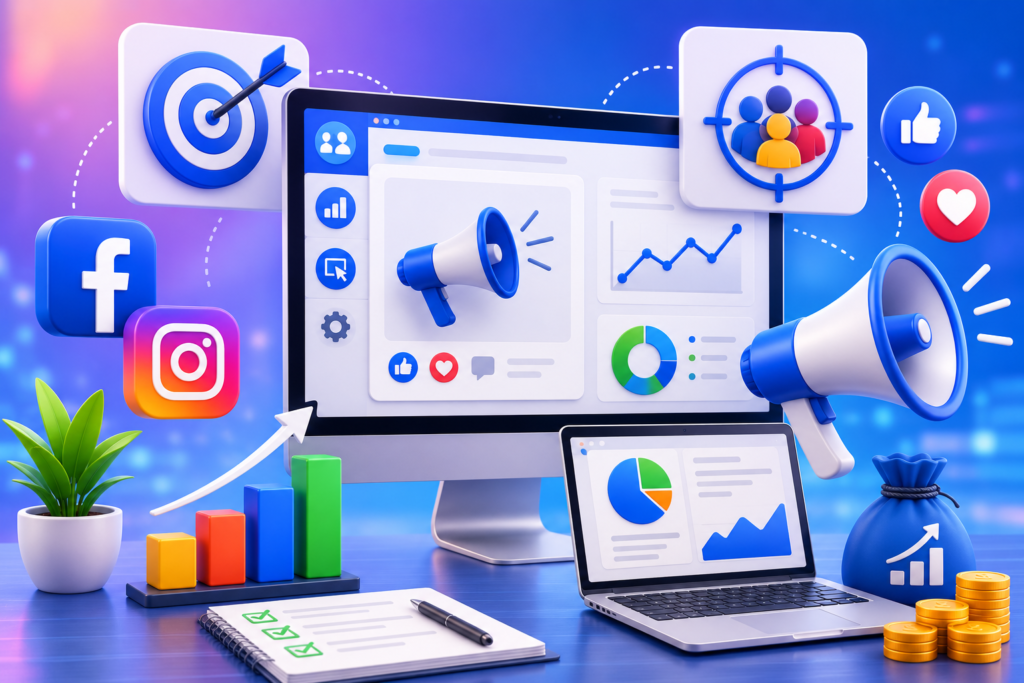
Facebook Ads strategy guide for businesses—learn advanced targeting, campaign optimization, ROI tracking, and scalable growth using high-converting Facebook advertising techniques.
Facebook Ads have transformed digital marketing by offering businesses a highly targeted, scalable, and cost-effective way to reach their audience. With billions of active users across platforms like Facebook and Instagram, advertisers can connect with potential customers based on demographics, behavior, and interests. This level of precision makes Facebook Ads one of the most powerful tools for both small businesses and large enterprises looking to grow online.
For businesses aiming to build brand awareness, generate leads, or drive sales, Facebook Ads provide unmatched flexibility. You can create campaigns tailored to specific objectives, such as website traffic, conversions, or engagement. Unlike traditional advertising, where results are often difficult to measure, Facebook Ads offer detailed analytics and performance insights that allow marketers to continuously optimize their campaigns.
At Appledew, businesses can leverage expert-driven strategies to maximize their Facebook advertising ROI. Whether you’re just starting or looking to scale existing campaigns, understanding the fundamentals and advanced techniques of Facebook Ads is essential for long-term success in today’s competitive digital landscape.
The Facebook Ads ecosystem is a comprehensive network that includes Facebook, Instagram, Messenger, and the Audience Network. Together, these platforms allow advertisers to reach users across multiple touchpoints, creating a seamless and engaging brand experience. This interconnected system ensures that your ads are displayed where your audience spends the most time.
At the core of this ecosystem is Facebook Ads Manager, a centralized tool where campaigns are created, managed, and analyzed. It provides detailed performance metrics such as impressions, click-through rates, and conversions. Understanding how to navigate Ads Manager is crucial for building effective campaigns and making data-driven decisions.
Additionally, Facebook’s algorithm uses machine learning to optimize ad delivery. By analyzing user behavior, engagement patterns, and historical data, the system ensures that your ads are shown to the most relevant audience. This automation not only improves efficiency but also enhances campaign performance over time, making it easier for businesses to achieve their marketing goals.
Creating a successful Facebook Ads campaign starts with setting up your account correctly. This includes configuring your Business Manager, linking your Facebook page, and integrating your website with Facebook Pixel. Each step plays a critical role in ensuring accurate tracking and campaign optimization.
The Facebook Pixel is particularly important as it tracks user interactions on your website. It allows you to measure conversions, optimize ads, and build retargeting audiences. According to Facebook’s official documentation, implementing the Pixel correctly can significantly improve campaign performance and ROI.
Another key aspect is setting up proper account permissions and security measures. Businesses should use two-factor authentication and assign roles carefully to maintain account integrity. A well-structured account not only improves efficiency but also ensures compliance with advertising policies, reducing the risk of account suspension.
One of the most critical steps in Facebook advertising is choosing the right campaign objective. Facebook offers various objectives, including awareness, consideration, and conversion, each designed to achieve specific marketing goals. Selecting the wrong objective can lead to wasted budget and poor performance.
For example, if your goal is to increase website sales, choosing a conversion objective is more effective than a traffic objective. This ensures that Facebook’s algorithm optimizes your ads for users who are more likely to take action. Understanding the difference between objectives allows you to align your campaigns with your business goals.
Moreover, clearly defined objectives help in measuring success. By setting key performance indicators (KPIs) such as cost per acquisition (CPA) or return on ad spend (ROAS), businesses can evaluate campaign effectiveness and make informed decisions. This strategic approach ensures that every advertising dollar is used efficiently.
Facebook’s audience targeting capabilities are one of its biggest strengths. Advertisers can target users based on age, location, interests, behaviors, and even past interactions with their brand. This level of granularity allows businesses to reach highly specific audiences with personalized messaging.
Custom Audiences enable you to target users who have already interacted with your business, such as website visitors or email subscribers. This is particularly useful for retargeting campaigns, where the goal is to convert warm leads into customers. Lookalike Audiences, on the other hand, help you find new users who share similar characteristics with your existing customers.
To maximize effectiveness, businesses should continuously test and refine their audience segments. Combining different targeting options and analyzing performance data can reveal valuable insights. This iterative process ensures that your ads are always reaching the most relevant audience, improving engagement and conversion rates.
Ad creatives play a crucial role in capturing attention and driving user engagement. A successful Facebook ad combines compelling visuals, persuasive copy, and a clear call-to-action (CTA). In a crowded digital space, creativity can make the difference between a successful campaign and a failed one.
Visual elements such as images and videos should be high-quality and relevant to your target audience. Video content, in particular, has been shown to generate higher engagement rates. According to Meta’s advertising guidelines, using visually appealing and mobile-optimized creatives can significantly improve ad performance.
Equally important is the ad copy. It should be concise, engaging, and aligned with the user’s needs. Highlighting benefits rather than features and addressing pain points can increase conversion rates. Testing different variations of creatives through A/B testing helps identify what resonates best with your audience.
Effective budgeting and bidding are essential for maximizing the return on your Facebook Ads investment. Facebook offers various bidding strategies, including cost per click (CPC), cost per thousand impressions (CPM), and cost per action (CPA). Choosing the right strategy depends on your campaign objectives and business goals.
Setting a realistic budget is equally important. Businesses should start with a manageable budget and gradually scale based on performance. This approach minimizes risk while allowing for continuous optimization. Monitoring key metrics such as cost per conversion and ROAS helps in making informed budgeting decisions.
Automation also plays a significant role in bidding. Facebook’s automated bidding system uses machine learning to optimize ad delivery and achieve the best results within your budget. By leveraging these tools, businesses can improve efficiency and focus on strategic decision-making rather than manual adjustments.
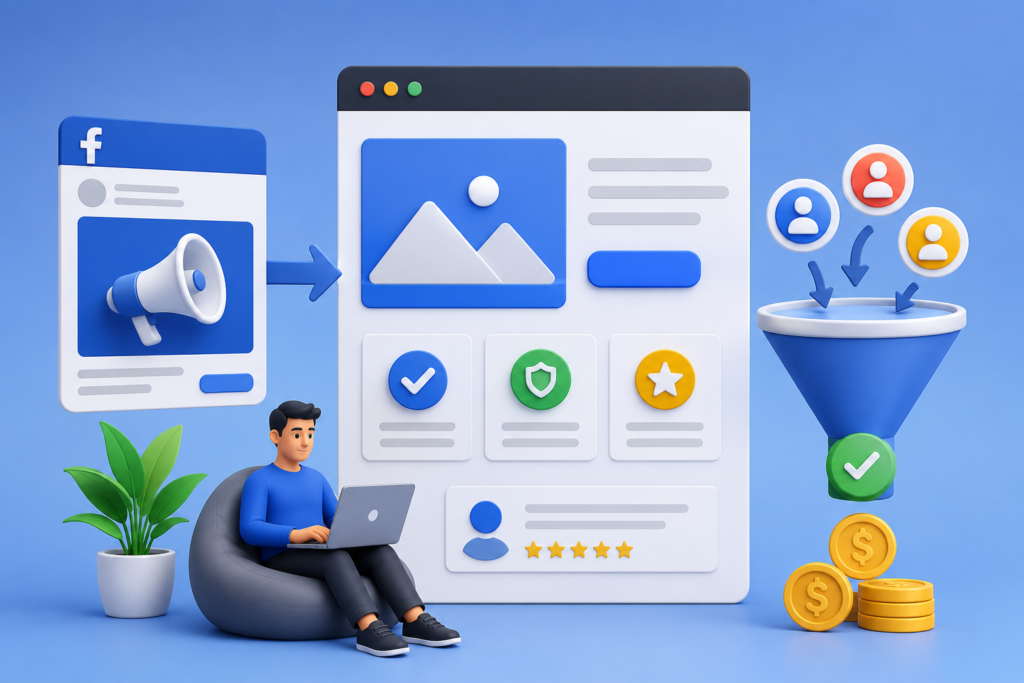
A well-optimized landing page is crucial for converting ad traffic into leads or sales. Even the most effective Facebook ad will fail if the landing page does not meet user expectations. Consistency between the ad and the landing page is key to maintaining user trust and engagement.
The landing page should load quickly, be mobile-friendly, and have a clear value proposition. According to Google’s Page Experience guidelines, fast-loading and user-friendly pages significantly improve conversion rates. Ensuring a seamless user experience is essential for maximizing ROI.
Additionally, strong calls-to-action and minimal distractions can enhance performance. Elements such as testimonials, trust badges, and clear benefits help build credibility and encourage users to take action. Continuous testing and optimization of landing pages ensure long-term success in Facebook advertising campaigns.
Facebook Pixel is one of the most powerful tools available for advertisers who want to track, optimize, and scale their campaigns effectively. It is a small piece of code installed on your website that collects data about user behavior, such as page views, purchases, and sign-ups. This data enables advertisers to understand how users interact with their site after clicking on an ad, providing valuable insights for campaign optimization.
Implementing the Pixel correctly allows businesses to track conversions accurately and build highly targeted audiences. For example, you can create Custom Audiences based on users who visited specific pages or completed certain actions. This makes retargeting campaigns more effective, as you can show ads to users who have already demonstrated interest in your products or services. According to Meta’s official Pixel documentation, proper implementation is essential for accurate tracking and improved ad performance.
Beyond tracking, the Pixel also plays a critical role in optimization. Facebook’s algorithm uses Pixel data to identify patterns and deliver ads to users who are more likely to convert. Over time, this machine learning process improves campaign efficiency and reduces costs. Businesses that leverage Pixel data effectively can achieve higher return on ad spend (ROAS) and more consistent results.
A/B testing, also known as split testing, is a fundamental practice for improving Facebook Ads performance. It involves creating multiple versions of an ad with slight variations, such as different headlines, images, or calls-to-action, and analyzing which version performs best. This data-driven approach eliminates guesswork and ensures that decisions are based on actual user behavior.
Testing should be done systematically, focusing on one variable at a time to isolate its impact. For example, you might test two different images while keeping the copy and audience the same. This allows you to determine which visual resonates more with your audience. According to Meta’s experimentation tools, structured testing can significantly improve campaign outcomes.
Continuous optimization is key to long-term success. Even high-performing ads can become less effective over time due to audience fatigue. Regularly refreshing creatives, testing new audiences, and analyzing performance metrics helps maintain engagement and drive better results. Businesses that prioritize ongoing testing and optimization are more likely to stay ahead in the competitive digital advertising landscape.
Scaling Facebook Ads campaigns requires a strategic approach to ensure that increased spending leads to proportional growth in results. One common method is vertical scaling, which involves gradually increasing the budget of high-performing campaigns. This allows Facebook’s algorithm to adjust without disrupting performance.
Another approach is horizontal scaling, where advertisers duplicate successful ad sets and target new audiences. This expands reach while maintaining the effectiveness of proven strategies. Combining both methods can help businesses achieve sustainable growth without compromising efficiency.
However, scaling should always be guided by data. Monitoring key metrics such as cost per acquisition (CPA) and return on ad spend (ROAS) ensures that campaigns remain profitable. Sudden increases in budget can lead to inefficiencies, so gradual adjustments are recommended. A well-planned scaling strategy enables businesses to maximize their advertising potential while minimizing risks.
Retargeting is one of the most effective Facebook Ads strategies for converting potential customers into actual buyers. It focuses on users who have already interacted with your brand, making them more likely to take action. By showing relevant ads to these users, businesses can reinforce their message and increase conversion rates.
There are several types of retargeting campaigns, including website retargeting, engagement retargeting, and dynamic product ads. For example, dynamic ads can display products that users have previously viewed, creating a personalized shopping experience. This level of customization significantly improves the chances of conversion.
Timing and frequency are crucial in retargeting campaigns. Showing ads too frequently can lead to ad fatigue, while infrequent exposure may reduce effectiveness. Finding the right balance ensures that your ads remain impactful without overwhelming the audience. Businesses that implement well-structured retargeting strategies often see higher ROI and improved customer retention.
Analyzing performance metrics is essential for optimizing Facebook Ads campaigns. Facebook Ads Manager provides a wide range of data, including impressions, clicks, conversions, and cost metrics. Understanding these metrics helps businesses evaluate campaign effectiveness and identify areas for improvement.
Key performance indicators (KPIs) such as click-through rate (CTR), cost per click (CPC), and return on ad spend (ROAS) provide insights into campaign performance. For example, a high CTR indicates that your ad is engaging, while a low ROAS may suggest issues with targeting or landing page experience.
Data-driven decision-making is the foundation of successful advertising. By regularly reviewing analytics and making adjustments based on insights, businesses can improve performance and achieve better results. This continuous optimization process ensures that campaigns remain effective and aligned with business goals.
Compliance with Facebook Ads policies is critical for maintaining account health and avoiding disruptions. Facebook has strict guidelines regarding ad content, targeting, and data usage. Violating these policies can result in ad rejection or account suspension, which can significantly impact your marketing efforts.
Advertisers should familiarize themselves with Facebook’s advertising policies to ensure compliance. This includes guidelines on prohibited content, such as misleading claims, and restricted categories, such as financial services and healthcare.
Maintaining transparency and accuracy in your ads is essential for building trust with your audience. Businesses should also ensure that their landing pages comply with Facebook’s standards, providing clear and honest information. Adhering to these guidelines not only prevents issues but also enhances credibility and user trust.
Many businesses struggle with Facebook Ads due to avoidable mistakes. One common error is targeting too broad or too narrow an audience. Broad targeting can lead to wasted budget, while overly narrow targeting may limit reach and scalability. Finding the right balance is crucial for success.
Another mistake is neglecting ad creatives. Poor-quality visuals and weak copy can significantly reduce engagement and conversion rates. Businesses should invest in high-quality creatives and continuously test different variations to identify what works best.
Additionally, failing to track and analyze performance data can hinder growth. Without proper tracking, it is impossible to understand what is working and what needs improvement. Businesses that avoid these common pitfalls and adopt a data-driven approach are more likely to achieve successful outcomes.
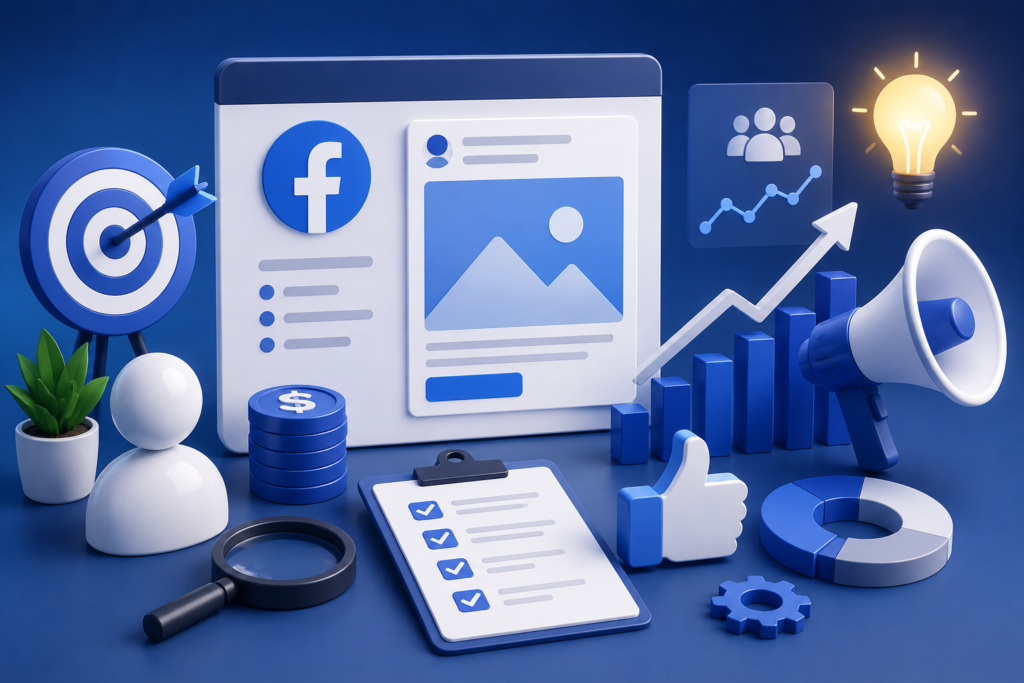
Achieving long-term success with Facebook Ads requires a combination of strategy, consistency, and continuous improvement. One of the most important practices is maintaining a clear understanding of your target audience. Regularly updating audience segments based on new data ensures that your ads remain relevant and effective.
Another best practice is focusing on value-driven content. Ads that provide genuine value, whether through educational content, special offers, or engaging storytelling, are more likely to resonate with users. This approach not only improves performance but also builds brand loyalty.
Finally, staying updated with industry trends and platform changes is essential. Facebook frequently updates its algorithms and features, and adapting to these changes can provide a competitive advantage. Businesses that prioritize learning and innovation are better positioned for sustained success.
1. How much should I spend on Facebook Ads?
Your budget depends on your business goals and industry. Start small, analyze performance, and scale gradually based on results.
2. Are Facebook Ads suitable for small businesses?
Yes, Facebook Ads are highly scalable and can be tailored to fit any budget, making them ideal for small businesses.
3. How long does it take to see results?
Results can vary, but most campaigns start showing meaningful data within a few days to a few weeks.
4. What is the best ad format?
Video ads and carousel ads tend to perform well, but the best format depends on your audience and objectives.
5. Can I run Facebook Ads without a website?
Yes, you can use lead generation ads or direct users to your Facebook page, but having a website improves tracking and conversions.
6. Why are my ads not converting?
This could be due to poor targeting, weak creatives, or an ineffective landing page. Analyzing data can help identify the issue.
7. What is a good CTR for Facebook Ads?
A good CTR typically ranges from 1% to 3%, but this can vary depending on the industry.
8. How do I reduce my ad costs?
Improving targeting, optimizing creatives, and using automated bidding can help reduce costs.
Facebook Ads remain one of the most powerful digital marketing tools for businesses looking to grow their online presence. From advanced targeting and creative strategies to data-driven optimization and scaling, the platform offers endless opportunities for success. However, achieving consistent results requires a strategic approach, continuous testing, and adherence to best practices.
By implementing the strategies outlined in this guide, businesses can maximize their advertising ROI and build sustainable growth. At Appledew, expert insights and tailored solutions can help you navigate the complexities of Facebook Ads and achieve your marketing goals effectively.
Prompt:
You are an expert consultant. Based on the blog post titled “(Facebook Ads)”, provide a step-by-step, practical implementation guide. Include tools, best practices, common mistakes to avoid, and advanced tips. Assume the reader wants to implement everything discussed in this article effectively.
Call to Action:
Want our help implementing this? Just reach out to us via our website contact form: https://appledew.com/contact-us/