

In today’s competitive digital landscape, businesses must leverage powerful advertising platforms to stay ahead. Google Ads has emerged as one of the most effective ways to reach potential customers precisely when they are searching for products or services. Whether you’re a small business owner or a large enterprise, understanding how to use this platform strategically can significantly impact your online growth.
At its core, Google Ads allows advertisers to display their offerings across search results, websites, videos, and apps within the Google ecosystem. The ability to target users based on intent, demographics, location, and behavior makes it an indispensable tool for modern marketing strategies. However, simply running ads is not enough—success requires a deep understanding of campaign structure, bidding strategies, keyword targeting, and performance optimization.
On Appledew, businesses can explore advanced digital marketing solutions that align with modern advertising practices. This guide will walk you through everything you need to know about Google Ads, from foundational concepts to advanced optimization techniques, ensuring you build campaigns that deliver measurable and scalable results.
Google Ads is an online advertising platform that operates primarily on a pay-per-click (PPC) model. This means advertisers only pay when users click on their ads, making it a cost-effective approach when managed correctly. The system relies on an auction-based mechanism where advertisers bid on specific keywords relevant to their business offerings.
The platform supports multiple campaign types, including search, display, video, shopping, and app campaigns. Each campaign type serves a unique purpose, allowing businesses to tailor their advertising strategies based on their goals. For example, search campaigns target users actively searching for specific queries, while display campaigns focus on brand awareness through visual ads.
One of the most powerful aspects of Google Ads is its integration with machine learning. The platform continuously analyzes user behavior, search patterns, and engagement metrics to optimize ad delivery. This ensures that ads are shown to the most relevant audience at the right time, improving the likelihood of conversions while maximizing return on investment.
In the modern marketing ecosystem, Google Ads plays a crucial role in driving immediate and measurable results. Unlike organic strategies that take time to show results, paid advertising provides instant visibility, making it ideal for businesses looking to generate quick traffic and leads.
Another key advantage is the ability to target high-intent users. When someone searches for a specific product or service, they are already in the decision-making phase. By appearing at the top of search results, businesses can capture this intent and convert it into sales. This level of precision targeting is unmatched by many other advertising channels.
Additionally, Google Ads offers detailed analytics and reporting features. Advertisers can track metrics such as impressions, clicks, conversions, and cost per acquisition. This data-driven approach allows businesses to refine their strategies continuously, ensuring that every dollar spent contributes to achieving their marketing objectives.
Keyword research is the backbone of any successful Google Ads campaign. Selecting the right keywords ensures that your ads appear for relevant searches, increasing the chances of attracting qualified traffic. This process involves identifying terms that potential customers use when searching for your products or services.
Effective keyword research goes beyond basic terms. It includes long-tail keywords, which are more specific and often less competitive. These keywords typically have lower search volumes but higher conversion rates because they align closely with user intent. For example, instead of targeting “shoes,” a more refined keyword would be “best running shoes for beginners.”
It is also essential to categorize keywords into match types, such as broad match, phrase match, and exact match. Each match type determines how closely a user’s search query must align with your chosen keywords. By strategically combining these match types, advertisers can balance reach and precision, ensuring optimal campaign performance.
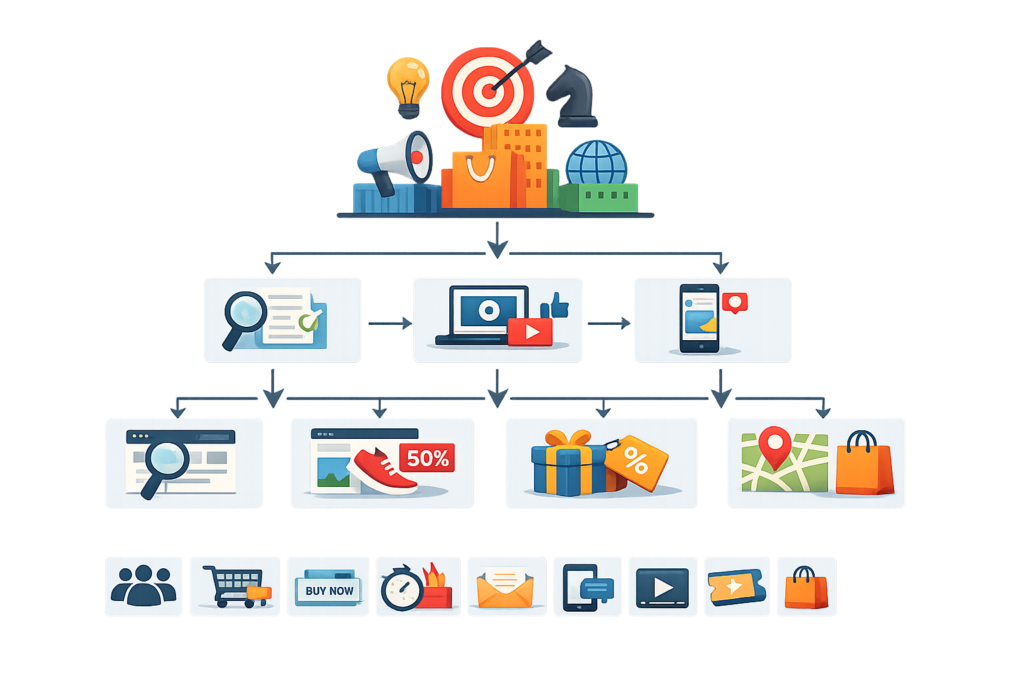
A well-organized campaign structure is critical for achieving consistent and scalable results in Google Ads. Campaigns should be divided based on specific goals, such as brand awareness, lead generation, or sales. Within each campaign, ad groups should be created to target closely related keywords and themes.
This hierarchical structure allows for better control over budgets, bidding strategies, and performance tracking. For instance, separating campaigns by product categories enables advertisers to allocate budgets more effectively and identify which areas are generating the highest returns.
Additionally, maintaining a clear structure improves ad relevance. When keywords, ad copy, and landing pages are closely aligned, it enhances the overall user experience. This alignment not only increases click-through rates but also contributes to higher quality scores, which can reduce advertising costs and improve ad positioning.
Ad copy plays a pivotal role in determining the success of your Google Ads campaigns. It is the first interaction users have with your brand, making it essential to create compelling and persuasive messages that capture attention and drive action.
Effective ad copy should include a clear value proposition, highlighting what sets your product or service apart from competitors. Using strong call-to-action phrases such as “Get Started Today,” “Claim Your Offer,” or “Learn More” encourages users to take the desired action. Additionally, incorporating relevant keywords into your ad copy improves its relevance and visibility.
Another important aspect is testing different variations of ad copy. A/B testing allows advertisers to compare multiple versions of ads to determine which performs best. By analyzing metrics such as click-through rates and conversion rates, businesses can continuously refine their messaging to maximize effectiveness.
Driving traffic to your website is only half the battle; converting that traffic into customers is equally important. A well-optimized landing page ensures that users have a seamless and engaging experience after clicking on your ad.
The landing page should align closely with the ad’s message and keywords. Consistency between the ad and landing page builds trust and reduces bounce rates. For example, if an ad promotes a specific offer, the landing page should clearly highlight that offer and provide a straightforward path for users to take action.
Additionally, factors such as page load speed, mobile responsiveness, and user-friendly design play a significant role in conversion rates. A slow or cluttered page can deter users from completing their desired action. By focusing on user experience and clarity, businesses can significantly improve their conversion performance.
Quality Score is a crucial metric in Google Ads that influences both ad placement and cost. It is determined by factors such as ad relevance, expected click-through rate, and landing page experience. A higher Quality Score indicates that your ads are more relevant to users, which can lead to better positioning and lower costs per click.
Improving Quality Score requires a holistic approach. Advertisers must ensure that their keywords, ad copy, and landing pages are closely aligned. Regularly reviewing and refining these elements helps maintain high relevance and performance.
Moreover, a strong Quality Score provides a competitive advantage. Even with lower bids, ads with higher scores can outperform competitors. This makes it essential for businesses to prioritize quality and relevance over simply increasing their advertising budget.
Choosing the right bidding strategy is essential for maximizing the effectiveness of your Google Ads campaigns. The platform offers various bidding options, including manual CPC, enhanced CPC, target CPA, and target ROAS. Each strategy is designed to achieve specific objectives, such as increasing clicks, conversions, or return on investment.
Manual bidding provides greater control over individual keyword bids, allowing advertisers to adjust based on performance. On the other hand, automated bidding leverages machine learning to optimize bids in real-time, saving time and improving efficiency.
Budget management is equally important. Setting a realistic budget ensures that campaigns run consistently without overspending. By analyzing performance data and adjusting budgets accordingly, businesses can allocate resources to high-performing campaigns and maximize overall returns.
Audience targeting in Google Ads has evolved significantly, allowing advertisers to go beyond basic demographics and tap into highly refined audience segments. Modern targeting options include in-market audiences, affinity audiences, and custom intent audiences, each designed to help businesses connect with users based on their behavior, interests, and purchasing intent. By leveraging these segments, advertisers can ensure their ads reach people who are more likely to convert.
One of the most effective strategies is combining audience targeting with keyword targeting. This layered approach enables advertisers to narrow down their audience while maintaining relevance. For example, targeting users searching for specific keywords while also belonging to a defined interest group increases the likelihood of engagement. Additionally, using remarketing lists allows businesses to re-engage users who have previously interacted with their website or ads.
To implement these strategies effectively, advertisers should refer to official resources like Google Ads audience targeting guide. This ensures campaigns align with platform guidelines while maximizing reach and relevance. When used strategically, advanced audience targeting can significantly improve campaign performance and return on investment.
Remarketing is a powerful feature that allows businesses to reconnect with users who have previously visited their website or interacted with their ads. These users are already familiar with your brand, making them more likely to convert compared to new visitors. By displaying tailored ads to these audiences, businesses can reinforce their messaging and encourage users to complete their desired actions.
There are various types of remarketing strategies, including standard remarketing, dynamic remarketing, and video remarketing. Dynamic remarketing is particularly effective for eCommerce businesses, as it displays personalized ads featuring products that users have previously viewed. This level of personalization enhances user experience and increases conversion rates.
Implementing remarketing requires careful planning and adherence to privacy policies. Businesses must ensure compliance with guidelines such as those outlined in the Google Ads remarketing policies. By maintaining transparency and respecting user privacy, advertisers can build trust while leveraging remarketing to drive meaningful results.
Accurate tracking and measurement are essential for evaluating the success of Google Ads campaigns. Conversion tracking allows businesses to monitor specific actions taken by users, such as purchases, form submissions, or phone calls. This data provides valuable insights into campaign performance and helps identify areas for improvement.
Setting up conversion tracking involves adding a tracking code to your website or integrating with analytics tools. Resources like Google Ads conversion tracking setup provide detailed instructions to ensure accurate implementation. Once tracking is in place, advertisers can analyze key metrics such as conversion rate, cost per conversion, and return on ad spend.
Performance measurement should be an ongoing process. Regularly reviewing data enables businesses to make informed decisions, optimize campaigns, and allocate budgets effectively. By focusing on data-driven strategies, advertisers can continuously improve their results and achieve long-term success.
Ad extensions are additional pieces of information that enhance your ads and provide users with more reasons to engage. These extensions can include site links, call buttons, location details, and structured snippets, all of which contribute to a richer and more informative ad experience.
Using ad extensions not only improves visibility but also increases click-through rates. For example, site link extensions allow users to navigate directly to specific pages on your website, while call extensions enable them to contact your business instantly. This added convenience can significantly improve user engagement and conversion rates.
To ensure proper implementation, advertisers should follow best practices outlined in resources like Google Ads ad extensions guide. By leveraging these features effectively, businesses can enhance their ads, stand out from competitors, and maximize their advertising impact.
Despite its potential, many advertisers fail to achieve optimal results due to common mistakes. One of the most frequent issues is poor keyword selection. Targeting overly broad or irrelevant keywords can lead to wasted budget and low-quality traffic. Conducting thorough keyword research and regularly refining keyword lists is essential for success.
Another common mistake is neglecting campaign optimization. Running ads without monitoring performance or making adjustments can result in declining effectiveness over time. Advertisers should continuously analyze metrics, test different strategies, and optimize their campaigns to maintain high performance.
Additionally, ignoring landing page quality can significantly impact conversion rates. Even the best ads cannot compensate for a poorly designed or irrelevant landing page. Ensuring a seamless user experience from ad click to conversion is crucial for achieving desired results.
Achieving long-term success with Google Ads requires a strategic and consistent approach. One of the most important best practices is continuous testing and optimization. This includes experimenting with different ad copies, keywords, bidding strategies, and targeting options to identify what works best.
Another key practice is maintaining a strong focus on user experience. Ads should be relevant, engaging, and aligned with user intent, while landing pages should provide clear and valuable information. By prioritizing the needs of users, businesses can build trust and improve conversion rates.
Staying updated with platform changes and industry trends is also essential. Google frequently updates its algorithms and features, making it important for advertisers to adapt their strategies accordingly. By staying informed and proactive, businesses can maintain a competitive edge and achieve sustainable growth.

The future of Google Ads is shaped by advancements in technology, particularly in artificial intelligence and machine learning. These technologies are enabling more sophisticated targeting, automation, and personalization, allowing advertisers to deliver highly relevant and effective ads.
One emerging trend is the increasing importance of automation. Features such as smart bidding and responsive search ads are designed to simplify campaign management while improving performance. As these tools continue to evolve, advertisers will need to embrace automation to stay competitive.
Another significant trend is the focus on privacy and data protection. With growing concerns about user privacy, platforms are implementing stricter policies and regulations. Advertisers must adapt by using first-party data and ensuring compliance with guidelines such as those outlined in the Google Ads privacy policies. By aligning with these trends, businesses can future-proof their advertising strategies and maintain trust with their audience.
1. What is Google Ads and how does it work?
Google Ads is an online advertising platform that allows businesses to display ads on Google’s search results and partner networks. It operates on a pay-per-click model, where advertisers pay only when users click on their ads.
2. How much does Google Ads cost?
The cost varies depending on factors such as competition, keyword selection, and bidding strategy. Advertisers can set their own budgets and control spending based on their goals.
3. What is a good click-through rate (CTR)?
A good CTR depends on the industry and campaign type, but generally, a higher CTR indicates better ad relevance and performance.
4. How long does it take to see results?
Google Ads can deliver immediate traffic, but optimizing campaigns for consistent results may take several weeks of testing and refinement.
5. What is Quality Score?
Quality Score is a metric that measures the relevance and effectiveness of your ads, keywords, and landing pages. A higher score can lead to better ad placement and lower costs.
6. Can small businesses benefit from Google Ads?
Yes, Google Ads is highly scalable and can be tailored to fit any budget, making it suitable for businesses of all sizes.
7. What are negative keywords?
Negative keywords prevent your ads from appearing for irrelevant searches, helping to improve targeting and reduce wasted spend.
8. Is Google Ads better than SEO?
Both have their advantages. Google Ads provides immediate results, while SEO focuses on long-term organic growth. A combined strategy often yields the best results.
Google Ads remains one of the most powerful tools for businesses looking to grow their online presence, attract targeted audiences, and drive measurable results. By understanding its core functionality, implementing advanced strategies, and continuously optimizing campaigns, businesses can achieve significant returns on their investment.
On Appledew, businesses can access expert guidance and tailored solutions to maximize their digital marketing efforts. Whether you are just starting or looking to refine your existing campaigns, adopting the strategies outlined in this guide will help you unlock the full potential of Google Ads and stay ahead in the competitive digital landscape.
Prompt:
You are an expert consultant. Based on the blog post titled “(Google Ads)”, provide a step-by-step, practical implementation guide. Include tools, best practices, common mistakes to avoid, and advanced tips. Assume the reader wants to implement everything discussed in this article effectively.
Call to Action:
Want our help implementing this? Just reach out to us via our website contact form: https://appledew.com/contact-us/