
What do the world’s fastest-growing businesses have in common?
They don’t just create content — they create strategic, SEO-driven content that builds trust, drives traffic, and converts consistently.
In a digital world where customers research everything before making a decision, Content Marketing has become the foundation of online growth. Whether you are a startup, scaling business, or global enterprise, the ability to educate, attract, and influence your audience determines how quickly you grow.
But here’s the challenge:
Most businesses publish content…
But very few create content that ranks, engages, and converts.
Content marketing today is no longer about pushing blog posts. It’s about:
This comprehensive guide is designed specifically for global businesses, startups, and digital agencies looking to understand the modern content marketing landscape. You will learn:
As a global digital agency, Appledew has helped businesses across industries build systems that grow visibility, authority, engagement, and revenue. This guide combines practical insights, SEO expertise, and proven content frameworks that you can apply immediately.
Content marketing is a strategic approach to creating and distributing valuable, relevant, and consistent content to attract and engage a clearly defined audience — and ultimately drive profitable customer actions.
Unlike traditional advertising, which pushes promotional messages, content marketing focuses on delivering value first. The goal is to educate, inspire, or inform your audience so they naturally trust your brand and move closer to buying from you.
At its core, content marketing answers three questions:
Modern content marketing goes beyond blog posts. It includes:
When executed correctly, content marketing becomes a powerful engine that drives:
For global businesses and startups, content marketing is essential because it ensures your brand remains discoverable, relevant, and competitive in an increasingly crowded digital world.

Global buying behavior has changed. Customers no longer trust companies simply based on ads or promotional claims. Instead:
They research.
They compare.
They look for proof.
They look for expertise.
Content marketing provides this proof.
Building authority is one of the most powerful outcomes of strategic content marketing. When your brand consistently publishes high-quality, educational, and insightful content, you naturally position yourself as an industry expert. Customers begin to trust your guidance, rely on your explanations, and engage with your recommendations because they see your business as a credible source of information.
Authority is not built overnight—it develops through consistency, relevance, and value. Every blog post, case study, video, or guide strengthens your brand’s reputation and showcases your deep understanding of the industry. This trust directly influences decision-making, helping potential customers feel confident choosing your services over competitors.
In a digital landscape where buyers research extensively before committing, authoritative content gives your business a significant competitive advantage. It increases your visibility, reinforces your expertise, and fosters long-term customer loyalty.
Content marketing plays a central role in improving SEO and boosting your brand’s organic visibility. When you publish high-quality, keyword-focused, and user-centric content, search engines recognize your website as valuable, relevant, and trustworthy. This leads to higher rankings across important search queries, allowing more potential customers to discover your business naturally—without relying on paid ads.
Regularly updated content, such as blogs, guides, and resources, signals to search engines that your website is active and authoritative. Optimized internal linking, structured headings, and targeted keywords further strengthen your search performance. As you cover a wide range of industry topics, you increase your chances of appearing in Google’s featured snippets, “People Also Ask” results, and top-ranking positions.
Stronger SEO results in more consistent traffic, better lead generation, and higher conversions. Ultimately, content marketing builds long-term visibility that continues to drive growth even when ad budgets stop.
Benefits include:
Content marketing enables businesses to connect with audiences far beyond their local markets, expanding their reach on a global scale. By creating valuable, relevant, and culturally adaptable content, you can attract and engage users from different countries and regions, regardless of time zones. High-quality content, optimized for international SEO and distributed through multiple channels such as social media, email, and websites, ensures your brand message reaches diverse audiences effectively.
A strategic approach to global content involves understanding the preferences, languages, and behaviors of international users. This allows businesses to tailor their messaging to resonate with different markets while maintaining brand consistency. By consistently providing informative and engaging content, your business not only raises awareness worldwide but also builds credibility and trust among global prospects. Ultimately, content marketing helps brands establish a worldwide presence and drive growth across international markets.
Content marketing is a powerful tool for turning prospects into paying customers by guiding them through the buyer’s journey. High-quality, targeted content addresses the needs, questions, and pain points of your audience at every stage—whether they are discovering your brand, considering solutions, or ready to make a purchase. By providing valuable information, demonstrating expertise, and showcasing solutions, your content builds trust and credibility, which are essential for conversion.
Well-crafted calls-to-action (CTAs), landing pages, and content offers like guides, webinars, or case studies encourage engagement and lead generation. By nurturing prospects with relevant content, businesses can move them from awareness to decision more effectively. Additionally, analyzing content performance helps refine strategies to maximize conversion rates. Ultimately, content marketing doesn’t just attract traffic—it influences behavior, drives meaningful interactions, and turns interested visitors into loyal customers, generating measurable business growth.
Content marketing is a cost-effective strategy that delivers long-term value compared to traditional advertising methods. While creating high-quality content requires an initial investment, it continues to attract, engage, and convert audiences over time without the ongoing expenses associated with paid campaigns. Blog posts, videos, guides, and social media content serve as evergreen assets, generating organic traffic and leads for months or even years after publication.
By focusing on organic channels and strategic distribution, businesses can reduce reliance on costly ads while still reaching their target audience effectively. Content marketing also enhances the efficiency of other marketing efforts, such as email campaigns and social media promotions, by providing valuable material to share and promote. Over time, this approach lowers customer acquisition costs and maximizes return on investment. Ultimately, content marketing offers a sustainable, budget-friendly way to grow brand visibility, authority, and conversions.
For startups with limited budgets, this is a major advantage.
Content marketing is an invaluable resource for sales teams, providing them with tools and materials that help engage prospects and close deals more effectively. By offering informative blog posts, case studies, whitepapers, product guides, and videos, content equips sales representatives with insights they can share with potential clients to address questions, overcome objections, and demonstrate expertise.
When sales teams have access to well-crafted content, they can personalize their outreach, educate prospects at every stage of the buyer’s journey, and build trust more quickly. Content also ensures consistency in messaging, allowing sales and marketing to align on key value propositions and brand promises.
Moreover, content marketing enables lead nurturing by offering resources that guide prospects toward decision-making, reducing the time and effort required by sales teams. Ultimately, it enhances efficiency, strengthens relationships with prospects, and drives higher conversion rates, making sales efforts more productive and impactful.
Effective content marketing requires using multiple content formats strategically. Here are the most impactful types of content for global businesses:
SEO content is the foundation of a strong digital presence, designed to improve a website’s visibility on search engines while providing value to the audience. It involves creating content that is both user-friendly and optimized with relevant keywords, meta tags, headings, and internal links to increase the likelihood of ranking higher on search engine results pages (SERPs). Well-structured SEO content attracts organic traffic, helping businesses reach potential customers who are actively searching for products, services, or information in their niche.
Effective SEO content balances keyword optimization with high-quality, informative, and engaging material. It includes blog posts, articles, guides, product descriptions, and landing pages that answer user queries, solve problems, and provide actionable insights. Beyond driving traffic, SEO content enhances user experience by offering valuable information in a clear, organized format, reducing bounce rates and encouraging longer site visits.
Regularly updated SEO content signals to search engines that a website is active and authoritative, boosting credibility and ranking potential. Ultimately, SEO content not only increases visibility but also builds trust, authority, and engagement, serving as a crucial tool for sustainable digital marketing and long-term business growth.
SEO content is important because:
Thought leadership content positions a brand or individual as an authority in their industry, showcasing expertise, insight, and innovative thinking. This type of content goes beyond promotional material; it provides valuable perspectives, solutions to industry challenges, and forward-thinking ideas that influence opinions and drive meaningful conversations. By sharing well-researched articles, whitepapers, case studies, webinars, and expert commentary, businesses can demonstrate credibility and establish trust with their audience.
The goal of thought leadership content is to educate and inspire rather than directly sell. When audiences perceive a brand as a trusted source of knowledge, they are more likely to engage, share insights, and consider the brand as a preferred partner. It also helps differentiate a business from competitors by highlighting unique expertise, vision, and strategic thinking.
Additionally, thought leadership content supports brand awareness, networking opportunities, and media recognition, creating long-term value beyond immediate conversions. It strengthens relationships with existing clients while attracting potential customers who value expertise. By consistently delivering insightful and authoritative content, businesses can solidify their reputation as industry leaders and drive sustainable growth.
This helps position your business as a leader in your niche.
Social media content is a critical component of modern digital marketing, designed to engage audiences, build brand awareness, and drive meaningful interactions across platforms such as Facebook, Instagram, LinkedIn, Twitter, and TikTok. Effective social media content combines creativity, relevance, and strategic messaging to capture attention and encourage users to like, comment, share, or take action.
This content can take many forms, including posts, videos, stories, reels, infographics, polls, and live sessions. By tailoring content to the preferences and behaviors of specific audiences, businesses can foster stronger connections, maintain brand consistency, and communicate their unique value proposition effectively. Regular, high-quality social media content helps maintain visibility, reinforces brand identity, and supports campaigns, promotions, or product launches.
Moreover, social media content plays a vital role in community building. It allows brands to interact directly with followers, respond to feedback, and create a sense of trust and loyalty. By analyzing engagement metrics, businesses can refine strategies, maximize reach, and improve ROI. Ultimately, social media content not only enhances brand presence but also drives traffic, leads, and conversions while building long-term relationships with audiences worldwide.
Great for building brand personality and community.
Video content has become one of the most powerful tools in digital marketing, offering an engaging and dynamic way to communicate messages, showcase products, and tell brand stories. Videos capture attention more effectively than text or images alone, making them ideal for increasing audience engagement, retention, and conversion rates. From short social media clips and tutorials to in-depth webinars and product demos, video content can be tailored to suit different platforms, audiences, and marketing objectives.
Creating high-quality video content allows businesses to explain complex concepts, highlight features, and demonstrate solutions in a visually compelling manner. It also fosters emotional connections by combining visuals, sound, and storytelling, which builds trust and strengthens brand identity. Optimized videos, complete with SEO-friendly titles, descriptions, and transcripts, can also enhance search engine visibility and drive organic traffic.
Additionally, video content supports lead generation and customer education, serving as a versatile resource for sales and marketing teams. By consistently producing valuable and relevant video content, brands can expand their reach, increase engagement, and drive measurable business growth while staying ahead in today’s competitive digital landscape.
Example formats:
Lead magnet content is a strategic marketing tool designed to attract potential customers by offering valuable resources in exchange for their contact information. This type of content is focused on providing high-quality, relevant, and actionable insights that address specific problems or needs of your target audience. Common forms of lead magnets include eBooks, whitepapers, checklists, templates, guides, webinars, and free trials.
The primary goal of lead magnet content is to generate qualified leads while establishing trust and credibility. By offering something of tangible value, businesses encourage users to engage with their brand and begin a relationship that can be nurtured through email marketing or personalized follow-ups. Well-crafted lead magnets not only demonstrate expertise but also position a brand as a helpful authority in its industry.
Moreover, lead magnet content supports sales and marketing alignment by providing resources that educate prospects and guide them through the buyer’s journey. It increases conversion rates, enhances audience engagement, and builds a database of potential customers for long-term marketing efforts. Ultimately, lead magnet content is an essential tool for attracting, capturing, and nurturing leads in a cost-effective and scalable manner.
Perfect for B2B and startup lead generation.
Email content is a crucial element of digital marketing that enables businesses to communicate directly with their audience in a personalized and targeted way. Well-crafted email content can inform, engage, and nurture prospects while strengthening relationships with existing customers. It includes newsletters, promotional emails, product announcements, drip campaigns, and transactional messages, all designed to deliver value and encourage action.
Effective email content balances informative and persuasive messaging, capturing attention with compelling subject lines, engaging visuals, and clear calls-to-action (CTAs). Personalization, segmentation, and timing play a key role in ensuring that the right message reaches the right audience at the right time, increasing open rates, click-through rates, and conversions.
Beyond promoting products or services, email content is a powerful tool for educating audiences, sharing insights, and building brand loyalty. It provides measurable results, allowing marketers to analyze performance metrics such as engagement, conversion, and retention rates, which helps refine strategies over time.
Ultimately, email content is a cost-effective, direct, and measurable way to drive traffic, generate leads, and foster long-term relationships. When executed strategically, it serves as a cornerstone of a successful content marketing and digital communication strategy.
Effective email types include:
Case studies are a powerful form of content marketing that demonstrate how a business’s products or services have successfully solved real-world problems for clients. By presenting detailed examples of challenges, strategies, and measurable results, case studies build credibility, showcase expertise, and provide potential customers with concrete evidence of value.
Well-crafted case studies focus on storytelling, illustrating the client’s problem, the approach taken by the business, and the tangible outcomes achieved. They often include statistics, visuals, quotes, and data-driven insights, making them both informative and persuasive. By highlighting specific successes, case studies allow prospects to relate to similar challenges they may be facing and envision how the business can address their needs.
Case studies also support sales and marketing efforts by serving as ready-to-use proof points during presentations, proposals, or campaigns. They strengthen trust and authority while nurturing leads through the consideration stage of the buyer’s journey. Additionally, publishing case studies online improves SEO, generates traffic, and enhances brand visibility.
Ultimately, case studies are an essential tool for demonstrating expertise, validating solutions, and influencing decision-making. They provide a compelling way to convert prospects into loyal customers by showing real, tangible results.
Website content is the cornerstone of a business’s online presence, serving as the primary medium to communicate with visitors, showcase offerings, and establish brand identity. It includes text, images, videos, infographics, and interactive elements that inform, engage, and guide users through the site. High-quality website content not only captures attention but also communicates the brand’s value proposition, expertise, and personality effectively.
Well-structured website content improves user experience by providing clear navigation, easy-to-read information, and relevant resources. It also plays a crucial role in search engine optimization (SEO), helping the website rank higher on search results and attract organic traffic. By integrating targeted keywords, compelling headlines, and strategic calls-to-action (CTAs), website content encourages visitors to take desired actions, such as making a purchase, subscribing to newsletters, or contacting the business.
Moreover, website content supports credibility and trust-building by offering informative pages, case studies, testimonials, and thought leadership materials. It acts as a central hub for all digital marketing efforts, connecting social media, email campaigns, and other promotional activities. Ultimately, well-crafted website content enhances visibility, engages audiences, drives conversions, and establishes a strong digital presence that supports long-term business growth.
This includes service pages, about pages, and landing pages.
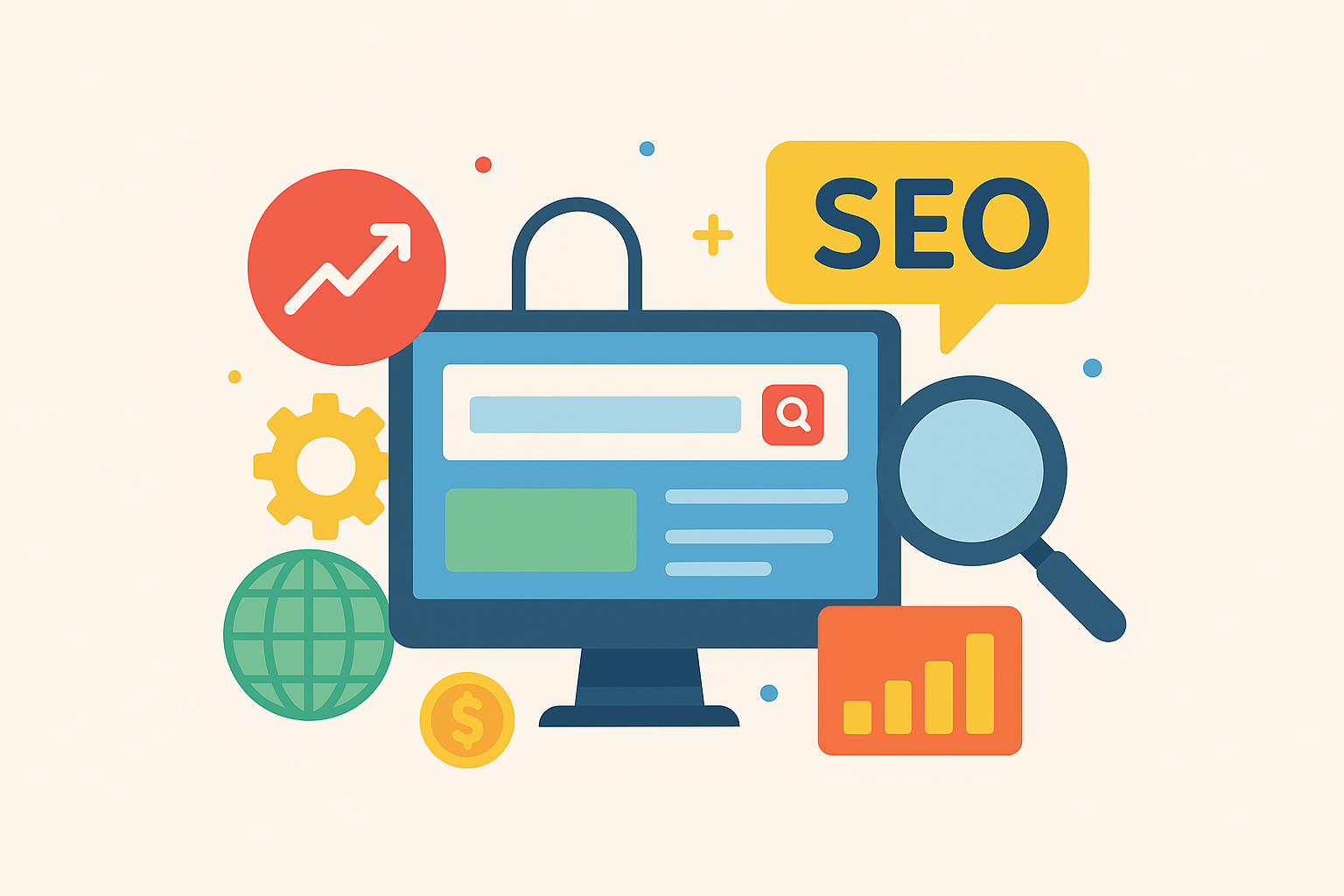
SEO content is the backbone of content marketing. It ensures your content is discoverable, searchable, and visible to your target audience at the exact moment they are looking for information.
Here’s how SEO content works:
Keyword research is a fundamental aspect of digital marketing and SEO that helps businesses identify the specific words and phrases their target audience uses when searching for products, services, or information online. By understanding search intent, search volume, and competition for various keywords, businesses can develop content strategies that attract qualified traffic and improve search engine rankings.
Effective keyword research ensures that content aligns with what potential customers are actively looking for, increasing visibility and engagement. It helps marketers prioritize high-impact keywords, optimize website pages, and create relevant blog posts, landing pages, or social media content. Additionally, keyword research supports paid advertising campaigns by identifying cost-effective terms that drive conversions.
Regularly updated keyword analysis allows businesses to stay ahead of trends, refine their strategies, and maintain a competitive edge. Ultimately, keyword research is essential for targeting the right audience, driving organic traffic, and achieving measurable growth in both visibility and conversions.
Find keywords your audience uses.
This includes:
A good SEO strategy includes mapping keywords to each stage of the buyer journey.
Search intent optimization is the process of tailoring content to match the specific goals and needs of users when they perform a search online. Understanding whether a user is looking to learn, make a purchase, compare options, or find a specific resource allows businesses to create content that directly addresses their intent. This strategy improves engagement, satisfaction, and the likelihood of conversions.
By aligning content with search intent, businesses can enhance their SEO performance and appear in the most relevant search results. It involves analyzing keywords, evaluating top-ranking pages, and structuring content to answer user queries effectively. Optimized content not only drives organic traffic but also reduces bounce rates by providing exactly what users are seeking.
Ultimately, search intent optimization ensures that every piece of content is purposeful, user-focused, and strategically positioned to meet business goals. It strengthens credibility, improves rankings, and helps attract high-quality, conversion-ready traffic.
Every keyword has an intent:
Your content must match what users want.
On-page optimization is a critical SEO practice that involves refining individual web pages to improve their search engine rankings and enhance user experience. This process focuses on elements such as title tags, meta descriptions, headings, URL structure, internal linking, image alt text, and keyword placement. By optimizing these components, businesses can make their content more accessible, relevant, and valuable to both search engines and users.
Effective on-page optimization ensures that search engines understand the context and purpose of each page, which helps improve visibility for targeted keywords. It also enhances readability and usability for visitors, encouraging longer engagement and reducing bounce rates. High-quality, well-structured content combined with proper optimization increases the chances of ranking higher in search results, attracting organic traffic, and generating leads.
Ultimately, on-page optimization is essential for aligning content with SEO best practices, boosting website performance, and driving sustainable online growth for businesses.
This includes:
These help Google understand your content.
Content depth and quality are essential factors in creating effective digital marketing materials that engage audiences and drive results. High-quality content provides comprehensive, well-researched, and insightful information that thoroughly addresses the needs, questions, and challenges of the target audience. Depth ensures that topics are explored in detail, offering practical solutions, examples, and actionable advice rather than superficial coverage.
Quality content is accurate, original, and easy to read, maintaining consistency in tone, style, and branding. It enhances credibility, builds trust, and positions a business as an authority in its industry. Additionally, search engines favor in-depth, high-quality content, improving SEO performance and organic visibility.
By prioritizing content depth and quality, businesses can deliver greater value to users, increase engagement, and encourage conversions. Ultimately, investing in detailed, well-crafted content strengthens brand reputation, supports marketing objectives, and drives long-term sustainable growth.
Google rewards:
Modern SEO content is experience-driven, not keyword-stuffed.
E-E-A-T Optimization stands for Experience, Expertise, Authoritativeness, and Trustworthiness, and it is a crucial framework for enhancing content quality and search engine credibility. Optimizing for E-E-A-T ensures that content demonstrates real-world experience, deep industry knowledge, credible authorship, and trustworthy information that users can rely on.
By incorporating E-E-A-T principles, businesses can improve their website’s reputation and ranking potential on search engines. This involves showcasing expert authors, providing accurate and well-researched information, citing reliable sources, and maintaining transparency with clear contact details and credentials. Experience adds authenticity by reflecting practical knowledge or firsthand insights, which strengthens user trust.
E-E-A-T optimization not only boosts SEO performance but also reassures users that the content is reliable and valuable. High E-E-A-T signals encourage engagement, repeat visits, and conversions while protecting the brand’s credibility. Ultimately, it is a key strategy for building authority, trust, and sustainable online growth.
Google prioritizes content with:
Ways to show this:
Internal linking is a strategic SEO practice that connects different pages within a website to improve navigation, user experience, and search engine visibility. By linking relevant content together, businesses can guide visitors through their site, helping them discover more information, products, or services. This creates a seamless journey that keeps users engaged and encourages longer site visits.
From an SEO perspective, internal links distribute page authority and ranking potential across the website, signaling to search engines which pages are most important. Properly structured internal linking also helps search engines crawl and index pages efficiently, improving overall site performance. Using descriptive anchor text and linking to relevant pages ensures that both users and search engines understand the context and relevance of the content.
Ultimately, internal linking strengthens website architecture, enhances user experience, and supports SEO goals. It is a simple yet powerful strategy for increasing visibility, driving traffic, and boosting conversions across a website.
Connect related content to:
Backlinks are inbound links from external websites that point to your website, serving as a key factor in search engine optimization (SEO) and online authority. High-quality backlinks signal to search engines that your content is valuable, credible, and trustworthy, which can significantly improve your search rankings and organic visibility.
Not all backlinks are equal; links from authoritative, relevant, and reputable websites carry more weight than low-quality or spammy links. Building a strong backlink profile involves creating high-quality content that others naturally want to reference, as well as engaging in outreach, partnerships, and guest posting strategies.
Backlinks also drive referral traffic by directing users from other websites to yours, increasing exposure, engagement, and potential leads. Over time, a robust backlink strategy enhances brand credibility, strengthens domain authority, and supports long-term SEO performance. Ultimately, backlinks are essential for improving visibility, attracting high-quality traffic, and establishing a strong online presence.
SEO content should attract natural backlinks by being:
A strong content marketing strategy gives your business direction, clarity, and consistency. Without a strategy, content becomes random — and random content never produces predictable results.
Here’s the complete framework global businesses and startups can follow.
Every content strategy begins with clear goals. Examples:
Your goals will determine your content types, channels, and KPIs.
Use audience research to uncover:
Tools: Google Analytics, Search Console, Keyword Planner, surveys, competitor analysis.
Keyword research reveals what your audience searches for. Competitor analysis reveals content gaps.
Look at:
You can then position your content to outperform them.
Plan your content for:
Include:
A strategic calendar ensures consistency.
Your content should be:
Every article should solve a real problem.
Your content must reach the right audience.
Distribution channels:
Each channel has its strengths; most businesses should use at least 3–5.
Track key metrics:
Use data to refine, improve, and expand your strategy.
To create high-quality content consistently, you need a repeatable system. Here are proven frameworks used by top digital agencies.
A — Attention
Hook your audience with a powerful intro, headline, or statistic.
I — Interest
Keep them engaged with relevant insights and relatable challenges.
D — Desire
Explain benefits, show value, provide examples.
A — Action
End with a call-to-action (CTA).
This framework works well for articles, emails, and social media content.
Clarity – Be direct and simple.
Context – Explain why it matters.
Credibility – Use data, examples, research.
This is essential for ranking.
Pillar Page
Large, comprehensive guide on a broad topic (e.g., Content Marketing Guide).
Cluster Pages
Specific, related articles linking back to the pillar.
This structure improves SEO, authority, and internal linking.
Use storytelling to make content memorable.
Includes:
Stories are powerful for brand messaging, videos, case studies, and email marketing.
To satisfy Google:
Include real data, examples, case studies, and expert quotes.

Creating content isn’t enough — promotion drives discovery.
Here are the most effective distribution channels:
Organic search, powered by SEO (Search Engine Optimization), is the process of attracting visitors to a website naturally through unpaid search engine results. Unlike paid ads, organic search relies on creating high-quality, relevant, and optimized content that aligns with user intent and search engine algorithms.
Effective SEO strategies improve a website’s visibility on search engines, helping businesses reach audiences actively searching for their products, services, or information. Key elements of organic search include keyword research, on-page optimization, technical SEO, content quality, internal linking, and backlink building. By combining these elements, businesses can enhance their rankings, drive consistent organic traffic, and increase engagement.
Organic search also builds credibility and trust with users, as people tend to value top-ranking results more than paid advertisements. Over time, investing in SEO provides sustainable growth, reduces marketing costs, and attracts qualified leads. Ultimately, organic search is a cost-effective, long-term strategy for increasing online visibility and driving business growth.
Social media platforms are essential tools for businesses to connect, engage, and build relationships with their audience online. Platforms such as Facebook, Instagram, LinkedIn, Twitter, TikTok, and YouTube provide diverse channels to share content, promote products, and communicate directly with customers. Each platform has unique features, user demographics, and content formats, allowing businesses to tailor their strategies for maximum impact.
Effective use of social media platforms helps increase brand awareness, drive website traffic, and generate leads by creating engaging posts, videos, stories, and interactive content. They also allow businesses to monitor trends, gather customer insights, and respond to feedback in real time, fostering loyalty and trust.
By strategically leveraging multiple social media platforms, businesses can reach broader audiences, strengthen their digital presence, and support marketing and sales goals. Ultimately, these platforms serve as powerful channels for growth, engagement, and long-term customer relationships in today’s digital landscape.
Email marketing is a highly effective digital marketing strategy that enables businesses to communicate directly with their audience through personalized and targeted messages. It involves sending newsletters, promotional offers, product updates, drip campaigns, and transactional emails to engage subscribers and nurture relationships.
The strength of email marketing lies in its ability to deliver tailored content based on user preferences, behavior, and purchase history. This personalization increases engagement, click-through rates, and conversions, making it a cost-effective way to drive business growth. Additionally, email marketing allows for precise tracking and analysis of performance metrics, such as open rates, click rates, and ROI, which helps refine campaigns for better results.
By consistently providing value, educating audiences, and promoting relevant offers, email marketing builds trust, strengthens brand loyalty, and encourages repeat business. Ultimately, it is a direct, measurable, and scalable strategy that supports customer acquisition, retention, and long-term digital marketing success.
Paid promotion is a digital marketing strategy that involves investing in advertisements to increase brand visibility, reach targeted audiences, and drive traffic or conversions. Unlike organic marketing efforts, paid promotion provides immediate results by placing your content, products, or services in front of specific users across search engines, social media platforms, display networks, or other online channels.
Effective paid promotion strategies leverage audience targeting, including demographics, interests, behaviors, and geographic locations, to ensure that campaigns reach the most relevant prospects. Common methods include pay-per-click (PPC) ads, social media ads, display banners, and sponsored content. By carefully monitoring performance metrics such as clicks, impressions, and conversions, businesses can optimize campaigns for maximum ROI.
Paid promotion complements organic marketing efforts by accelerating visibility, boosting lead generation, and supporting sales initiatives. When executed strategically, it drives immediate results, strengthens brand awareness, and contributes to overall marketing growth while delivering measurable outcomes for businesses.
Boost top-performing content using:
Influencer or expert collaborations are a strategic marketing approach where brands partner with industry influencers, thought leaders, or subject-matter experts to expand reach, build credibility, and engage target audiences. These collaborations leverage the influencer’s established audience and authority, allowing businesses to connect with potential customers in an authentic and trustworthy way.
Such partnerships can take various forms, including sponsored posts, product reviews, co-created content, webinars, or social media takeovers. By collaborating with experts, brands gain access to new markets, enhance brand perception, and amplify messaging with a trusted voice. Additionally, these collaborations can generate high-quality backlinks, increase social engagement, and improve visibility across digital platforms.
When executed strategically, influencer and expert collaborations not only drive awareness and traffic but also foster trust, credibility, and long-term relationships with audiences. This approach strengthens marketing efforts and contributes significantly to brand growth and authority.
Most businesses fail at content marketing because of predictable mistakes. Avoiding these will instantly give you an advantage.
Random content rarely ranks or converts.
Outdated SEO tactics harm rankings and readability.
Inconsistency leads to poor results.
Content must solve the reader’s problem — not promote your business.
Even the best content fails without proper promotion.
You can’t improve what you don’t track.
To create high-performing content, follow these expert practices:
Using data and research is essential for creating informed, effective, and results-driven marketing strategies. By analyzing audience behavior, market trends, and performance metrics, businesses can make strategic decisions, optimize campaigns, and tailor content to meet user needs. Data-driven insights help identify opportunities, reduce risks, and improve ROI. Incorporating thorough research ensures accuracy, credibility, and relevance, enabling brands to deliver value, stay competitive, and achieve measurable growth in today’s dynamic digital landscape.
Focusing on search intent ensures that content aligns with what users are actively looking for, whether informational, navigational, or transactional. By understanding and addressing the intent behind searches, businesses can create relevant, valuable content that satisfies user needs and improves engagement. This approach enhances SEO performance, reduces bounce rates, and attracts high-quality traffic. Prioritizing search intent helps brands deliver meaningful experiences, build trust, and drive conversions in a competitive digital landscape.
Prioritizing quality over quantity in content creation ensures that every piece delivers value, relevance, and credibility to the audience. High-quality content engages users, builds trust, and establishes authority, while poorly crafted content can harm brand reputation. Focusing on well-researched, informative, and actionable material improves SEO, encourages longer site visits, and drives meaningful interactions. By emphasizing quality, businesses create lasting impact, strengthen their digital presence, and achieve better long-term results than producing large volumes of superficial content.
Regularly updating content ensures that information remains accurate, relevant, and valuable to your audience. Fresh content improves SEO performance, signals activity to search engines, and keeps your website competitive in search rankings. By revisiting and refining existing articles, blogs, and resources, businesses can enhance user experience, maintain credibility, and address evolving industry trends. Consistent updates also increase engagement, drive repeat visits, and support long-term growth, making it a crucial strategy for sustaining a strong and authoritative online presence.
Using visuals enhances content by making it more engaging, memorable, and easier to understand. Images, infographics, videos, charts, and illustrations help convey complex information quickly and capture audience attention. Visual content also improves user experience, encourages sharing on social media, and supports brand storytelling. Incorporating relevant and high-quality visuals boosts SEO, increases retention, and strengthens overall communication. By combining compelling visuals with written content, businesses can effectively convey messages and drive higher engagement and conversions.
Adding strong calls-to-action (CTAs) is essential for guiding users toward desired actions, such as making a purchase, subscribing, or downloading resources. Effective CTAs are clear, compelling, and strategically placed within content to encourage engagement and conversions. They provide direction, create urgency, and help turn visitors into leads or customers. By combining persuasive language with visually prominent buttons or links, businesses can maximize the impact of their content and achieve measurable marketing goals.
Repurposing content involves transforming existing materials into new formats to reach different audiences and extend their value. Blog posts can become videos, infographics, social media snippets, or podcasts, maximizing reach without creating entirely new content. This approach saves time and resources while reinforcing key messages across multiple channels. Repurposed content enhances engagement, strengthens brand consistency, and improves SEO by generating additional touchpoints. By leveraging existing assets strategically, businesses can boost visibility, attract new audiences, and drive long-term growth.
Situation:
A tech startup struggled with low visibility and lacked consistent content.
Approach:
Implemented an SEO-driven content strategy with weekly blogs targeting long-tail keywords.
Results:
Key Lesson:
Consistency + SEO = sustainable growth.
Situation:
A global services brand needed stronger positioning and authority.
Approach:
Created thought leadership content, case studies, and lead magnets.
Results:
Key Lesson:
Authority-driven content accelerates conversions.
Content marketing is creating valuable content to attract, educate, and convert your audience without using pushy advertising.
At least 4–8 high-quality pieces per month, depending on goals and resources.
Yes. SEO and content marketing work together. High-quality content improves rankings, authority, and traffic.
Blog posts, guides, SEO content, case studies, videos, and social media content are most effective.
Expect noticeable results in 3–6 months, depending on competition, consistency, and strategy.
Absolutely. Content is the fastest and most cost-effective way to grow visibility and attract customers.
Yes — especially for digital businesses. Localize when needed, but global content expands reach.
Content marketing is no longer optional — it is the foundation of modern digital growth. In a world where customers research before buying, brands that educate, inform, and inspire will always outperform those that only advertise.
Whether you’re a startup looking to build trust or a global business aiming to scale visibility, a strong content strategy gives you the momentum you need. By creating SEO-driven, valuable, and relevant content consistently, you build an ecosystem that:
Content marketing works best when it is strategic, consistent, and data-driven. Use the frameworks in this guide to build a system that grows with your business. Focus on quality, audience needs, and continuous optimization — and your content will produce compounding results.
If you’re ready to elevate your content strategy and want expert support from a global agency with proven experience:
Contact Appledew today to build a powerful content marketing system that drives visibility, engagement, and conversions.
Key Takeaways: