
Email marketing remains one of the most profitable, reliable, and scalable digital marketing channels — even in an era dominated by social media, automation tools, and AI-driven advertising. While algorithms change and ad costs continue to rise, one channel stays fully under your control: your email list.
For small businesses, startups, and e-commerce brands, email marketing is often the difference between inconsistent sales and predictable revenue. Whether you’re nurturing leads, building relationships, recovering abandoned carts, or promoting new products, email provides direct access to your audience without depending on third-party platforms.
According to multiple industry reports, email marketing delivers an average ROI of $36 for every $1 spent, making it one of the highest-performing marketing investments available. But strong ROI doesn’t happen automatically — it requires a well-structured system that blends strategy, automation, segmentation, newsletter marketing, and continuous optimization.
This guide breaks down exactly how to build a high-converting email marketing system based on modern best practices. It’s written for businesses ready to improve conversions, streamline workflows, and implement automation that works 24/7 behind the scenes.
As a digital marketing and software company, Appledew helps global businesses create scalable email ecosystems that attract, nurture, and convert customers more effectively. In this comprehensive guide, you’ll learn the complete process — from list-building and segmentation to crafting automated workflows, optimizing campaigns, and boosting engagement.
Let’s dive in and build an email marketing system that supports your business growth for years to come.
Email marketing is the practice of sending targeted, purposeful messages to your audience through email to build relationships, drive engagement, and generate conversions. It can include newsletters, promotional emails, automated sequences, onboarding campaigns, abandoned cart workflows, and more.
At its core, email marketing is about:
Unlike social media, where visibility depends on algorithms, email lands straight in your subscriber’s inbox — a place they check multiple times a day.
Even with dozens of new marketing platforms emerging, email continues to outperform nearly every channel due to:
Social media followers aren’t guaranteed to see your content. But your email list? You own it.
Emails often achieve engagement rates significantly higher than social media impressions and ad clicks.
Email remains the #1 most cost-effective marketing channel.
Modern tools allow you to send tailored messages based on behavior, purchase history, or interests.
With automation, you can run email campaigns 24/7 without manual effort.
Email marketing has transformed from simple broadcasts to advanced, data-driven experiences powered by:
Today’s email marketing isn’t about blasting your entire list.
It’s about sending the right message to the right person at the right time — automatically.
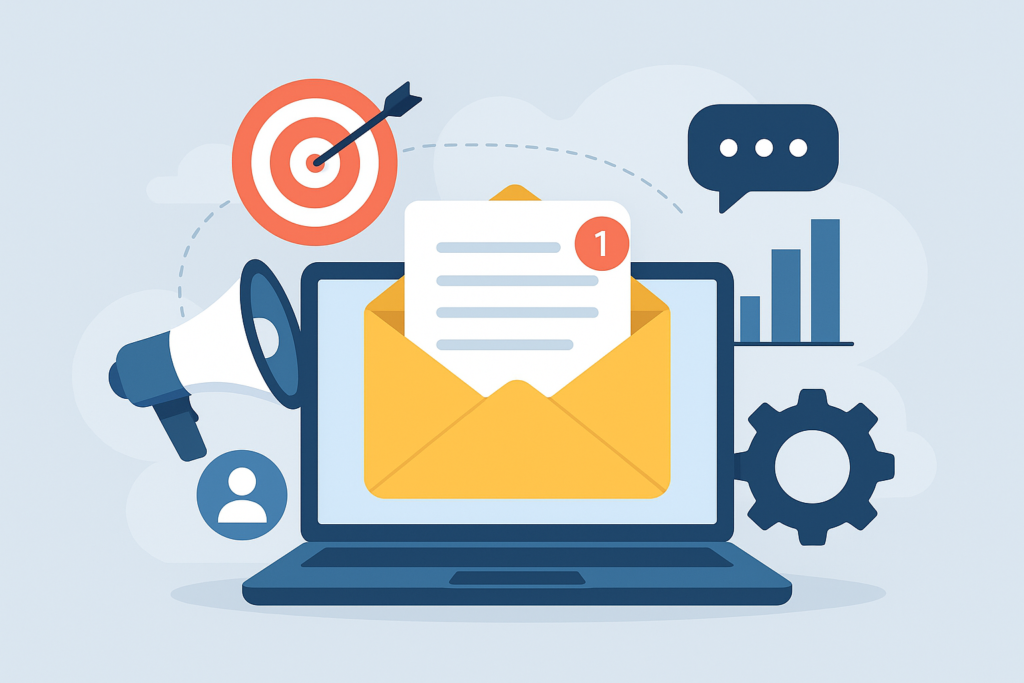
A high-converting email marketing system doesn’t start with tools or automation—it starts with a strategy. Without a strategic foundation, even the most advanced email tools won’t deliver results. This section breaks down the essential components required to build a scalable email marketing strategy that attracts, nurtures, and converts your audience.
Email marketing works best when your messages feel personal, relevant, and timely. That begins with segmentation.
Sending the same email to your entire list is one of the biggest mistakes you can make. People unsubscribe when they receive content that doesn’t match their interests, buying stage, or needs.
Segmentation lets you group subscribers by:
Here are segments that consistently deliver higher open and conversion rates:
Segmentation allows your email marketing system to behave like a smart sales machine — delivering the right message at the perfect moment.
The foundation of any successful email marketing system is a high-quality list — and that starts with effective lead magnets.
A lead magnet is a piece of valuable content offered in exchange for an email address. It moves people from being cold visitors to warm leads.
Depending on your business type, choose one or more of these:
Your lead magnet must be:
When your lead magnet solves a real problem, subscribers trust you—and trust leads to conversions.
Your emails need to do more than look good. They need to connect emotionally, provide real value, and motivate action.
Your subject line determines whether your email gets opened.
Best practices:
Examples:
Write like you are speaking to one person. Use simple language and short paragraphs.
Include:
Avoid heavy designs unless your goal is a newsletter. Simple, plain-text emails often perform better for sales and engagement.
Every email should guide the reader to do something:
Your tools determine how efficiently your email system runs.
For small businesses, startups, and e-commerce brands, look for platforms that offer:
For software companies or advanced users, API-driven email tools like Customer.io or Iterable may be ideal.
Consistency is critical.
An email calendar keeps your planning structured and ensures your audience stays engaged.
Email automation is the backbone of a high-performing, high-converting email marketing system. It allows your business to communicate with subscribers at the right moment — without manually sending every message. Whether you’re welcoming new subscribers, onboarding customers, promoting products, or re-engaging inactive buyers, automation works quietly in the background to drive consistent results.
For small businesses, startups, and e-commerce brands, automation doesn’t just save time — it builds a scalable engine for predictable revenue.
Email automation refers to sending automated emails to subscribers based on specific actions, behaviors, or time-based triggers. Instead of blasting one message to everyone, automation allows you to send relevant, personalized content at precise moments.
Automation ensures subscribers receive meaningful content that matches their intent and journey stage — increasing conversion rates dramatically.
Below are the most essential automation sequences every business (especially small business, startups, and e-commerce) should implement. Each contributes to stronger engagement and better results.
Your welcome sequence is the most opened series in your entire email marketing system. It introduces your brand, sets expectations, and nurtures new leads.
A strong welcome sequence includes:
This is where you build trust and warm up your leads.
A nurturing sequence:
Lead nurturing emails dramatically improve conversion rates, especially for high-ticket or service-based businesses like Appledew.
Over 70% of online shoppers abandon their carts.
An abandoned cart sequence helps recover lost revenue by sending reminders like:
Short, simple messages work best.
After a customer buys, they should receive:
This builds loyalty AND increases long-term customer value.
For software companies, onboarding sequences dramatically reduce churn. They help users activate and use the product effectively.
Your onboarding sequence may include:
Inactive subscribers hurt deliverability and engagement.
A re-engagement sequence includes:
Subscribers who still don’t respond should be removed from your main list to improve email campaign optimization.
Former customers who haven’t purchased in a while can be valuable if reactivated.
Win-back emails may include:
To properly implement automation, you need a platform that supports:
Choose a tool that matches your business goals, product type, and audience behavior.
Personalization is no longer optional. Today’s customers expect messaging tailored to their needs, interests, and journey stage.
Personalization increases:
AI-driven tools now allow businesses to achieve personalization even with small teams.
A digital marketing agency implements:
Result:
More booked calls without manually following up.
A DTC brand uses:
Result:
Higher AOV (average order value) + increased repeat purchases.
A software business builds:
Result:
Lower churn + higher monthly recurring revenue (MRR).
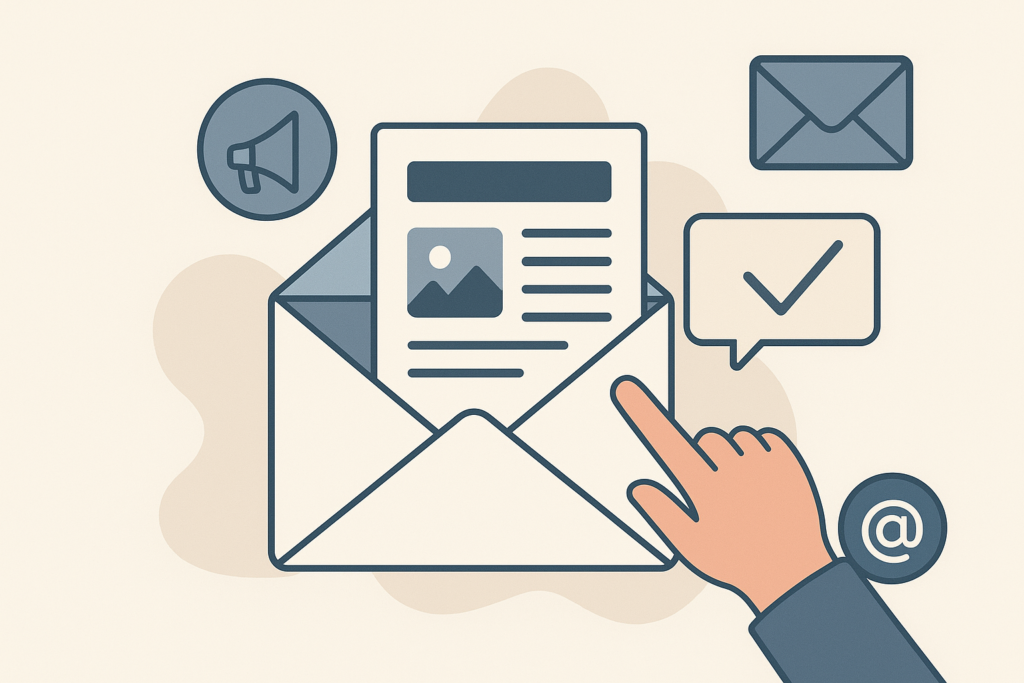
A newsletter is more than a weekly email — it’s a strategic communication channel that builds trust, educates your audience, and keeps your brand top-of-mind. For small businesses, startups, and e-commerce brands, newsletters are a powerful way to nurture long-term relationships, share valuable insights, and generate consistent engagement.
A well-crafted newsletter positions your brand as an authority and drives repeat website visits, returning customers, and stronger conversions.
A high-performing newsletter achieves three goals:
Your newsletter must offer information that subscribers actually want. This may include:
When your newsletter consistently solves problems or inspires subscribers, they stay engaged—and keep opening your emails.
Your newsletter is a direct reflection of your brand. Every issue should reinforce:
The more trust you build, the more likely subscribers are to respond to your offers.
An effective newsletter motivates subscribers to:
In short, it drives traffic and conversions without feeling like a constant sales pitch.
Your newsletter’s structure affects how easily readers consume your content. Busy professionals will not read long, cluttered emails. Simplicity and clarity always win.
This includes:
This builds brand recognition.
Summarize the main topic of the edition.
Example:
“5 Email Marketing Mistakes That Kill Conversions”
Set the tone and explain why this issue matters.
This may include:
Keep paragraphs short and scannable.
Images, icons, or illustrations improve readability, but use them sparingly. Mobile users should still enjoy a seamless experience.
Every newsletter should guide the reader toward an action:
Include:
Consistency is more important than frequency. Choose a schedule you can maintain long-term.
When you rotate content pillars, your newsletter stays fresh and engaging.
Your email newsletter is only effective if people open it and engage with it. Here are proven techniques to increase open and click-through rates (CTR):
Keep them:
Examples:
Preview text appears under the subject line in most inboxes.
Use it to reinforce the main message.
Example:
“This 10-second tweak boosted our open rates by 34%.”
Use dynamic fields like:
Example:
“John, your weekly optimization tips are here!”
Sending the same newsletter to everyone is outdated.
Segment based on:
Personalized content always outperforms generic broadcasts.
Test different sending times:
Different audiences have different checking habits.
Use analytics to determine when your subscribers are most active.
Use:
Readers should be able to scan your newsletter in 20–30 seconds.
Multiple CTAs create confusion.
Choose one main action per newsletter.
Examples:
A common question: “How often should I send newsletters?”
There’s no one-size-fits-all answer, but here are proven guidelines:
Avoid sending:
If you commit to weekly emails, stick to them.
Consistency leads to:
Think of newsletters as a scheduled touchpoint with your audience.
Once your email marketing system is running — with strategy, segmentation, newsletters, and automation in place — the next step is optimization. This phase transforms an average email program into a high-converting, revenue-generating machine.
Email campaign optimization focuses on improving performance through testing, deliverability, behavioral insights, and continuous refinement. These advanced techniques help ensure your emails reach inboxes, attract engagement, and convert subscribers into customers.
A/B testing (also known as split testing) is one of the most reliable ways to improve email performance. Instead of guessing what works, you experiment with variations to identify the highest-performing elements.
Small improvements in A/B testing can compound into major revenue increases over time.
Even the best email content is useless if it doesn’t reach the inbox. Deliverability is the hidden foundation of email marketing. Poor deliverability means:
Set up the essential protocols:
These tell email providers you are legitimate and reduce spam risk.
Remove:
Clean lists improve engagement and sender reputation.
Words like:
…can trigger filters. Use natural, professional language.
Emails like [email protected] have much higher trust than [email protected].
If engagement drops, inbox placement suffers.
Focus on:
Strong engagement = stronger deliverability.
Healthy lists convert better.
List hygiene refers to maintaining an active, responsive audience by removing or re-engaging inactive subscribers.
Poor list hygiene leads to:
Clean lists → better performance → more conversions.
Behavioral targeting is one of the most powerful components of advanced email marketing. Instead of guessing what subscribers want, you track their actions and tailor your messaging accordingly.
It improves conversions because messages feel personal, timely, and highly relevant.
Behavior-driven email marketing consistently outperforms generic sequences.
Numbers never lie.
Data-driven optimization is essential if you want long-term email marketing success.
Data helps you create:
Email marketing is a cycle of testing → learning → improving → testing again.
Even the most experienced marketers fall into common email marketing traps that hurt conversions, engagement, and deliverability. Avoiding these mistakes is just as important as implementing the right strategies. Below are the most frequent errors businesses make — along with the solutions to fix them.
The mistake:
Treating your entire email list as one massive group, regardless of interests, behavior, and buying stage.
Why it hurts your results:
The fix:
Segment your list by behavior, interests, purchase history, and engagement level.
The more personalized the message, the higher the conversion rate.
The mistake:
Constant promotional emails with little educational or helpful content.
Why it hurts results:
Subscribers lose trust quickly when they feel “sold to” all the time.
This leads to:
The fix:
Follow the 80/20 rule:
Offer tips, guides, insights, and stories. Build trust first — sales follow naturally.
The mistake:
Designing emails that look great on desktop but break on phones.
Why it hurts results:
Over 70% of users read email on mobile.
If your email doesn’t load properly, readers delete it instantly.
The fix:
Always test your email across multiple devices before sending.
The mistake:
Assuming deliverability “just happens automatically.”
Why it hurts results:
Your emails could be landing in spam without you realizing it.
The fix:
Deliverability is the foundation of your email success.
The mistake:
Sending emails without analyzing performance.
Why it hurts results:
You don’t know what’s working — or what’s failing.
The fix:
Track key metrics:
Use these insights to improve future campaigns.
Email marketing is a continuous cycle of: test → optimize → repeat.
The mistake:
Either flooding inboxes or disappearing for weeks.
Why it hurts results:
Too many emails = fatigue and frustration
Too few emails = low recall, poor engagement
The fix:
Choose a consistent, sustainable frequency.
Best practices:
Consistency builds trust.
The mistake:
Keeping inactive subscribers forever.
Why it hurts results:
Inactive users:
The fix:
A clean list performs significantly better.
The mistake:
Emails without clear direction or too many competing CTAs.
Why it hurts results:
Readers feel unsure about the next step — so they do nothing.
The fix:
Use ONE main CTA per email.
Examples:
Clear direction = higher conversion rates.
Avoiding these mistakes will put your brand ahead of most email marketers. With a strong foundation and optimized system, your emails become more effective, trustworthy, and profitable.
Background:
A local coffee shop wanted to increase repeat visits and promote its seasonal drinks. They had an email list of 1,500 subscribers but low engagement rates.
Strategy Implemented:
Results:
Key Takeaways:
Background:
An e-commerce clothing brand wanted to reduce cart abandonment and increase overall sales during seasonal promotions. Their email campaigns had inconsistent results.
Strategy Implemented:
Results:
Key Takeaways:
1. What is email marketing, and why is it important?
Email marketing is the practice of sending targeted messages to a group of subscribers via email. It is crucial because it helps businesses nurture leads, boost sales, and maintain direct communication with customers, providing one of the highest ROI channels in digital marketing.
2. How often should I send marketing emails?
The ideal frequency depends on your audience. Generally, 1–4 emails per month are effective. Too few can reduce engagement, while too many may lead to unsubscribes. Monitoring open and click-through rates helps determine the optimal schedule.
3. What makes an email campaign successful?
Successful campaigns combine a compelling subject line, personalized content, clear call-to-action (CTA), and visually appealing design. Segmenting your audience and testing different approaches also boosts effectiveness.
4. How can I avoid my emails being marked as spam?
To prevent spam issues, always get explicit consent, use a verified sender address, include an unsubscribe link, and avoid spammy words. Maintaining a clean email list also improves deliverability.
5. What is email automation, and how does it help?
Email automation allows you to send pre-scheduled or trigger-based emails, such as welcome series, abandoned cart reminders, and birthday offers. It saves time, ensures timely communication, and increases conversions.
6. How do I measure the success of my email campaigns?
Key metrics include open rate, click-through rate, conversion rate, bounce rate, and unsubscribe rate. Tracking these metrics helps refine strategies and improve ROI over time.
7. Should I use newsletters, promotions, or both?
Both have value. Newsletters educate and nurture relationships, while promotional emails drive sales. A balanced mix ensures engagement while maintaining trust with your audience.
Email marketing remains one of the most powerful tools for businesses of all sizes. By crafting personalized campaigns, leveraging automation, and analyzing performance metrics, you can nurture leads, boost conversions, and build lasting customer relationships. Avoid common pitfalls, test your strategies, and continuously optimize for better results.
Call to Action:
Start building your high-converting email marketing system today with Appledew! Sign up for our services or contact our team to create campaigns that engage, convert, and grow your business.