
Your website is often the first interaction customers have with your brand—and in today’s digital world, first impressions happen in less than 3 seconds. Whether you’re a small business, e-commerce store, startup, enterprise, or agency, a modern, fast, and well-designed website is no longer a luxury. It is the foundation of your brand identity, marketing engine, and growth strategy.
As competition increases globally, businesses that invest in professional website design and development gain measurable advantages: higher conversions, better SEO performance, stronger brand credibility, and improved customer trust. Yet most businesses still struggle with unclear design strategy, outdated layouts, slow loading speed, and websites that fail to convert.
This comprehensive 4,000-word guide—crafted for businesses at the decision-making stage—dives deep into everything you need to know about building a high-performing website in 2025: design principles, development processes, UX/UI practices, optimization techniques, and best-in-class industry standards.
Backed by Appledew expertise as a digital marketing agency, software company, creative agency, and IT services provider, we combine technical knowledge with marketing-focused development. With affordable pricing, fast delivery, custom UI/UX, full-stack development, SEO-optimized structures, global experience, and long-term maintenance, Appledew brings world-class web solutions to businesses of all sizes.
By the end of this guide, you’ll know exactly how to plan, design, develop, and launch a website that looks stunning, loads fast, ranks high, and converts visitors into customers.
Website design and development are two interconnected disciplines that build the visual structure, functionality, and performance of a website.
Design is what users see and interact with.
Development is how everything works behind the scenes.
Together, they create a complete, functional digital experience.
Modern customers expect far more from a website than just basic information. Their expectations have evolved with faster technology, smarter devices, and seamless digital experiences. Today’s visitors want speed, mobile responsiveness, intuitive navigation, and a visually appealing layout that feels professional and trustworthy. They expect personalized content, quick loading times, secure browsing, and a friction-free path to purchase or inquiry. If a website fails to meet these standards, users leave instantly and turn to competitors who offer a better experience. A high-quality website is no longer optional—it’s essential for meeting rising customer demands and building lasting trust.
Users expect:
A website plays a major role in shaping how customers perceive your brand. When visitors land on a clean, modern, and professionally designed website, they instantly feel more confident about the business behind it. A well-structured layout, consistent branding, clear messaging, and secure browsing signals all help build credibility. On the other hand, outdated design, broken links, slow loading pages, or confusing navigation can quickly damage trust and make users question your reliability. Since your website is often the first point of contact, it directly influences whether customers choose to engage, purchase, or move on to a competitor.
A poorly designed website creates doubts.
A well-designed website builds credibility instantly.
Search engines prioritize websites that deliver strong technical performance, making it a critical factor in achieving high SEO rankings. Google evaluates elements like page speed, mobile responsiveness, site structure, and overall user experience when determining where a website should appear in search results. If your website loads slowly, has poor mobile optimization, or contains technical errors, it becomes harder for search engines to crawl and index your pages effectively. This leads to lower visibility and fewer organic visitors. A high-quality website, built with clean code and optimized performance, supports stronger SEO results and helps your business stand out in competitive markets.
Google ranks websites based on:
A high-quality website plays a crucial role in turning visitors into leads, customers, or clients. With clear messaging, persuasive design, and intuitive navigation, a well-built website guides users toward taking the actions that matter—whether it’s making a purchase, filling out a form, or requesting a service. Fast loading pages, strong visuals, and trust-building elements like testimonials and secure checkout improve user confidence and reduce drop-offs. When your website is optimized for usability and conversions, every interaction becomes smoother and more impactful. Ultimately, a professional, strategically designed website directly boosts conversions and helps your business achieve measurable growth.
A professional design increases:
Your website acts as a digital office that never closes, providing information, services, and support to visitors around the clock. Unlike a physical location with limited hours, a well-designed website is always available to answer questions, showcase products, and capture leads. It allows customers to engage with your brand at any time, from anywhere, creating convenience and enhancing the overall experience. By offering accessible content, clear navigation, and responsive design, your website ensures that potential clients can explore your offerings and make decisions even outside business hours. A high-quality website maximizes opportunities and extends your business presence online continuously.
A clean and modern layout is essential for creating a website that is both visually appealing and easy to navigate. Minimal clutter, clear typography, and well-organized sections help visitors focus on important content and calls-to-action. Modern design elements, such as intuitive menus, whitespace, and consistent color schemes, improve readability and enhance user experience. A polished layout reflects professionalism and builds trust, encouraging users to stay longer and engage more. By combining aesthetics with functionality, a clean and modern design ensures that visitors can find information quickly, enjoy a seamless browsing experience, and feel confident interacting with your brand.
Visual hierarchy is the strategic arrangement of design elements to guide visitors’ attention and prioritize information on a website. By varying size, color, contrast, and placement, designers can highlight the most important content, such as headlines, calls-to-action, and key messages. Proper visual hierarchy improves readability, reduces confusion, and ensures that users can navigate the site effortlessly. It helps visitors understand the flow of information, making it easier to engage with content and take desired actions. A strong visual hierarchy enhances user experience, strengthens brand messaging, and ultimately contributes to higher conversions and a more effective website design.
Important elements must stand out:
Branding consistency ensures that your website reflects a cohesive and recognizable identity across all pages and elements. This includes consistent use of logos, colors, fonts, imagery, and tone of voice. Maintaining uniform branding strengthens credibility, builds trust with visitors, and reinforces your company’s values and personality. When users encounter a consistent brand experience, they are more likely to remember your business and feel confident engaging with it. Inconsistent design or messaging can create confusion and reduce professionalism. A website with strong branding consistency not only looks polished but also enhances recognition, loyalty, and the overall effectiveness of your online presence.
User interface (UI) clarity is crucial for providing visitors with a seamless and intuitive browsing experience. A clear UI ensures that buttons, menus, forms, and interactive elements are easy to find, understand, and use. When users can navigate a website effortlessly, they are more likely to engage with content, complete desired actions, and return in the future. Cluttered or confusing interfaces lead to frustration, high bounce rates, and lost opportunities. By prioritizing simplicity, consistency, and logical layout in UI design, a website becomes more user-friendly, enhances overall satisfaction, and effectively supports business goals and conversions.
Easy navigation is a fundamental element of effective website design, allowing visitors to find information quickly and effortlessly. Clear menus, logical page structures, and intuitive links help users move through the site without confusion or frustration. When navigation is simple, visitors can access products, services, or content efficiently, which increases engagement and encourages them to stay longer. Poor navigation leads to higher bounce rates and lost opportunities. By implementing well-organized menus, search functionality, and consistent navigation patterns, a website becomes more user-friendly, enhances the overall experience, and supports business goals such as lead generation, conversions, and customer satisfaction.
Menus should be:
Engaging visuals are a vital component of effective website design, capturing visitors’ attention and conveying messages quickly. High-quality images, graphics, icons, and videos make content more appealing and memorable, enhancing user experience. Visuals can guide focus, support storytelling, and highlight key information or calls-to-action, making it easier for users to understand your offerings. When carefully chosen and aligned with your brand identity, visuals create a professional and trustworthy impression. Poor or irrelevant visuals, however, can distract or confuse visitors. By integrating engaging visuals thoughtfully, websites become more interactive, visually appealing, and effective at retaining users and driving conversions.
Appledew follows a proven, structured process:
The discovery and strategy phase is the first crucial step in Website Design and Development, laying the groundwork for a successful project. During this stage, the team analyzes the client’s business objectives, target audience, brand identity, and competitors. Through research, brainstorming, and requirement gathering, they define key features, design preferences, and content needs. A clear strategy outlines timelines, technical approaches, and project scope, ensuring alignment among all stakeholders. By focusing on discovery and planning, Website Design and Development becomes more efficient, resulting in a website that not only looks great but also meets user needs and drives business goals.
Wireframing is a critical step in Website Design and Development that focuses on creating a visual blueprint of the website’s structure and layout. It outlines the placement of key elements such as navigation, content sections, buttons, and calls-to-action, without final design details. Wireframes help designers, developers, and clients visualize the user journey, identify potential issues, and ensure a logical flow before moving to full design. By establishing a clear framework early in the project, wireframing streamlines the development process, reduces revisions, and ensures that the final website is intuitive, functional, and aligned with business goals and user expectations.
UI/UX design is a vital phase in Website Design and Development, focusing on creating an intuitive, visually appealing, and user-friendly experience. UX design ensures that the website’s structure, navigation, and functionality meet user needs, while UI design adds aesthetics through layouts, colors, typography, and interactive elements. This stage balances usability and visual appeal to engage visitors, reduce bounce rates, and guide them toward desired actions. By prioritizing seamless interactions and consistent branding, UI/UX design enhances user satisfaction and trust. Effective UI/UX design in Website Design and Development ultimately drives higher engagement, conversions, and long-term business success.
The development phase is a core stage in Website Design and Development, where design concepts and wireframes are transformed into a fully functional website. Front-end development ensures that the site’s interface is interactive, responsive, and visually aligned with the design, while back-end development manages databases, server logic, and overall functionality. Developers integrate features, optimize performance, and implement security measures to deliver a seamless user experience. This stage requires close collaboration between designers and developers to ensure the website operates flawlessly across devices and browsers. Effective development in Website Design and Development ensures a reliable, scalable, and high-performing website that meets both user and business needs.
Testing is a critical phase in Website Design and Development, ensuring that the website functions flawlessly before it goes live. During this stage, developers check for bugs, broken links, browser compatibility, page speed, responsiveness, and overall usability. Quality assurance processes verify that forms, interactive elements, and integrations work as intended. User testing helps identify potential issues from a visitor’s perspective, ensuring a smooth experience. By rigorously testing the website, teams can fix problems early, optimize performance, and enhance security. Effective testing in Website Design and Development guarantees a reliable, user-friendly, and high-performing website that meets business objectives and user expectations.
The launch phase is the exciting culmination of Website Design and Development, where the fully developed website goes live for users to access. Before launch, final checks are performed to ensure functionality, performance, responsiveness, and security are flawless. Content is reviewed, SEO settings are optimized, and analytics tools are implemented to track user behavior. Launching a website involves coordinating hosting, domain setup, and server configurations to ensure smooth accessibility. A successful launch marks the transition from development to real-world user engagement, allowing businesses to showcase their brand, attract visitors, and achieve goals established during the Website Design and Development process.
Maintenance is an ongoing and essential phase of Website Design and Development, ensuring that the website remains secure, functional, and up-to-date over time. Regular updates to software, plugins, and content help prevent security vulnerabilities and keep the site running smoothly. Performance monitoring, backups, and troubleshooting are critical to addressing technical issues quickly. Maintenance also includes optimizing user experience, improving page speed, and adapting to changing business needs or industry trends. By investing in consistent maintenance, businesses can protect their online presence, retain visitor trust, and ensure that the website continues to deliver value long after the initial Website Design and Development process is complete.
Appledew provides ongoing support, updates, and performance monitoring.
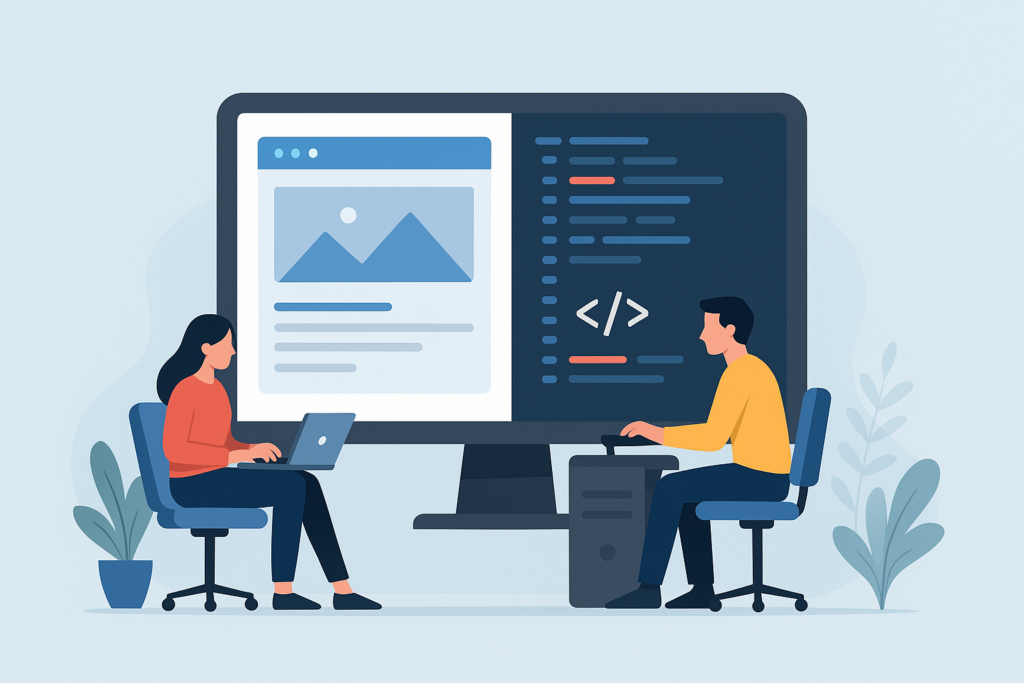
Front-end, or client-side, development focuses on everything users see and interact with on a website or application. It involves designing and coding elements like layouts, buttons, menus, forms, and graphics using technologies such as HTML, CSS, and JavaScript. Front-end developers ensure that the interface is visually appealing, responsive, and user-friendly across devices and browsers. They work to create smooth interactions, fast-loading pages, and intuitive navigation, directly shaping the user experience. By translating design concepts into functional, interactive web pages, front-end development plays a critical role in engaging users and making websites both attractive and easy to use.
Handles visuals and interactions:
Back-end, or server-side, development manages the behind-the-scenes functionality of a website or application. It involves working with databases, servers, and applications to ensure that data is stored, retrieved, and processed efficiently. Back-end developers use programming languages like Python, Java, PHP, or Node.js to handle user authentication, server logic, APIs, and data management. While users don’t see this part of the system, it is essential for the smooth operation of front-end features, security, and performance. Strong back-end development ensures reliability, scalability, and fast response times, enabling websites and apps to function seamlessly and support dynamic, data-driven user experiences.
Handles data and functionality:
Full-stack development combines both front-end (client-side) and back-end (server-side) skills, enabling developers to build complete, functional web applications. Full-stack developers handle everything from designing user interfaces and ensuring responsive layouts to managing server logic, databases, and APIs. This versatility allows them to create seamless interactions between what users see and how data is processed behind the scenes. Full-stack development streamlines communication between front-end and back-end systems, reduces project complexity, and accelerates development cycles. By understanding the full spectrum of web technologies, full-stack developers can deliver efficient, cohesive, and scalable solutions that enhance user experience and support business goals effectively.
Appledew combines both for faster delivery and cost-efficiency.
Simplicity is a core principle of UX/UI design that directly impacts user engagement and conversions. A simple design removes unnecessary clutter, focuses on essential elements, and ensures that users can navigate the website effortlessly. Clear layouts, concise content, and intuitive interfaces reduce cognitive load and prevent confusion, making it easier for visitors to take desired actions. By prioritizing simplicity, designers can highlight calls-to-action, key features, and important messages without distractions. A clean, straightforward design not only improves usability but also enhances credibility and trust, ultimately driving higher conversions and creating a seamless, satisfying experience for users.
Predictable user flow is essential for guiding visitors smoothly through a website toward desired actions, such as purchases, sign-ups, or inquiries. By anticipating user behavior and designing logical, consistent pathways, a website can minimize confusion and reduce drop-offs. Clear navigation, sequential steps, and well-placed calls-to-action create a sense of familiarity and make interactions intuitive. When users know what to expect at each stage, they feel more confident and engaged, which increases the likelihood of conversion. A predictable user flow enhances usability, strengthens trust, and ensures that every page and interaction contributes effectively to achieving business goals.
CTA-focused design emphasizes strategically placing clear and compelling calls-to-action throughout a website to guide users toward desired actions. By highlighting buttons, links, and prompts with contrasting colors, concise text, and prominent placement, designers make it easy for visitors to know what steps to take next. A well-designed CTA reduces friction, draws attention, and encourages immediate engagement, whether it’s making a purchase, signing up for a newsletter, or requesting more information. When integrated thoughtfully into the overall layout, CTA-focused design enhances user experience, drives higher conversions, and ensures that every interaction contributes effectively to achieving business objectives.
Buttons should be:
Accessibility in UX/UI design ensures that websites are usable by all visitors, including those with disabilities or impairments. This involves incorporating features like screen reader compatibility, keyboard navigation, alt text for images, and sufficient color contrast. An accessible design makes it easier for users to navigate, understand content, and interact with key elements, regardless of their abilities. Prioritizing accessibility not only broadens your audience but also demonstrates inclusivity and professionalism, building trust and credibility. By creating a website that is barrier-free and user-friendly for everyone, businesses can enhance engagement, improve user satisfaction, and boost conversion rates effectively.
Include:
Emotion-driven visuals use images, colors, and graphics to evoke feelings that connect users to your brand and encourage action. By appealing to emotions such as trust, excitement, or curiosity, these visuals make experiences more memorable and persuasive. Thoughtfully chosen imagery can guide attention, reinforce messaging, and highlight calls-to-action, creating a stronger bond between visitors and your content. When users feel emotionally engaged, they are more likely to stay longer, interact with key elements, and convert. Integrating emotion-driven visuals into UX/UI design enhances overall engagement, strengthens brand perception, and drives higher conversion rates by making interactions more compelling and human-centered.
Your modern website may need:
Appledew builds all of these using scalable technologies.
Over 65% of global traffic comes from mobile devices.
Mobile design must include:
Appledew builds SEO-optimized websites using:
Speed directly affects search rankings.
For online stores, design must focus on:
Appledew specializes in Shopify, WooCommerce, and custom-built e-commerce platforms.
Avoiding these mistakes increases conversions significantly.
Situation: Slow website and low sales
Approach: Appledew rebuilt UX/UI, improved speed, optimized product pages
Results: 40% conversion increase in 60 days
Situation: Needed a professional website for investors
Approach: Appledew created custom UI, smooth navigation, modern branding
Results: Secured partnerships within weeks
Design covers visuals; development covers coding and functionality.
2–8 weeks depending on size.
Depends on goals. Appledew helps you choose the right one.
Yes—security, updates, backups, speed optimization.
Pricing varies—Appledew offers affordable global packages.
A professional website is the backbone of any modern business. It represents your brand, drives conversions, builds trust, and supports long-term growth. Whether you’re a startup launching your first digital presence, a small business expanding globally, or an enterprise upgrading your digital infrastructure—the right website design and development strategy can transform your results.
With Appledew expertise in design, development, UX/UI, SEO, e-commerce, full-stack engineering, and maintenance—we help businesses build high-performing websites that deliver real impact.