
Digital Marketing has become the backbone of modern business growth. Whether you’re a global enterprise, a fast-scaling startup, or an ambitious eCommerce brand, your customers live, shop, research, and make decisions online. The question isn’t whether you need Digital Marketing—it’s how intelligently and strategically you use it.
Every digital interaction influences your brand: a search query, a social media post, a retargeting ad, a product video, a chatbot reply, or even a negative review. Businesses that master Digital Marketing are the ones that attract targeted customers, outsmart competitors, and convert traffic into predictable revenue.
However, the Digital Marketing landscape has become more advanced than ever—AI-driven personalization, data analytics, performance-focused campaigns, omnichannel buyers, new privacy laws, and rising acquisition costs mean businesses need expert-level strategy, not guesswork.
That’s where Appledew, a professional Digital Marketing agency, helps brands gain clarity and structure. With experience scaling global businesses, startups, and eCommerce brands across regions, Appledew provides a framework that transforms random marketing activity into systematic and scalable growth.
In this guide, you’ll learn the complete Digital Marketing ecosystem, how to build a powerful strategy, advanced optimization tactics, and what businesses must do in 2025 and beyond to dominate online.
Let’s begin.
Digital marketing is the practice of promoting products, services, or brands using online channels and technologies to reach and engage target audiences. It encompasses a wide range of strategies, including search engine optimization (SEO), pay-per-click advertising (PPC), social media marketing, content marketing, email marketing, and more. Digital marketing allows businesses to connect with customers in real-time, track performance through analytics, and tailor campaigns based on data insights. By leveraging digital platforms, businesses can increase brand visibility, drive website traffic, generate leads, and build lasting customer relationships in a cost-effective and measurable way.
Digital Marketing helps businesses:
Today’s customers make decisions based on digital touchpoints—reviews, search results, comparison websites, recommendation engines, and social content. Digital Marketing ensures you are present at every stage of the buyer’s journey.
Traditional marketing focuses on mass reach using channels like TV, radio, and print. Digital Marketing is data-driven, targeted, measurable, and scalable.
Key differences:
Digital Marketing is no longer optional—it is fundamental for business survival.
This section deepens the understanding of Digital Marketing’s impact on scaling and growth.
Digital Marketing enables businesses to advertise across countries with platforms like Google Ads, Meta Ads, LinkedIn, and TikTok. Unlike traditional marketing, global campaigns can be launched with small budgets and scaled based on performance.
Digital Marketing provides real-time data:
This empowers businesses to optimize campaigns with precision.
Digital Marketing services such as:
…turn random visitors into loyal customers through structured communication and optimization.
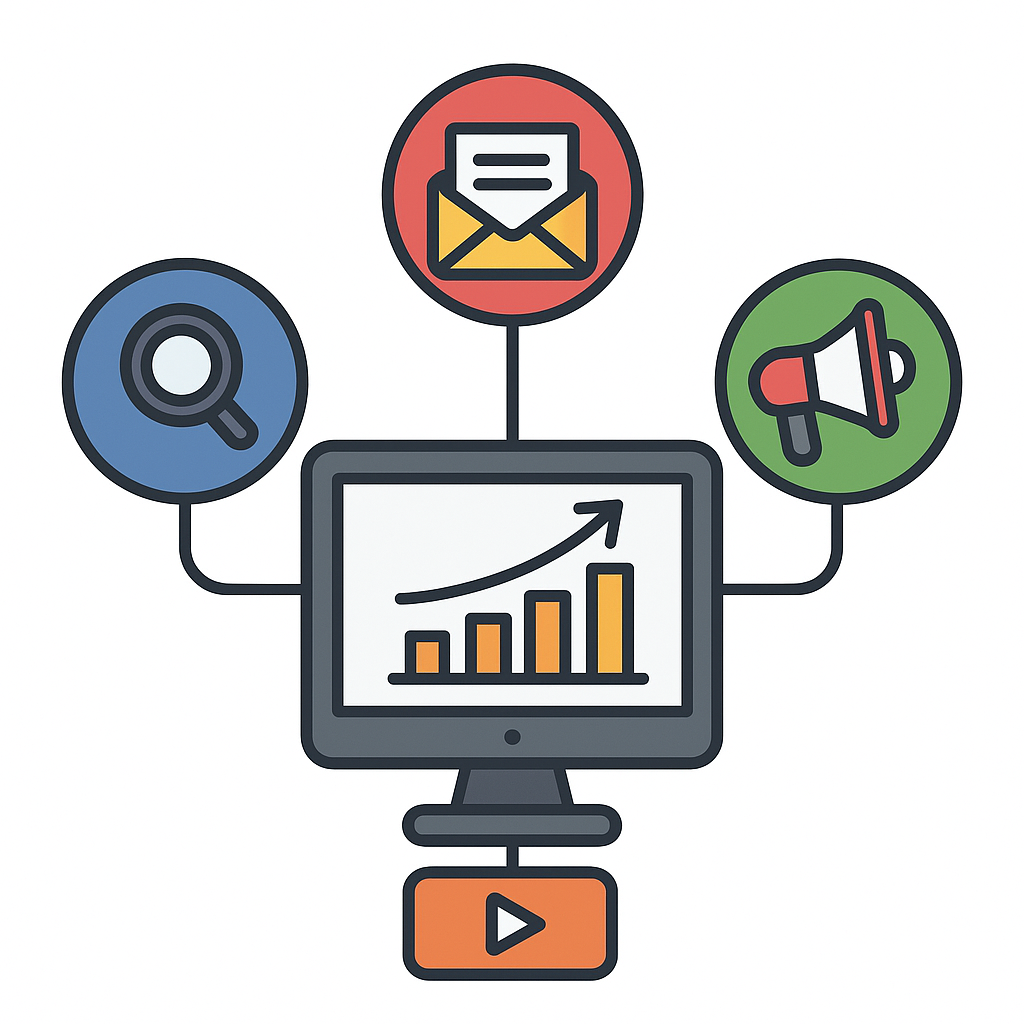
This section addresses secondary user intents by breaking down each service type offered by a Digital Marketing agency like Appledew.
Search Engine Optimization (SEO) improves a website’s visibility on search engines by optimizing content, keywords, and technical elements. It drives organic traffic, enhances user experience, and boosts rankings for relevant searches. SEO includes on-page, off-page, and technical strategies, helping businesses attract qualified leads, increase brand credibility, and achieve long-term sustainable growth online.
SEO helps your business rank higher on search engines like Google, increasing organic traffic and visibility.
Includes:
SEO is a long-term growth channel with high ROI.
Pay-Per-Click (PPC) advertising allows businesses to display ads on search engines and platforms, paying only when users click. It drives targeted traffic, boosts brand visibility, and delivers measurable results quickly. PPC campaigns can be optimized for conversions, ROI, and audience segmentation, making it an essential strategy for businesses seeking immediate exposure and efficient digital marketing performance.
PPC platforms include:
PPC drives fast results, targeted leads, and measurable performance.
Social Media Marketing leverages platforms like Facebook, Instagram, LinkedIn, and Twitter to engage audiences, build brand awareness, and drive traffic. By creating compelling content, running targeted campaigns, and analyzing engagement metrics, businesses can connect with their audience effectively. It fosters community, strengthens brand loyalty, and supports lead generation and conversion in today’s digital landscape.
Content marketing focuses on creating and sharing valuable, relevant, and consistent content to attract and retain a target audience. It includes blogs, videos, infographics, and more to educate, engage, and build trust with customers. By providing meaningful content, businesses can enhance brand authority, improve SEO, nurture leads, and drive conversions effectively across digital channels.
Creating valuable content helps:
Types include blogs, videos, podcasts, whitepapers, landing pages, and case studies.
Email and marketing automation streamline communication by delivering personalized messages to the right audience at the right time. Through automated workflows, businesses can nurture leads, engage customers, and drive conversions efficiently. This approach saves time, enhances customer experience, and ensures consistent, targeted messaging, making it a vital component for building loyalty and maximizing digital marketing effectiveness.
Conversion Rate Optimization (CRO) focuses on improving a website or landing page to turn visitors into customers. By analyzing user behavior, A/B testing, and optimizing design, content, and calls-to-action, businesses can increase engagement and maximize conversions. CRO enhances user experience, boosts ROI, and ensures marketing efforts translate into measurable results, making it a critical part of digital marketing strategy.
Here is the step-by-step framework.
Defining your target audience is the first crucial step in building an effective digital marketing strategy. It involves identifying the specific group of people most likely to engage with your brand, based on demographics, interests, behaviors, and pain points. Understanding your audience allows you to craft relevant messaging, choose the right marketing channels, and create personalized experiences. A well-defined audience ensures marketing resources are used efficiently, enhances engagement, improves conversion rates, and builds stronger, long-term customer relationships.
Identify:
Keyword and competitive research is a foundational step in crafting a successful digital marketing strategy. It involves identifying the search terms your target audience uses and analyzing competitors’ strategies to uncover opportunities and gaps. By understanding which keywords drive traffic and conversions, businesses can optimize content, improve SEO, and create targeted campaigns. Competitive insights help refine messaging, positioning, and marketing tactics, ensuring your brand stands out. This research enables data-driven decisions, maximizes visibility, and strengthens your overall digital marketing effectiveness.
Study your competitors’:
Building a digital marketing funnel involves mapping the customer journey from awareness to conversion and beyond. It defines each stage—awareness, consideration, decision, and retention—allowing businesses to deliver targeted content and campaigns that guide prospects effectively. By aligning messaging, touchpoints, and calls-to-action with each stage, brands can nurture leads, increase engagement, and boost conversions. A well-structured funnel helps identify bottlenecks, optimize marketing efforts, and ensure a seamless, personalized experience that drives long-term customer loyalty and business growth.
Stages:
Choosing the right channels is a critical step in building an effective digital marketing strategy. It involves selecting platforms and mediums—such as social media, email, search engines, paid advertising, and content marketing—that align with your target audience and business goals. The right mix ensures your message reaches the right people at the right time. By analyzing audience behavior, engagement patterns, and campaign objectives, businesses can maximize reach, improve ROI, and deliver consistent, impactful marketing experiences across multiple channels.
Depending on business type:
Measuring, analyzing, and optimizing is essential for refining and improving digital marketing strategies. By tracking key performance metrics, businesses can evaluate campaign effectiveness, understand audience behavior, and identify areas for improvement. Data-driven analysis helps uncover trends, strengths, and weaknesses, enabling informed decision-making. Continuous optimization—adjusting content, targeting, channels, and tactics—ensures campaigns achieve maximum impact. This iterative process increases ROI, enhances customer engagement, and drives sustained growth by allowing marketers to adapt strategies to evolving market conditions and audience needs.
With tools like:
AI-driven personalization transforms digital marketing by delivering highly relevant, real-time experiences tailored to each user’s behavior, interests, and intent. By analyzing large datasets—such as browsing patterns, purchase history, demographics, and engagement signals—AI predicts what customers want next and adapts content, product recommendations, and messaging automatically. This approach helps brands increase conversions, improve customer satisfaction, and reduce marketing waste by targeting users with precision. From personalized email campaigns to dynamic website content and predictive product suggestions, AI ensures that every interaction feels uniquely crafted. As a result, businesses can build stronger relationships and drive significantly higher ROI through smarter, data-driven decisions.
Omnichannel marketing focuses on creating a seamless, consistent customer experience across all digital and offline touchpoints. Whether a user interacts with your brand through social media, email, website, mobile app, or in-store, the messaging and journey remain connected and personalized. This approach ensures that customers can switch between channels without disruption, improving engagement and trust. With data integration and unified customer profiles, businesses can deliver relevant offers, track behavior across platforms, and understand the full customer journey. Omnichannel marketing ultimately increases brand loyalty, boosts conversions, and provides a cohesive experience that meets modern consumer expectations across every stage of interaction.
Customers interact across:
A unified experience increases conversions.
Predictive analytics in digital marketing leverages historical data, machine learning, and statistical models to forecast future customer behaviors, trends, and outcomes. By analyzing patterns in user interactions, purchase history, and engagement metrics, businesses can anticipate needs, identify high-value leads, and optimize campaigns for maximum impact. This data-driven approach enables marketers to make proactive decisions, personalize offers, and allocate resources efficiently. From predicting churn and customer lifetime value to optimizing ad spend and content strategies, predictive analytics provides actionable insights that reduce risk and increase ROI. It empowers brands to stay ahead of market trends and deliver targeted, timely experiences.
Automation workflows in digital marketing streamline repetitive tasks, enabling businesses to deliver timely, personalized communication at scale. By using marketing automation tools, brands can set up triggers, sequences, and actions based on customer behavior, engagement, or lifecycle stage. This includes automated email campaigns, lead nurturing sequences, social media posting, and follow-up reminders, ensuring consistent and relevant messaging without manual intervention. Automation workflows increase efficiency, reduce human error, and free up teams to focus on strategic initiatives. By delivering the right message to the right audience at the right time, businesses can enhance customer experience, improve conversion rates, and drive sustained growth in a competitive digital landscape.
Businesses run campaigns without direction.
This wastes budget and reduces efficiency.
Traffic without CRO is money lost.
Weak ads lower engagement and sales.
Situation: Low traffic and inconsistent sales.
Approach: SEO + PPC + CRO + remarketing.
Results: 230% increase in monthly revenue.
Situation: Low-quality leads from organic search.
Approach: Content strategy + LinkedIn ads.
Results: 4x improvement in leads + lower CAC.
Q1: What is Digital Marketing?
A: Digital Marketing is the strategic use of online platforms to promote brands, drive traffic, and generate measurable results.
Q2: How long does Digital Marketing take to show results?
A: SEO takes 3–6 months, PPC shows instant results, content needs 30–90 days.
Q3: Do I need a Digital Marketing agency?
A: Yes, if you want structured strategy, campaign management, and expert optimization.
Q4: What is the cost of Digital Marketing services?
A: Pricing varies by business size, industry, goals, and campaign type.
Q5: What channels should my business use?
A: Use a mix of SEO, PPC, social media, email, and CRO depending on goals.
Digital Marketing is the foundation of modern business growth. Whether you’re scaling globally, launching a startup, or growing an eCommerce brand, the right Digital Marketing strategy helps you attract targeted customers, build brand trust, and generate predictable revenue.
This guide has equipped you with advanced insights, strategic frameworks, and actionable steps to dominate online. But implementing everything consistently requires expertise, tools, optimization, and ongoing refinement.
Appledew helps businesses eliminate guesswork and adopt data-driven Digital Marketing systems that deliver real growth, not vanity metrics. If you want expert support—from strategy to execution, management, and analytics—we’re here to help.
Contact Appledew today to start your Digital Marketing journey.