
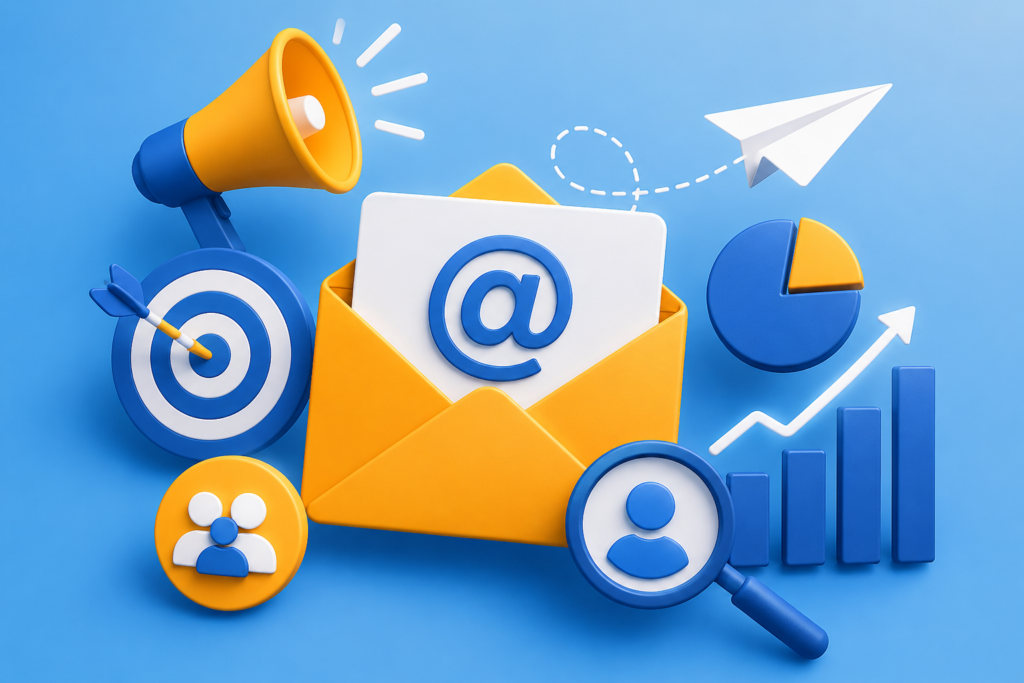
A complete guide to Email Marketing covering strategies, benefits, tools, and best practices to increase engagement, conversions, and ROI.
Email marketing continues to be one of the most reliable and high-performing digital marketing channels in today’s competitive online environment. It provides businesses with a direct communication line to their audience, allowing brands to deliver personalized messages without depending on third-party algorithms. Unlike social media platforms where visibility can fluctuate, email marketing ensures your message reaches the subscriber’s inbox consistently.
At its foundation, email marketing is the process of sending targeted messages to a group of people via email. These emails can serve multiple purposes, including promotions, updates, onboarding, and nurturing leads. The real power of email marketing lies in its ability to create meaningful connections with users through personalized and relevant content that aligns with their needs and behaviors.
Appledew leverages modern email marketing strategies to help businesses build strong customer relationships and achieve long-term growth. By combining creativity with data-driven insights, businesses can maximize engagement and drive measurable outcomes. This guide will provide you with a deep understanding of how email marketing works and how to use it effectively.
Email marketing is a digital marketing strategy that involves sending emails to prospects and customers to build relationships, promote services, and drive conversions. It works by collecting user data through signup forms, landing pages, or subscriptions, and then segmenting the audience based on behavior, demographics, or preferences.
Once an email list is created, marketers design campaigns tailored to specific goals such as increasing sales, improving engagement, or nurturing leads. Automation tools allow businesses to send emails at the right time, ensuring consistency and relevance without manual effort. This automation improves efficiency while maintaining a personalized experience for each user.
According to Google Search Central guidelines, content should be helpful, user-focused, and created with real value in mind. Email marketing aligns with this approach by delivering relevant and valuable information directly to users, enhancing their overall experience.
In today’s digital landscape, businesses must rely on channels that offer both reliability and measurable results. Email marketing stands out due to its high return on investment and ability to deliver targeted communication. It allows businesses to maintain control over their messaging without being affected by changing algorithms or platform policies.
Email marketing is also highly versatile. It can be used for promotions, customer engagement, onboarding, feedback collection, and brand awareness. This flexibility makes it suitable for businesses of all sizes, from startups to large enterprises. Additionally, performance metrics such as open rates and click-through rates allow marketers to refine their strategies continuously.
From a trust perspective, email marketing helps businesses establish credibility and authority. By consistently delivering valuable content, brands can build long-term relationships with their audience. This aligns with Google’s E-E-A-T principles, emphasizing experience, expertise, authoritativeness, and trustworthiness.
Email marketing offers several advantages that make it an essential part of any digital strategy. One of the most significant benefits is cost-effectiveness. Compared to traditional advertising methods, email campaigns require minimal investment while delivering high returns.
Another important benefit is personalization. Businesses can tailor messages based on user behavior, preferences, and purchase history. Personalized emails create a more engaging experience, increasing the likelihood of conversions and customer retention. This level of targeting is difficult to achieve with other marketing channels.
Email marketing also provides measurable results. Marketers can track performance metrics such as open rates, click-through rates, and conversions. These insights help optimize campaigns and improve future performance. By using data effectively, businesses can continuously refine their strategies for better outcomes.
There are different types of email marketing campaigns, each designed to achieve specific goals. Promotional emails are commonly used to announce offers, discounts, or new products. These emails are designed to drive immediate action and boost sales.
Transactional emails are triggered by user actions, such as order confirmations or password resets. These emails are highly relevant and often have higher open rates because they provide essential information. They play a key role in enhancing the customer experience.
Newsletter emails focus on providing valuable and informative content. They help businesses stay connected with their audience by sharing updates, insights, and educational material. Consistent newsletters build trust and keep subscribers engaged over time.
A strong email list is the foundation of successful email marketing. Instead of focusing on quantity, businesses should prioritize quality by attracting subscribers who are genuinely interested in their content or services. This ensures better engagement and higher conversion rates.
One effective way to build a quality email list is by offering lead magnets. These can include free resources such as eBooks, guides, webinars, or exclusive content. In exchange for their email address, users receive something valuable, creating a mutually beneficial relationship.
It is also important to use ethical and transparent opt-in methods. Double opt-in processes help ensure that subscribers genuinely want to receive emails, reducing the risk of spam complaints. A clean and engaged email list leads to better deliverability and long-term success.
Creating a successful email marketing strategy requires careful planning and execution. Businesses must first define their goals, such as increasing sales, improving customer retention, or boosting brand awareness. Clear objectives provide direction and help measure success effectively.
Audience segmentation is another critical component of strategy development. By dividing subscribers into smaller groups based on behavior or preferences, businesses can deliver more targeted and relevant content. This increases engagement and improves overall campaign performance.
Content planning is equally important. Emails should provide value, whether through informative content, exclusive offers, or personalized recommendations. A well-structured strategy ensures consistency and helps businesses build stronger relationships with their audience.

Choosing the right tools is essential for successful email marketing. Modern platforms offer features such as automation, segmentation, analytics, and template design. These tools simplify the process and allow businesses to manage campaigns efficiently.
Popular email marketing tools include Mailchimp, HubSpot, and ActiveCampaign. These platforms provide user-friendly interfaces and powerful features that help businesses create and optimize campaigns. Selecting the right tool depends on your business needs and budget.
Security and data privacy are also important considerations. According to Google security best practices, protecting user data is critical. Businesses must ensure that their email marketing tools comply with data protection regulations and maintain user trust.
Personalization and segmentation are at the heart of successful email marketing campaigns. Rather than sending generic emails to an entire list, businesses can divide their audience into smaller, more targeted groups based on behavior, demographics, purchase history, or engagement levels. This allows marketers to deliver highly relevant content that resonates with each subscriber.
Personalization goes beyond simply adding a recipient’s name. It includes tailoring subject lines, product recommendations, and content based on user behavior. For example, if a customer recently browsed a specific product category, sending them a follow-up email with related items can significantly increase conversion rates. This approach enhances user experience and strengthens customer relationships.
Segmentation also helps improve email performance metrics such as open rates and click-through rates. By delivering the right message to the right audience at the right time, businesses can maximize engagement and achieve better results. A well-executed personalization strategy creates a more meaningful and impactful communication experience.
Email automation is a powerful feature that allows businesses to send timely and relevant messages without manual effort. Automated workflows are triggered by specific user actions, such as signing up for a newsletter, making a purchase, or abandoning a cart. This ensures that users receive the right message at the right stage of their journey.
Drip campaigns are a form of email automation that involves sending a series of pre-written emails over a specific period. These campaigns are commonly used for onboarding new subscribers, nurturing leads, and guiding users through the sales funnel. Each email in the sequence builds upon the previous one, gradually moving the user toward a desired action.
Automation not only saves time but also improves consistency and accuracy. By leveraging automation tools, businesses can maintain continuous engagement with their audience. This leads to higher conversion rates and a more streamlined marketing process.
Design plays a crucial role in the success of email marketing campaigns. A well-designed email captures attention, communicates the message clearly, and encourages users to take action. Elements such as layout, color scheme, typography, and images must be carefully selected to create a visually appealing experience.
Responsive design is essential in today’s mobile-driven world. Emails must be optimized for different devices, ensuring they look and function well on smartphones, tablets, and desktops. A seamless user experience across devices increases the likelihood of engagement and conversions.
Call-to-action (CTA) buttons are another critical component of email design. Clear, compelling CTAs guide users toward the desired action, whether it’s making a purchase, signing up for an event, or reading a blog post. Effective design combined with strong messaging results in higher-performing campaigns.
Email deliverability refers to the ability of an email to reach the recipient’s inbox rather than being marked as spam. Several factors influence deliverability, including sender reputation, email content, and subscriber engagement. Maintaining a clean email list and avoiding spammy practices are essential for improving deliverability.
Compliance with email marketing regulations is equally important. Laws such as GDPR and CAN-SPAM require businesses to obtain user consent, provide clear opt-out options, and protect user data. Following these regulations not only ensures legal compliance but also builds trust with subscribers.
Google emphasizes secure and user-friendly experiences in its guidelines Google security best practices. Businesses must prioritize data protection and transparency to maintain credibility and avoid potential penalties.
Measuring performance is essential for understanding the effectiveness of email marketing campaigns. Key metrics include open rates, click-through rates, conversion rates, and unsubscribe rates. These metrics provide valuable insights into how users interact with your emails.
Analytics tools help businesses track and analyze these metrics in real time. By identifying patterns and trends, marketers can optimize their campaigns for better results. For example, testing different subject lines or email formats can reveal what resonates most with the audience.
Continuous monitoring and optimization are crucial for long-term success. Data-driven decision-making allows businesses to refine their strategies and achieve higher engagement and conversion rates over time.
Advanced strategies take email marketing to the next level by incorporating data analytics, behavioral targeting, and AI-driven insights. Predictive analytics can help identify user preferences and anticipate future actions, allowing businesses to create more effective campaigns.
Another advanced technique is dynamic content, which changes based on the recipient’s behavior or preferences. This ensures that each user receives a unique and personalized experience. Interactive elements such as surveys and polls can also increase engagement.
Integrating email marketing with other channels, such as social media and content marketing, creates a cohesive and unified strategy. This multi-channel approach enhances brand visibility and improves overall marketing performance.
Email marketing and SEO work together to create a comprehensive digital marketing strategy. While SEO focuses on attracting traffic through search engines, email marketing helps nurture and convert that traffic into loyal customers. Combining these strategies maximizes overall effectiveness.
For example, businesses can use email campaigns to promote blog content, driving traffic back to their website. This increases engagement and supports SEO efforts by improving user behavior metrics. Internal linking and content promotion play a key role in this process.
According to Google Search Essentials, creating valuable content and improving user experience are critical for success. Email marketing complements these efforts by delivering relevant content directly to users.
Many businesses make mistakes that reduce the effectiveness of their email marketing campaigns. One common mistake is sending too many emails, which can overwhelm subscribers and lead to higher unsubscribe rates. Finding the right balance is essential for maintaining engagement.
Another mistake is neglecting personalization. Generic emails fail to capture attention and often result in low engagement. Businesses should focus on creating targeted and relevant content that resonates with their audience.
Poor email design and lack of mobile optimization can also impact performance. Emails that are difficult to read or navigate discourage users from engaging. Avoiding these common mistakes helps businesses achieve better results and maintain a positive brand image.
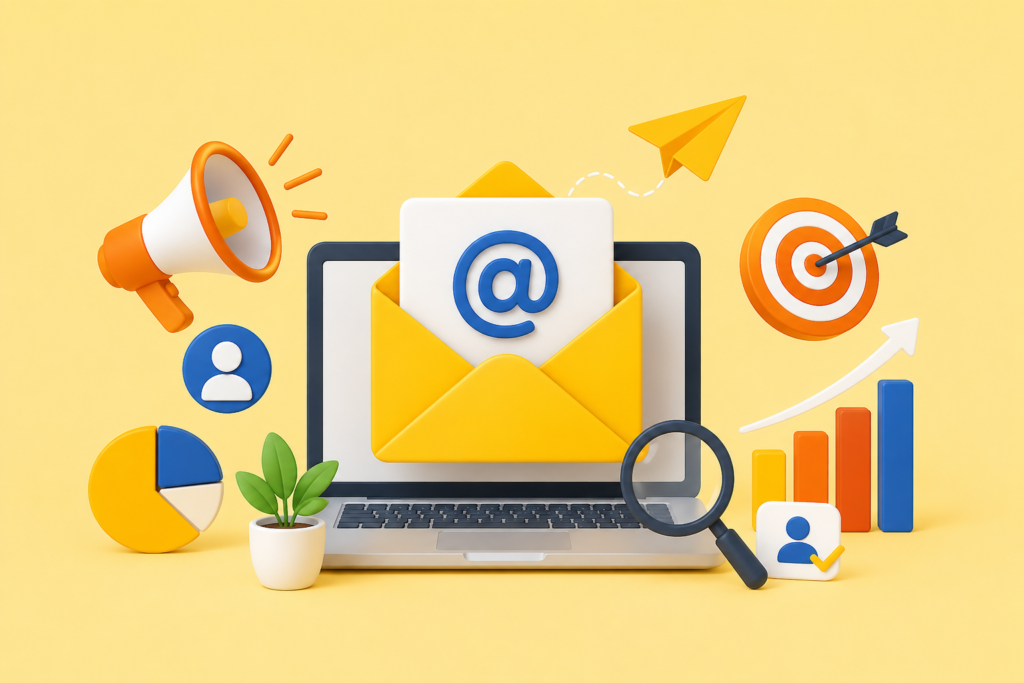
To achieve success in email marketing, businesses must follow proven best practices. First, focus on building a high-quality email list through ethical and transparent methods. This ensures better engagement and long-term growth.
Second, prioritize content quality. Emails should provide value, whether through informative content, exclusive offers, or personalized recommendations. High-quality content builds trust and encourages user interaction.
1. What is email marketing?
Email marketing is a digital strategy that involves sending targeted emails to promote products, share updates, and build relationships with customers.
2. Why is email marketing important?
It provides direct communication with customers, offers high ROI, and allows personalized messaging.
3. What tools are used in email marketing?
Popular tools include Mailchimp, HubSpot, and ActiveCampaign.
4. How can I improve email open rates?
Use compelling subject lines, personalize content, and send emails at optimal times.
5. What is email automation?
It involves sending automated emails based on user actions or predefined triggers.
6. How do I build an email list?
Use lead magnets, signup forms, and ethical opt-in methods.
7. What are common email marketing mistakes?
Sending too many emails, lack of personalization, and poor design.
8. How do I measure success?
Track metrics like open rates, click-through rates, and conversions.
Email marketing remains a powerful tool for businesses looking to connect with their audience and drive measurable results. By implementing effective strategies, leveraging advanced tools, and following best practices, businesses can achieve long-term success in their marketing efforts.
Appledew helps businesses unlock the full potential of email marketing through data-driven strategies and innovative solutions. With the right approach, email marketing can become a cornerstone of your digital marketing strategy, delivering consistent growth and engagement.
Prompt:
You are an expert consultant. Based on the blog post titled “Email Marketing”, provide a step-by-step, practical implementation guide. Include tools, best practices, common mistakes to avoid, and advanced tips. Assume the reader wants to implement everything discussed in this article effectively.
Call to Action:
Want our help implementing this? Just reach out to us via our website contact form: https://appledew.com/contact-us/