

Social Media Marketing helps businesses grow online visibility, engage audiences, and increase conversions using proven strategies, tools, and data-driven insights.
In today’s competitive digital world, Social Media Marketing has become a cornerstone of business success. Companies are no longer relying only on traditional advertising. Instead, they are using social platforms to build meaningful relationships with their audiences. This shift has created new opportunities for brands to connect, engage, and convert users into loyal customers.
Social media platforms are evolving rapidly, and they now offer powerful tools for targeting, analytics, and automation. Businesses can reach highly specific audiences based on interests, behaviors, and demographics. As a result, marketing campaigns have become more precise and cost-effective. This level of targeting allows brands to maximize their return on investment while maintaining strong engagement.
At Appledew, businesses can explore advanced digital strategies to strengthen their online presence. Social Media Marketing is not just about posting content; it is about creating value, building trust, and driving measurable results. When done correctly, it becomes a long-term growth engine for any business.
Social Media Marketing refers to the process of using social platforms to promote products, services, or brands. It involves creating and sharing content, running paid campaigns, and interacting with users. This approach helps businesses expand their reach and connect with potential customers in a more personalized way.
One of the key benefits of Social Media Marketing is its ability to deliver targeted communication. Platforms such as Facebook, Instagram, LinkedIn, and Twitter provide advanced audience segmentation. Businesses can target users based on age, location, interests, and even purchasing behavior. This ensures that marketing messages reach the right people at the right time.
Additionally, Social Media Marketing supports multiple content formats, including images, videos, live streams, and stories. This flexibility allows businesses to experiment and find what works best for their audience. By analyzing performance data, marketers can refine their strategies and improve results over time.
Social Media Marketing plays a critical role in modern business strategies. With billions of active users worldwide, social platforms provide unmatched opportunities for brand exposure. Businesses that ignore this channel risk losing visibility and falling behind competitors.
Another major advantage is cost efficiency. Compared to traditional marketing methods, Social Media Marketing offers a more affordable way to reach large audiences. Even small businesses with limited budgets can run effective campaigns and achieve strong results.
Moreover, Social Media Marketing enhances customer engagement. It allows businesses to communicate directly with their audience, respond to feedback, and build relationships. This level of interaction increases trust and loyalty, which are essential for long-term success.
Choosing the right platform is essential for successful Social Media Marketing. Each platform has unique features and serves different audiences. Understanding these differences helps businesses create more effective strategies.
Facebook is one of the most popular platforms, offering powerful advertising tools and a wide user base. It is suitable for both B2C and B2B businesses. Instagram focuses on visual content and is ideal for brands in industries like fashion, food, and lifestyle.
LinkedIn is the leading platform for professional networking and B2B marketing. It allows businesses to share industry insights and connect with decision-makers. Twitter is effective for real-time updates and customer engagement. By leveraging multiple platforms, businesses can maximize their reach and impact.
Setting clear goals is essential for achieving success in Social Media Marketing. Without defined objectives, it becomes difficult to measure performance and determine effectiveness. Goals should align with overall business objectives.
Common goals include increasing brand awareness, driving website traffic, generating leads, and boosting sales. Each goal requires different strategies and metrics. For example, awareness campaigns focus on reach, while conversion campaigns focus on clicks and sales.
It is also important to track progress regularly. By analyzing data and adjusting strategies, businesses can improve their results. Clear goals provide direction and ensure that Social Media Marketing efforts deliver meaningful outcomes.
A strong strategy is the foundation of successful Social Media Marketing. It starts with understanding your target audience. Knowing their preferences, behaviors, and challenges helps create content that resonates with them.
Content planning is another key element. A content calendar ensures consistency and helps organize campaigns. It allows businesses to plan posts around events, promotions, and trends. Consistency builds trust and keeps the audience engaged.
Additionally, a successful strategy requires continuous improvement. By analyzing performance metrics, businesses can identify what works and what does not. This data-driven approach helps refine strategies and achieve better results over time.
Content is the backbone of Social Media Marketing. High-quality content attracts attention, engages users, and drives conversions. Businesses must focus on creating content that provides value to their audience.
Visual content, such as images and videos, performs particularly well on social media. It captures attention quickly and communicates messages effectively. However, captions and written content also play an important role in delivering context.
Optimization is equally important. Using relevant keywords, hashtags, and posting at the right time can improve visibility. Consistency and creativity are key to maintaining audience interest. By testing different formats, businesses can discover what works best.
Effective targeting is essential for maximizing the impact of Social Media Marketing. Understanding your audience allows you to create personalized campaigns that resonate with users.
Segmentation divides the audience into smaller groups based on specific characteristics. This allows businesses to deliver tailored messages. For example, new customers may require educational content, while existing customers may respond better to promotions.
Advanced targeting tools enable businesses to reach users with precision. Retargeting campaigns can bring back users who have interacted with your brand before. This increases the chances of conversion and improves campaign efficiency.
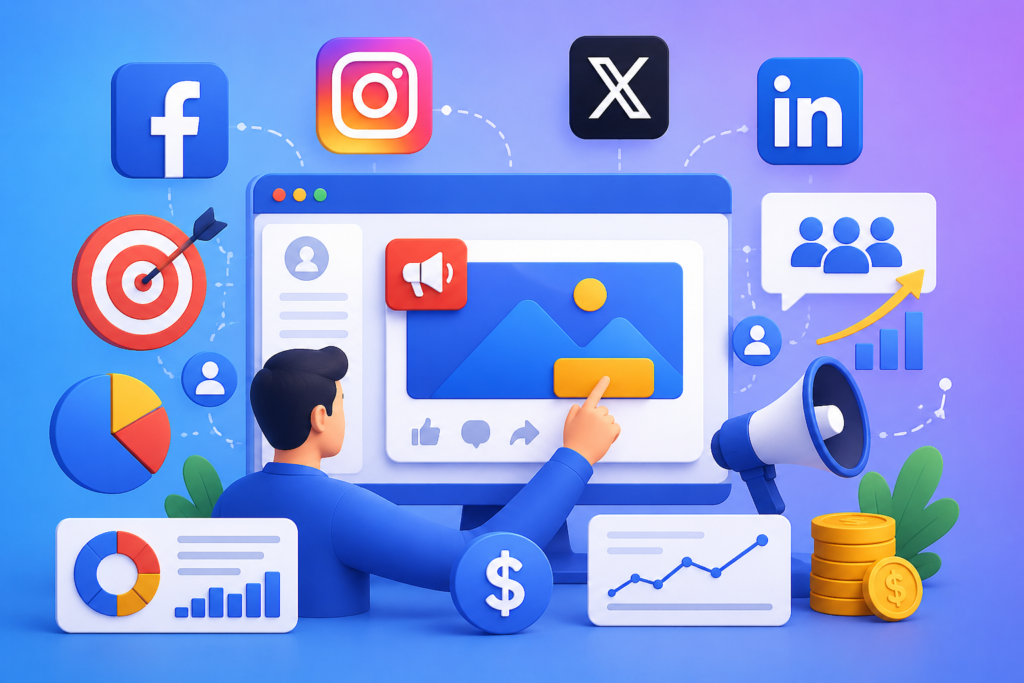
Paid advertising is a powerful component of Social Media Marketing. It allows businesses to reach a larger audience quickly and achieve specific goals. Platforms provide advanced tools for targeting and performance tracking.
One of the main advantages is scalability. Businesses can start with a small budget and increase it based on performance. This flexibility makes paid advertising accessible to companies of all sizes.
To achieve the best results, it is important to create compelling ads and optimize campaigns. Testing different formats and messages helps identify what works best. Continuous optimization ensures a higher return on investment.
Analytics play a crucial role in Social Media Marketing. They provide insights into how campaigns are performing and help businesses make informed decisions. Key metrics include engagement, reach, clicks, and conversions.
By analyzing these metrics, businesses can identify trends and improve their strategies. For example, they can determine which content performs best and focus on similar approaches.
For accurate tracking and performance measurement, refer to
Google Analytics
Google Tag Manager
Google Search Console
Using these tools ensures data-driven decision-making and continuous improvement.
SEO and Social Media Marketing work together to improve online visibility. While social signals do not directly affect rankings, they drive traffic and increase brand awareness.
Optimizing social profiles with keywords improves discoverability. Sharing valuable content can also attract backlinks, which enhance website authority. This integration strengthens overall digital marketing efforts.
For SEO best practices, refer to the Google SEO Starter Guide.
By combining SEO and Social Media Marketing, businesses can achieve better long-term results.
Social Media Marketing helps businesses establish authority and credibility. By consistently sharing valuable content, brands can position themselves as industry leaders.
Thought leadership is an important aspect. Sharing insights, trends, and expert opinions builds trust and attracts a loyal audience. This credibility leads to higher engagement and conversions.
Engaging with users and responding to their queries also strengthens relationships. Trust is a key factor in customer decision-making, and Social Media Marketing helps build it effectively.
Influencer marketing has become a powerful extension of Social Media Marketing. It allows brands to leverage the trust and credibility that influencers have already built with their audiences. Instead of promoting directly, businesses collaborate with influencers to deliver authentic messages that feel more relatable and engaging. This approach increases brand visibility and builds trust more quickly than traditional advertising.
Choosing the right influencer is critical for success. Businesses should focus on relevance, audience alignment, and engagement rates rather than just follower count. Micro-influencers, for example, often have highly engaged audiences and can deliver better results for niche markets. Authenticity plays a key role, as users can easily identify forced or overly promotional content.
Collaborations can include sponsored posts, product reviews, giveaways, and long-term partnerships. These campaigns should be aligned with brand values and messaging to maintain consistency. When executed properly, influencer marketing can significantly boost brand awareness, engagement, and conversions within a Social Media Marketing strategy.
Social Media Marketing is constantly evolving, and staying updated with trends is essential for maintaining a competitive edge. One of the most important trends is the rise of short-form video content. Platforms are prioritizing videos because they capture attention quickly and drive higher engagement rates.
Another major trend is personalization. Users expect content that is relevant to their interests and preferences. Businesses are using data and analytics to create tailored experiences that resonate with individual users. This improves engagement and increases the likelihood of conversions.
Artificial intelligence and automation are also transforming Social Media Marketing. AI-powered tools help businesses analyze data, predict trends, and optimize campaigns. Additionally, features like chatbots and automated responses improve customer experience by providing instant support and interaction.
Social Media Marketing is highly effective for generating qualified leads. By offering valuable content and incentives, businesses can attract users who are genuinely interested in their products or services. Lead magnets such as eBooks, webinars, and free trials encourage users to share their contact information.
Understanding the customer journey is essential for lead generation. Businesses must create content that addresses different stages, from awareness to decision-making. Educational content helps build trust, while targeted offers encourage conversions.
Advanced tools like retargeting ads and custom audiences enhance lead generation efforts. These strategies allow businesses to reconnect with users who have shown interest in their brand. By nurturing leads through consistent engagement, Social Media Marketing can significantly improve conversion rates.
Customer engagement is a fundamental aspect of Social Media Marketing. Engaging with your audience builds relationships and encourages loyalty. Social platforms allow businesses to interact directly with users, making communication more personal and meaningful.
Interactive content is a great way to boost engagement. Polls, quizzes, live sessions, and Q&A formats encourage users to participate and share their opinions. This not only increases engagement but also provides valuable insights into customer preferences.
Community building goes beyond engagement. Creating groups or forums allows businesses to bring their audience together. This fosters a sense of belonging and encourages users to become brand advocates. A strong community can drive organic growth and long-term success.
Automation tools play a crucial role in improving efficiency in Social Media Marketing. These tools help businesses schedule posts, manage multiple accounts, and track performance from a single platform. This saves time and ensures consistency in content delivery.
Scheduling tools allow businesses to plan their content in advance. This ensures that posts are published at optimal times, increasing visibility and engagement. Analytics features provide insights into performance, helping marketers refine their strategies.
However, automation should not replace human interaction. While tools improve efficiency, genuine engagement requires a personal touch. Balancing automation with real-time interaction ensures a more effective and authentic Social Media Marketing strategy.
E-commerce businesses benefit greatly from Social Media Marketing. Social platforms provide direct access to potential customers and offer features that simplify the buying process. Users can discover products, read reviews, and make purchases without leaving the platform.
Visual content is especially important for e-commerce. High-quality images and videos showcase products effectively and attract attention. User-generated content, such as reviews and testimonials, builds trust and influences purchasing decisions.
Retargeting campaigns are another powerful strategy. By targeting users who have previously interacted with your brand, businesses can encourage them to complete their purchases. Social Media Marketing helps e-commerce brands increase sales and build long-term customer relationships.
Many businesses fail to achieve success in Social Media Marketing due to avoidable mistakes. One of the most common errors is inconsistency. Posting irregularly reduces visibility and weakens audience engagement. Maintaining a consistent schedule is essential for building a strong presence.
Another mistake is focusing too much on selling. Constant promotional content can overwhelm users and reduce engagement. Instead, businesses should provide value through educational, entertaining, and informative content.
Ignoring analytics is also a critical issue. Without tracking performance, businesses cannot identify what works and what does not. Regular analysis and optimization are necessary for improving results and achieving long-term success.

To succeed in Social Media Marketing, businesses must follow proven best practices. First, consistency is key. Posting regularly and maintaining a cohesive brand voice helps build recognition and trust. A content calendar ensures that your strategy remains organized.
Second, focus on quality over quantity. High-quality content that provides value is more effective than frequent low-quality posts. Investing in visuals, storytelling, and creativity enhances engagement.
Third, leverage data and analytics. Monitoring performance metrics allows businesses to refine their strategies and optimize campaigns. Continuous testing and improvement ensure sustainable growth and better results.
1. What is Social Media Marketing?
It is the process of using social platforms to promote brands, engage audiences, and drive business growth.
2. Which platform is best for Social Media Marketing?
The best platform depends on your target audience and goals. Facebook, Instagram, LinkedIn, and Twitter all serve different purposes.
3. How often should I post on social media?
Consistency matters more than frequency. Posting 3 to 5 times per week is generally effective.
4. Is paid advertising necessary?
Paid advertising is not mandatory but helps scale results and reach a larger audience quickly.
5. How do I measure success?
Success is measured using metrics such as engagement, reach, conversions, and return on investment.
6. Can small businesses benefit from Social Media Marketing?
Yes, it is cost-effective and allows small businesses to compete with larger brands.
7. What type of content works best?
Visual content, videos, and interactive posts tend to perform best.
8. How long does it take to see results?
Results vary, but consistent effort usually shows improvements within a few months.
Social Media Marketing is a powerful tool for businesses looking to grow their online presence, engage with their audience, and increase conversions. It provides opportunities to connect with users in meaningful ways and build long-term relationships. By implementing the right strategies, businesses can achieve sustainable growth and success.
At Appledew, businesses can explore expert-driven strategies and solutions to maximize their Social Media Marketing efforts. With the right approach, tools, and consistency, Social Media Marketing can become a key driver of business success in the digital age.
Prompt:
You are an expert consultant. Based on the blog post titled “Social Media Marketing”, provide a step-by-step, practical implementation guide. Include tools, best practices, common mistakes to avoid, and advanced tips. Assume the reader wants to implement everything discussed in this article effectively.
Call to Action:
Want our help implementing this? Just reach out to us via our website contact form:
https://appledew.com/contact-us/