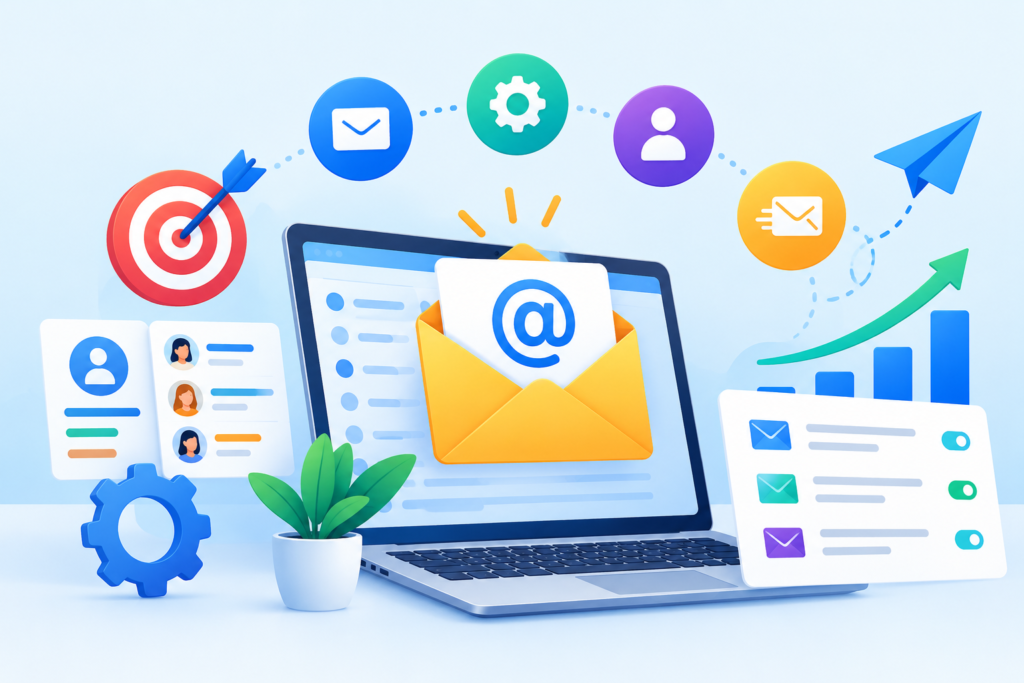
Learn how to build an effective email marketing strategy with ethical list building, segmentation, automation, personalization, deliverability, analytics, and customer retention techniques.
Email marketing is one of the most direct ways for a business to communicate with its audience. It can help attract leads, educate prospects, promote products, support customers, increase repeat purchases, and build long-term relationships. However, successful email marketing is not simply about sending more emails. It depends on sending useful information to the right people at the right time.
Modern email marketing combines strategy, content, technology, customer data, automation, analytics, and responsible communication. A strong program begins with a clear understanding of the audience. It then uses relevant content and carefully planned campaigns to guide subscribers through different stages of the customer journey.
The strongest approach is based on usefulness and trust. Google’s guidance on people-first content emphasizes creating valuable content for people rather than producing material simply to manipulate search visibility. The same principle is highly relevant to email. Subscribers are more likely to remain engaged when every message has a clear purpose and provides genuine value.
For businesses using Appledew as part of a wider digital strategy, email marketing can connect website traffic, content marketing, paid advertising, social media, lead generation, and customer retention. Email can turn an initial website visit into an ongoing relationship and provide a direct communication channel after a visitor leaves the website.
This guide explains how to create an effective email marketing program from the ground up. It covers strategy, list building, segmentation, content, subject lines, automation, personalization, deliverability, mobile design, analytics, testing, lifecycle marketing, compliance, and long-term growth.
Email marketing is the process of using email to communicate with people who have chosen to receive messages from a business or organization. These messages can include newsletters, educational resources, product announcements, promotional offers, onboarding information, event invitations, customer updates, and automated lifecycle communications.
One of the biggest advantages of email is direct communication. Businesses do not have to depend entirely on social media algorithms to reach people who have already shown interest. When someone willingly joins an email list, the business gains permission to communicate with that person according to the expectations established during signup.
Email can support almost every stage of the customer journey. During the awareness stage, educational emails can explain problems and introduce possible solutions. During consideration, businesses can send guides, comparisons, case studies, demonstrations, or answers to common questions. After conversion, onboarding emails can help customers get more value from their purchase. Later, retention campaigns can encourage repeat purchases, renewals, referrals, or continued engagement.
Email marketing is also valuable because it can be measured. Marketers can evaluate opens where appropriate, clicks, conversions, revenue, unsubscribes, engagement, and other business outcomes. These measurements help teams understand what is working and where improvement is needed.
However, effective email marketing should never be reduced to a single metric. A campaign can achieve a strong open rate but generate very few conversions. Another campaign may have fewer opens but generate significantly more revenue. The right measurement depends on the campaign objective.
The central principle is simple: email marketing should provide value before it asks for value. Helpful information, relevant recommendations, timely updates, and clear communication create stronger relationships than constant promotional messages.
A successful email marketing strategy begins with a clear business goal. Without a defined objective, email campaigns can quickly become inconsistent. One week may focus on promotions, another on company news, and another on unrelated educational content. This makes it difficult for subscribers to understand why they should remain engaged.
Start by identifying what the email program is expected to accomplish. Common objectives include generating leads, increasing sales, nurturing prospects, improving customer retention, increasing repeat purchases, promoting events, educating customers, or supporting product adoption.
Once the goal is defined, identify the audience. Different groups may need different communication. A new subscriber should not necessarily receive the same message as a long-term customer. Similarly, a person who has never purchased may need educational content while an existing customer may benefit more from product recommendations or support information.
The next step is to define the customer journey. Consider what happens after someone joins the list. What should they receive during the first week? What information would help them understand the product or service? When should they receive a promotional message? What should happen after they purchase? Planning these stages creates a more connected experience.
Campaign frequency should also be considered. There is no universal number of emails that works for every audience. The correct frequency depends on the relationship with subscribers, the type of content being provided, and what people were promised when they subscribed.
A good strategy should also include measurable goals. For example, a lead-generation campaign might focus on qualified leads and conversion rate. A retention campaign might focus on repeat purchases. A newsletter might focus on meaningful engagement and website visits.
The goal is not to send the maximum number of emails. The goal is to create a system where every major email has a clear audience, clear purpose, clear message, and clear next step.
An email list is one of the most valuable assets in an email marketing program, but list quality matters more than list size. Thousands of inactive or uninterested contacts are not necessarily more valuable than a smaller group of engaged subscribers.
Ethical list building starts with permission. People should understand what they are signing up for before providing their email address. A signup form should clearly explain the benefit of subscribing and, where appropriate, the type and frequency of communication they can expect.
Businesses can build lists through many channels. Website forms, downloadable guides, webinars, newsletters, product updates, event registrations, account creation, consultation requests, educational resources, and content upgrades can all create legitimate opportunities for subscription.
The value proposition should be clear. Instead of simply asking someone to “Subscribe,” explain what they will receive. A business could offer weekly marketing tips, monthly industry insights, product education, useful templates, or access to selected resources.
Confirmation can also improve list quality. Google’s email subscription guidelines recommend confirming an email address after signup before adding the person to a subscription mailing list. This type of confirmation can help ensure that the subscriber genuinely intended to sign up.
Businesses should avoid purchasing email lists. Purchased lists often contain people who never requested communication from the sender. This can lead to poor engagement, complaints, unsubscribes, and deliverability problems.
A strong signup process should also make expectations clear. If someone signs up for educational content but begins receiving frequent promotional messages, the mismatch can damage trust.
The best email lists grow through relevance, permission, transparency, and value. A smaller list of people who genuinely want the communication can provide stronger long-term results than a much larger list filled with unqualified contacts.
Segmentation means dividing subscribers into groups based on information or behavior that can improve communication. Rather than sending exactly the same email to everyone, marketers can create messages that are more closely connected to each subscriber’s needs.
Basic segmentation can be based on factors such as customer type, location, business size, product interest, signup source, purchase history, or stated preferences. These categories can help marketers decide which information is most useful to each group.
Behavioral segmentation is often even more powerful. A business can consider actions such as email clicks, website visits, content downloads, product views, purchases, webinar attendance, or recent engagement.
For example, imagine a business that sells several categories of software. Someone repeatedly reading articles about project management may be more interested in project management resources than content about unrelated products. Sending relevant material can make the communication more useful and reduce unnecessary messages.
Segmentation can also support different customer stages. New subscribers may need introductory education. Prospects who have interacted with multiple product pages may be ready for deeper product information. Existing customers may need onboarding or support content. Long-term customers may be suitable for loyalty campaigns.
However, segmentation should remain manageable. Creating hundreds of tiny segments can make an email program difficult to operate. A segment is useful when it changes the message, offer, timing, or customer experience in a meaningful way.
The key question should always be: Does this information allow us to communicate more helpfully?
If the answer is yes, segmentation may improve the campaign. If the information does not change anything about the communication, collecting or maintaining that data may add unnecessary complexity.
Effective segmentation makes email marketing feel less like mass broadcasting and more like relevant communication.
Strong email content starts with the subscriber’s needs. Before writing an email, determine what the reader wants to know, solve, achieve, compare, or decide.
Educational content can be particularly useful for subscribers who are still learning about a problem. A business can provide practical advice, explain industry concepts, answer common questions, share checklists, or introduce useful strategies.
Promotional content has an important place as well, but it should explain why the offer is relevant. A discount by itself may not provide enough context. Strong promotional emails connect the offer with a specific need and explain the benefits clearly.
Every email should have a primary purpose. A newsletter may contain several articles, but it should still have a clear overall theme. A promotional campaign may contain supporting information, but the main action should remain obvious.
Email copy should also be easy to read. Short paragraphs, clear wording, useful headings, and direct calls to action help subscribers understand the message quickly. Complex language can make even valuable information difficult to consume.
Trust is another important part of content quality. Claims should be accurate. Promotions should have clear terms. Product descriptions should not exaggerate benefits. If a business promises something during signup, the emails should deliver on that promise.
The tone should also remain consistent. Subscribers should recognize the sender and understand what type of experience to expect. Consistency helps create familiarity, while sudden changes in tone or content can make communication feel disconnected.
Useful email content does not always need to sell something. Sometimes the best email simply helps the reader solve a problem. That value can strengthen the relationship and make future promotional communication more welcome.
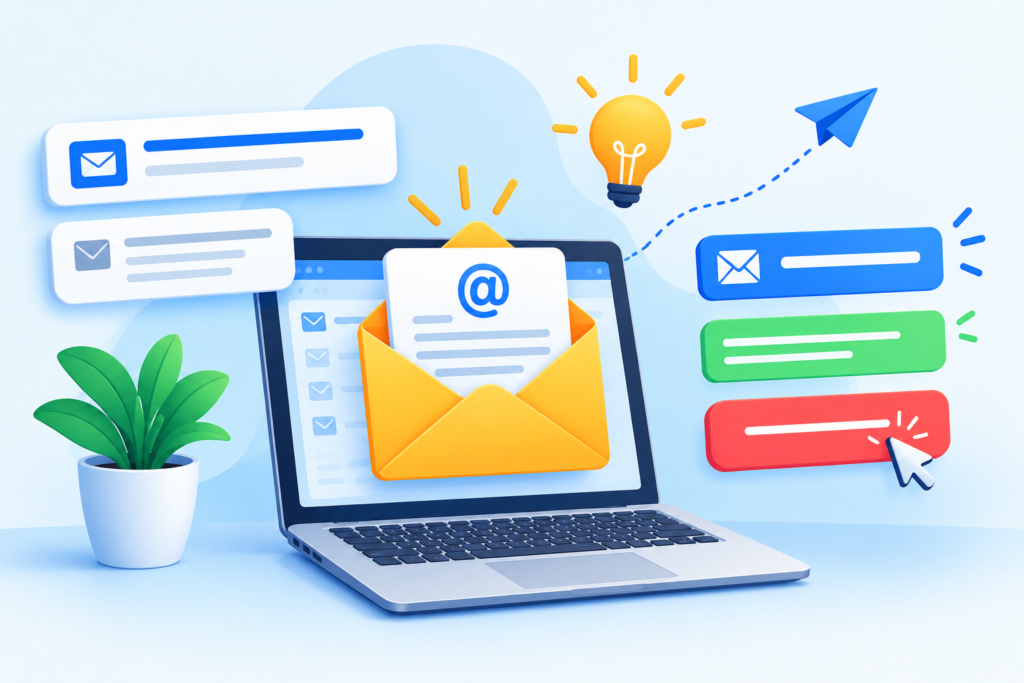
The subject line is often the first part of an email that a subscriber notices. It should give the reader a clear reason to consider opening the message without making misleading promises.
Strong subject lines are usually specific, relevant, and connected to the actual content of the email. A subject line that promises a useful guide should lead to a message that actually provides that guide.
Curiosity can be useful, but it should not replace clarity. Overly sensational subject lines may produce short-term attention while damaging trust over time.
The preheader provides another opportunity to communicate value. It can expand on the subject line by explaining what the subscriber will learn, receive, or be able to do.
Calls to action should also be specific. Generic phrases such as “Click Here” provide little context. Action-oriented wording can explain what the reader should expect next, such as “Read the Complete Guide,” “View the Product,” “Book a Consultation,” or “Download the Checklist.”
The call to action should match the customer’s stage. A new subscriber may not be ready to buy immediately. Asking them to read an educational resource may be more appropriate. A returning customer may be ready for a stronger commercial action.
Testing different subject lines, preheaders, and CTA wording can reveal what resonates with a particular audience. However, testing should be connected to a meaningful goal rather than performed simply because testing is available.
The best subject line is not necessarily the one that produces the highest number of opens. If an exaggerated subject line creates many opens but few conversions or more unsubscribes, it may be harming the overall email program.
Good email copy creates an accurate expectation and then delivers on it.
Automation allows businesses to deliver messages based on triggers, timing, customer actions, or lifecycle stages. It can reduce repetitive manual work while creating more timely communication.
A welcome series is one of the most common examples. After a person subscribes, the first message can confirm the relationship and explain what they can expect. Follow-up messages can introduce useful resources, explain important topics, or provide information about relevant products and services.
Lead-nurturing sequences can help prospects move through the consideration process. Instead of immediately asking for a purchase, the sequence can answer questions, provide educational content, demonstrate expertise, and gradually introduce an appropriate offer.
Post-purchase automation can also improve the customer experience. Customers may receive order information, onboarding instructions, educational resources, usage tips, feedback requests, and relevant recommendations.
Re-engagement campaigns are another useful application. If a subscriber has stopped interacting with messages, the business can send a carefully designed sequence that asks whether the person still wants to receive communication. This can help maintain a healthier and more engaged audience.
Automation should respond to behavior where possible. If someone completes a purchase, promotional emails for the same purchase should normally stop or change. If someone repeatedly interacts with a particular topic, future content can become more relevant to that interest.
Businesses should regularly review automated workflows. Links can break, offers can expire, products can change, and customer expectations can evolve. An automation that worked well a year ago may no longer be appropriate.
Effective automation should feel timely and useful, not mechanical. Technology should support the customer experience rather than replace thoughtful communication.
Personalization means adapting communication based on information that helps make the message more relevant. It can include a subscriber’s name, interests, customer status, purchase history, preferences, or previous interactions.
Simple personalization can improve recognition, but meaningful personalization goes deeper. For example, recommending a product related to a customer’s previous purchase can be more useful than simply adding the customer’s first name to the subject line.
Personalization should always have a purpose. Businesses should not collect large amounts of personal information simply because their technology allows it. Data should be relevant to the customer experience and handled responsibly.
Context is especially important. A person who has just purchased a product should not continue receiving emails that treat them as someone who has never considered the product. Instead, their communication should move into onboarding, education, support, or related recommendations.
Dynamic email content can also allow different subscribers to see different information within the same campaign. This can make campaigns more relevant without requiring a completely separate email for every audience group.
However, personalization should never become intrusive. If an email reveals that a business is tracking details the subscriber did not expect to be used, the experience can feel uncomfortable rather than helpful.
The most effective personalization often feels natural. The reader should receive information that makes sense based on their relationship with the business.
When personalization is built around relevance, transparency, and genuine customer value, it can improve engagement while strengthening trust.
Email deliverability is one of the most important technical areas of email marketing. A beautifully designed campaign cannot produce results if messages do not reach the intended inbox. Deliverability involves several factors, including sender reputation, authentication, recipient engagement, message quality, sending practices, and technical configuration.
Businesses that send email at scale should pay close attention to Google’s email sender guidelines. These requirements include technical measures such as SPF, DKIM, and DMARC authentication. These technologies help receiving systems verify that messages are legitimately associated with the domain sending them. Proper authentication can also reduce the risk of unauthorized senders impersonating a business.
Sender reputation is another important factor. Internet service providers and mailbox providers evaluate signals related to sending behavior. High complaint rates, poor engagement, suspicious sending patterns, and large numbers of invalid recipients can create problems. This is why list quality matters so much. A business should regularly remove or suppress addresses that repeatedly bounce or show prolonged inactivity when appropriate.
Google also provides guidance around one-click unsubscribe for qualifying bulk senders. Making it easy for recipients to stop receiving unwanted promotional messages is not only a compliance consideration; it can also improve list quality because people who no longer want communication can leave rather than marking messages as spam.
Email authentication should therefore be treated as part of the foundation of an email program rather than a technical task to complete once and forget. DNS records, domain configuration, authentication policies, and sending systems should be reviewed when platforms or domains change.
Businesses should also avoid misleading sender information, deceptive subject lines, and unclear subscription practices. Recipients should be able to recognize who sent the message and understand why they received it.
Deliverability is ultimately about trust between the sender, recipient, and receiving mail system. Strong authentication, permission-based list growth, relevant content, clear unsubscribe options, and responsible sending practices all contribute to a healthier email program.
Email design needs to work across different screen sizes, devices, browsers, and email applications. Many subscribers read messages on smartphones, so a campaign that looks good only on a desktop computer can create a poor user experience.
Responsive email design should use layouts that adapt to smaller screens. Text should remain readable without excessive zooming, buttons should be large enough to tap comfortably, and important content should not depend on tiny images or complicated layouts.
The hierarchy of the email is also important. The reader should quickly understand the headline, main message, supporting information, and primary action. Long blocks of text can be difficult to scan on mobile devices, so concise paragraphs and clear spacing are useful.
Images can support email content, but they should not carry the entire meaning of the message. Some email clients may block images, while some subscribers may use accessibility technologies. Important information should therefore remain understandable through text.
Accessibility should be considered throughout the design process. Meaningful alternative text can help describe useful images. Links should be understandable without relying only on surrounding context. Sufficient visual contrast can make text easier to read. Headings and content order should also follow a logical structure.
Buttons should clearly communicate what happens when they are selected. A button labelled “Get Started” may be appropriate when the next step is obvious, while a more specific label can be better when several actions appear in the same email.
Businesses should test emails across multiple devices and email clients before sending important campaigns. A design that appears perfect in one environment may have spacing, font, image, or alignment issues somewhere else.
The goal is not to create the most visually complex email. The goal is to create an email that is easy to understand, easy to navigate, and easy to act on.
Email marketing becomes more effective when decisions are based on evidence rather than assumptions. Analytics help marketers understand which campaigns create engagement and which activities contribute to business outcomes.
Common email metrics include delivery rate, bounce rate, click-through rate, conversion rate, unsubscribe rate, complaint rate, and revenue generated. Some platforms also report open rates, but marketers should understand that technical and privacy changes can affect how open activity is measured.
The most important metric depends on the campaign objective. If the goal is lead generation, marketers may focus on qualified leads and conversion rate. If the goal is ecommerce revenue, revenue per recipient and completed purchases may be more useful. If the goal is education, meaningful clicks and content engagement may provide better insight.
Marketers should also compare performance over time rather than judging campaigns individually. A single email can perform unusually well or poorly because of timing, audience composition, seasonality, or an external event. Looking at trends helps identify more reliable patterns.
Tracking should extend beyond the email itself when possible. A campaign may generate clicks, but the website experience after the click can determine whether those visitors convert. Landing page performance, form completion, checkout activity, and other downstream actions can therefore be important parts of email analysis.
Attribution should also be handled carefully. A customer may interact with search, social media, paid advertising, organic content, and email before converting. Email may influence the decision without being the only source responsible for the sale.
A strong reporting system should connect email activity with business outcomes. Instead of asking only, “How many people opened the email?” ask questions such as:
This approach turns email reporting from a collection of numbers into a decision-making system.
Testing is one of the most effective ways to improve an email marketing program because it replaces assumptions with evidence. Instead of deciding what subscribers will prefer, marketers can test different approaches and measure the results.
A/B testing can be used for elements such as subject lines, preheaders, calls to action, content structure, offers, images, or send timing. However, testing should be designed carefully. If too many elements are changed simultaneously, it becomes difficult to determine what caused the performance difference.
Subject-line testing is a common starting point. One version might emphasize a direct benefit, while another may focus on a specific problem. The results can help reveal which communication style better matches the audience.
Call-to-action testing can also be useful. For example, one campaign may use a direct commercial action while another uses a lower-commitment educational action. The better choice depends on the audience and customer journey.
Timing can be tested as well, but marketers should avoid assuming that there is one universally perfect day or hour for every audience. Different subscribers may have different schedules, locations, and habits.
Testing should always use a meaningful success metric. If the objective is sales, the winning version should not automatically be selected because it produced more opens. The version that creates better business results may be the more useful winner.
After testing, document the findings. A simple record of what was tested, what changed, what audience was used, and what result occurred can prevent the same experiments from being repeated unnecessarily.
Optimization is an ongoing process. Subscriber behavior changes, products change, market conditions change, and competitors change. An email strategy that performs well today should still be reviewed regularly.
The best optimization process is systematic: identify a problem, create a hypothesis, test one meaningful variable, measure the correct outcome, document the result, and apply the learning where appropriate.
Email marketing becomes especially powerful when it follows the customer’s lifecycle. Different stages require different types of communication, and a lifecycle approach allows businesses to provide information that fits the subscriber’s current relationship with the brand.
The first stage may begin with a new subscriber. Welcome emails can introduce the business, explain what the subscriber can expect, and provide immediate value. This is an important opportunity because the subscriber has recently demonstrated interest.
The next stage may involve education and consideration. Lead-nurturing emails can answer questions, explain solutions, provide resources, and address common concerns. The purpose is to help the prospect make an informed decision rather than simply repeating sales messages.
When a customer converts, the communication should change. Post-purchase emails can provide confirmation, onboarding instructions, product education, support resources, and relevant recommendations. A positive onboarding experience can reduce confusion and help customers reach value faster.
Retention campaigns can then maintain the relationship. Depending on the business, these may include helpful updates, loyalty benefits, renewal reminders, educational content, new product announcements, or personalized recommendations.
Re-engagement is another lifecycle stage. If someone stops interacting, sending endless promotional emails may not solve the problem. A re-engagement campaign can acknowledge the lack of activity and offer the subscriber a clear choice about whether they want to remain subscribed.
Lifecycle marketing can also support customer advocacy. Satisfied customers may be invited to provide reviews, share feedback, refer others, or participate in a community.
The important principle is that the customer relationship should determine the communication. A new lead, active customer, long-term customer, and inactive subscriber should not necessarily receive the same message.
Lifecycle email marketing creates a more natural communication journey. It allows businesses to provide the right type of information at different moments rather than treating the entire database as one audience.
Email marketing requires responsible handling of personal information and clear communication with subscribers. Businesses should understand the laws and regulations that apply to their audience, location, industry, and business model.
Permission is a core part of responsible email marketing. Subscribers should know what they are signing up for and should not be added to promotional lists without an appropriate legal or consent basis.
Unsubscribe functionality is also essential. People who no longer want promotional communication should have a straightforward way to stop receiving it. Google’s requirements for qualifying bulk senders include mechanisms such as one-click unsubscribe for applicable promotional messages.
Privacy should guide data collection. Businesses should avoid gathering more information than they reasonably need for the intended purpose. Information collected through signup forms, customer accounts, purchases, and behavioral tracking should be handled according to applicable privacy obligations.
Security is equally important. Email databases can contain valuable personal information, so access should be limited to authorized people and systems. Marketing platforms should use appropriate security controls, and businesses should carefully manage user permissions.
Authentication also supports security. SPF, DKIM, and DMARC can help protect domains against unauthorized use and improve the legitimacy of outgoing messages.
Businesses should also maintain clear records of their email processes. Documentation can help teams understand where subscriber data comes from, why it is collected, which campaigns use it, and how subscription preferences are handled.
Compliance should not be treated as a barrier to marketing. Responsible practices can improve trust and strengthen the quality of the audience.
Rules can differ across jurisdictions, so businesses should obtain appropriate legal advice when they need to determine their specific obligations. A strong email marketing program combines marketing effectiveness with respect for privacy, consent, security, and subscriber choice.
Scaling email marketing does not simply mean sending more emails to more people. Sustainable growth requires better systems, stronger data, clearer processes, and consistent quality.
The first step is to establish a reliable foundation. This includes a healthy permission-based database, clear segmentation, authentication, documented workflows, consistent branding, and accurate tracking.
Automation can then reduce repetitive work. Businesses can create reusable journeys for onboarding, lead nurturing, customer education, retention, and re-engagement. These workflows should be monitored rather than left completely unattended.
Content operations also become important as the program grows. A content calendar can help teams plan newsletters, educational campaigns, product announcements, seasonal promotions, and automated content. This reduces last-minute decisions and helps maintain consistency.
Technology should support the strategy rather than drive it. An advanced platform is not automatically better if the business does not have a clear use for its features. Select tools based on the needs of the organization, including automation, segmentation, analytics, integrations, personalization, and team workflow.
As the audience grows, deliverability monitoring becomes increasingly important. Businesses should watch engagement, bounces, complaints, unsubscribes, and authentication status. Problems should be investigated early rather than after inbox placement has already deteriorated.
Scaling also requires quality control. Before major campaigns are sent, teams should check links, personalization fields, offers, dates, spelling, mobile rendering, tracking, unsubscribe functionality, and audience selection.
Finally, create a regular optimization cycle. Review performance, identify opportunities, test improvements, document lessons, and update campaigns.
The best long-term email programs grow through better relevance and better customer experiences, not simply through higher sending volume.
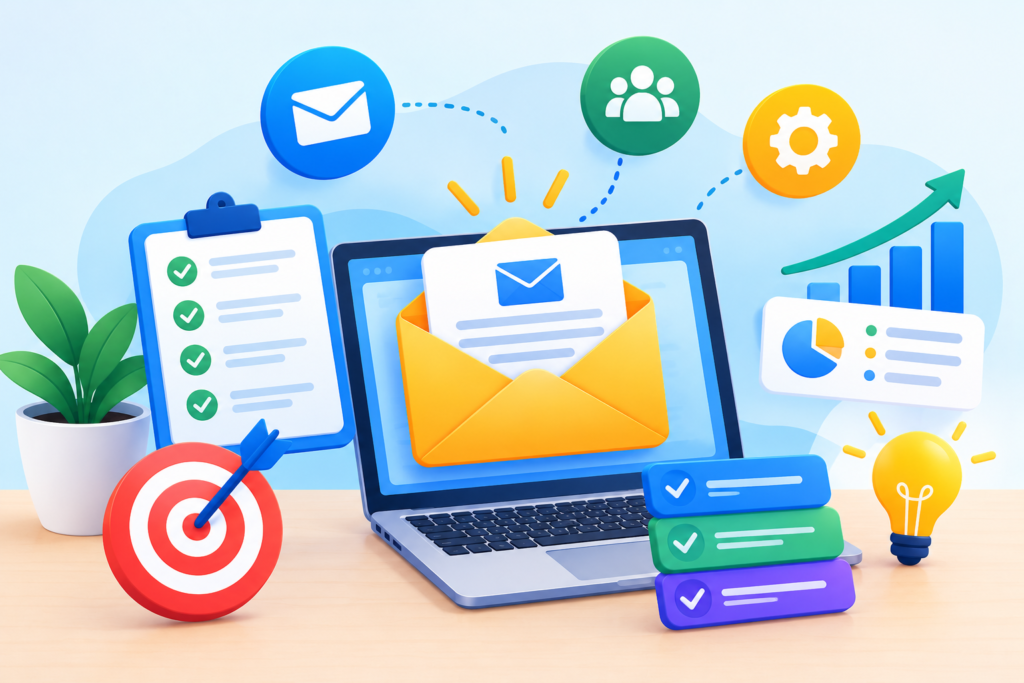
A sustainable email marketing program should follow several core principles.
1. Build permission-based lists.
Only communicate with people who have an appropriate reason or permission to receive the messages.
2. Focus on relevance.
Use segmentation and customer information to make communication more useful.
3. Provide genuine value.
Educational content, helpful recommendations, useful resources, and timely information can strengthen subscriber relationships.
4. Keep messages clear.
Every email should have a recognizable purpose and an obvious next step.
5. Use automation carefully.
Automate repetitive journeys while regularly reviewing them for accuracy and relevance.
6. Protect deliverability.
Use appropriate authentication, maintain list quality, monitor engagement, and follow applicable sender requirements.
7. Make unsubscribing easy.
Respect subscriber choices and process unsubscribe requests promptly.
8. Design for mobile users.
Make emails readable, responsive, accessible, and easy to navigate.
9. Measure business outcomes.
Look beyond surface-level metrics and connect campaigns with meaningful actions.
10. Test and learn.
Use controlled experiments to improve subject lines, content, offers, timing, and calls to action.
11. Protect subscriber data.
Collect information responsibly and apply appropriate security controls.
12. Review the entire customer journey.
Email should work together with the website, content, sales process, customer service, and other marketing channels.
One common mistake is buying email lists. Purchased databases may contain people who never requested communication and can create engagement and reputation problems.
Another mistake is sending too many promotional emails. Subscribers may become frustrated when every message asks them to purchase something. Educational and useful content can create a healthier balance.
Poor segmentation is another problem. Sending identical messages to every subscriber ignores differences in customer needs and behavior.
Some businesses also focus too heavily on open rates. Opens can provide useful directional information, but they should not be treated as the only indicator of success. Clicks, conversions, revenue, retention, and customer behavior can provide stronger business insight.
Ignoring mobile design is another serious mistake. An email that is difficult to read or interact with on a smartphone can lose valuable engagement.
Businesses can also damage trust through misleading subject lines. If the content does not match the promise made in the subject line, subscribers may stop trusting future emails.
Poorly maintained automation can create awkward customer experiences. Someone may receive an introductory offer after already becoming a customer, or receive outdated information months after a campaign was created.
Another mistake is making unsubscribe options difficult to find. Subscribers who cannot easily leave may resort to marking messages as spam instead.
Finally, some businesses never review their strategy. Email marketing requires continuous improvement because audience behavior, technology, products, and market conditions change.
Avoiding these mistakes can improve both the customer experience and the long-term performance of the email program.
Email marketing is the use of email to communicate with subscribers, customers, prospects, or other permitted recipients. It can be used for education, lead nurturing, promotions, onboarding, customer retention, product updates, and other business communication.
There is no universal frequency that works for every business. The right schedule depends on the audience, content quality, customer expectations, and signup agreement. Businesses should prioritize useful communication over sending a fixed number of emails simply to maintain volume.
Use legitimate signup opportunities such as website forms, educational resources, webinars, newsletters, events, product updates, and other valuable offers. Clearly explain what subscribers will receive and avoid purchasing email databases.
Email segmentation is the process of dividing subscribers into meaningful groups based on information such as interests, customer status, behavior, purchase history, or preferences. Segmentation allows businesses to send more relevant communication.
Email automation uses triggers, schedules, and subscriber behavior to send predefined messages automatically. Common examples include welcome sequences, lead nurturing, onboarding, abandoned-cart campaigns, post-purchase emails, and re-engagement workflows.
Deliverability can be influenced by authentication, sender reputation, list quality, engagement, bounce rates, spam complaints, sending practices, and message content. Technical configuration such as SPF, DKIM, and DMARC is also important for qualifying senders.
Generally, businesses should avoid purchased email lists. These contacts may not have requested communication, which can result in poor engagement, complaints, unsubscribes, and deliverability problems.
Start with a clear objective, relevant audience, useful content, strong calls to action, accurate segmentation, and proper tracking. Then test meaningful variables and use performance data to improve future campaigns.
Email marketing is most effective when it is treated as a long-term customer communication system rather than a simple promotional channel. Strong results come from combining useful content, ethical list growth, thoughtful segmentation, relevant personalization, automation, reliable deliverability, accurate analytics, and continuous optimization.
The most successful programs focus on the subscriber. They provide information that solves problems, answer questions at the right stage, make relevant recommendations, and respect customer preferences. Technical requirements matter, but they work best when they support a broader strategy built around trust and usefulness.
For businesses using Appledew, email can become an important part of a wider digital marketing system by connecting website visitors, leads, customers, content, and business goals. When email works together with other digital channels, it can support both immediate campaigns and long-term customer relationships.
A strong email strategy is never truly finished. Audiences change, technology evolves, customer expectations develop, and business goals shift. The best approach is therefore to build a reliable foundation, measure meaningful outcomes, learn from subscriber behavior, and continuously improve.
When email marketing is approached with relevance, permission, transparency, useful content, and measurable objectives, it becomes more than a campaign tool. It becomes a dependable channel for building relationships and sustainable business growth.
Prompt Text: You are an expert consultant. Based on the blog post titled “Email Marketing”, provide a step-by-step, practical implementation guide. Include tools, best practices, common mistakes to avoid, and advanced tips. Assume the reader wants to implement everything discussed in this article effectively.
CTA: Want our help implementing this? Just reach out to us via our website contact form.