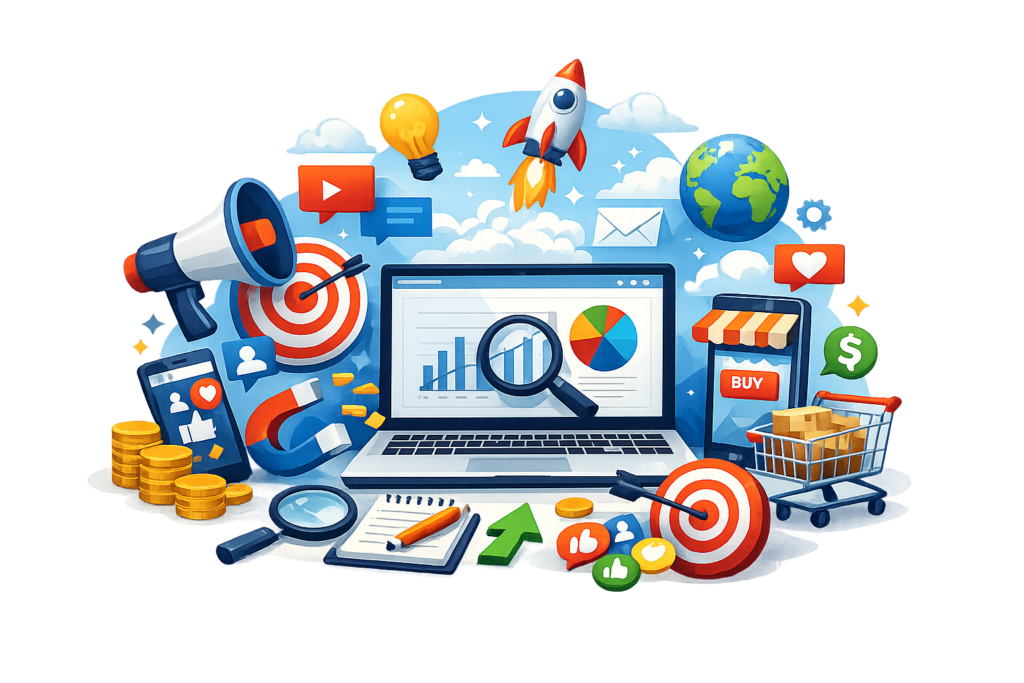
Digital Marketing is the most powerful strategy to grow your business online. Learn proven techniques, SEO strategies, PPC, social media, and conversion optimization in this complete guide.
In today’s fast-evolving digital landscape, businesses must adopt modern marketing strategies to stay competitive. Digital Marketing has become the backbone of online success, enabling brands to connect with their audience, generate leads, and increase revenue through data-driven techniques. Whether you are a startup, small business, or enterprise, understanding how digital channels work together is essential for sustainable growth.
At Appledew, we understand the importance of building a strong digital presence that not only attracts visitors but also converts them into loyal customers. Digital Marketing is not just about running ads or posting on social media—it is about creating a strategic ecosystem where every touchpoint enhances the customer experience.
This guide provides a comprehensive breakdown of Digital Marketing, covering SEO, paid advertising, content marketing, social media, analytics, and more. By the end, you will have a clear roadmap to implement strategies that deliver measurable results.
Digital Marketing refers to all marketing efforts that use the internet or electronic devices to promote products and services. It includes channels such as search engines, social media platforms, email, websites, and mobile applications. Unlike traditional marketing, digital marketing allows businesses to track performance in real time and optimize campaigns based on data.
One of the biggest advantages of digital marketing is its ability to target specific audiences. With tools like audience segmentation, businesses can reach users based on demographics, interests, behaviors, and even purchase intent. This level of precision ensures better ROI compared to traditional marketing methods.
Moreover, digital marketing is highly scalable. Whether you have a small budget or a large one, you can create campaigns that align with your goals. From organic strategies like SEO to paid campaigns like PPC, digital marketing provides flexibility and control over your marketing efforts.
In 2026, digital marketing is no longer optional—it is a necessity. Consumers spend a significant amount of time online, making it crucial for businesses to meet them where they are. From searching for products on Google to browsing social media platforms, the customer journey is increasingly digital.
Another key factor is the rise of mobile usage. With smartphones becoming the primary device for internet access, businesses must optimize their marketing strategies for mobile users. This includes responsive websites, mobile-friendly content, and fast-loading pages.
Additionally, digital marketing enables businesses to build strong customer relationships. Through personalized messaging, email campaigns, and social media interactions, brands can engage with their audience in meaningful ways. This not only increases customer loyalty but also enhances brand reputation.
Digital Marketing is made up of several key components that work together to achieve business goals. These include Search Engine Optimization (SEO), Pay-Per-Click Advertising (PPC), Content Marketing, Social Media Marketing, Email Marketing, and Analytics.
Each component plays a unique role. For example, SEO focuses on improving organic visibility, while PPC delivers immediate traffic through paid ads. Content marketing builds trust and authority, and social media helps in audience engagement and brand awareness.
When combined effectively, these components create a holistic marketing strategy. Businesses that integrate multiple channels often see better results compared to those relying on a single approach. The key is to maintain consistency and alignment across all platforms.
SEO is the process of optimizing your website to rank higher in search engine results. It involves both on-page and off-page strategies, including keyword optimization, content creation, technical SEO, and link building.
Search engines like Google prioritize websites that provide high-quality, relevant, and trustworthy content. This means your website must offer value to users while adhering to technical best practices. Factors such as page speed, mobile-friendliness, and secure connections play a crucial role in rankings.
SEO is a long-term strategy, but its benefits are significant. Unlike paid advertising, organic traffic continues to grow over time, providing a sustainable source of leads and conversions.
PPC is a digital advertising model where businesses pay a fee each time their ad is clicked. Platforms like Google Ads and social media networks offer PPC campaigns that can drive immediate traffic to your website.
One of the main advantages of PPC is its speed and precision. You can launch a campaign and start seeing results within hours. Additionally, PPC allows for detailed targeting, ensuring your ads reach the right audience.
However, successful PPC campaigns require careful planning and optimization. This includes keyword research, ad copywriting, landing page optimization, and continuous performance monitoring.
Content Marketing focuses on creating and distributing valuable content to attract and engage your target audience. This includes blog posts, videos, infographics, podcasts, and more.
High-quality content helps establish your brand as an authority in your industry. It also plays a critical role in SEO by providing relevant information that search engines can index and rank.
To succeed in content marketing, businesses must understand their audience’s needs and create content that addresses their pain points. Consistency and quality are key factors in building trust and driving conversions.
Social media platforms have become essential tools for connecting with audiences. Platforms like Facebook, Instagram, LinkedIn, and Twitter allow businesses to share content, interact with users, and build brand awareness.
Social media marketing is not just about posting content—it is about creating meaningful interactions. Engaging with your audience through comments, messages, and live sessions helps build a loyal community.
Additionally, social media platforms offer advanced advertising options, enabling businesses to reach specific audiences and achieve their marketing objectives.
Email Marketing remains one of the most effective digital marketing channels. It allows businesses to communicate directly with their audience and deliver personalized messages.
With email marketing, businesses can nurture leads, promote products, and maintain customer relationships. Automated email campaigns make it easier to send targeted messages based on user behavior.
The key to successful email marketing is providing value. This includes relevant content, attractive design, and clear calls to action.
Conversion Rate Optimization focuses on improving the percentage of visitors who take a desired action on your website. This could be making a purchase, signing up for a newsletter, or filling out a contact form.
CRO involves analyzing user behavior and making data-driven changes to improve performance. This includes optimizing landing pages, improving website design, and testing different elements.
By focusing on CRO, businesses can maximize the value of their existing traffic, leading to higher ROI and better results.
Data Analytics plays a crucial role in digital marketing. It allows businesses to track performance, understand user behavior, and make informed decisions.
Tools like Google Analytics provide insights into website traffic, user demographics, and conversion rates. This data helps businesses identify what works and what needs improvement.
By leveraging analytics, businesses can optimize their strategies and achieve better outcomes.
Mobile Marketing focuses on reaching users through mobile devices. This includes mobile-friendly websites, apps, SMS marketing, and location-based services.
With the increasing use of smartphones, mobile marketing has become a critical component of digital marketing. Businesses must ensure their content and campaigns are optimized for mobile users.
A seamless mobile experience enhances user satisfaction and increases the likelihood of conversions.
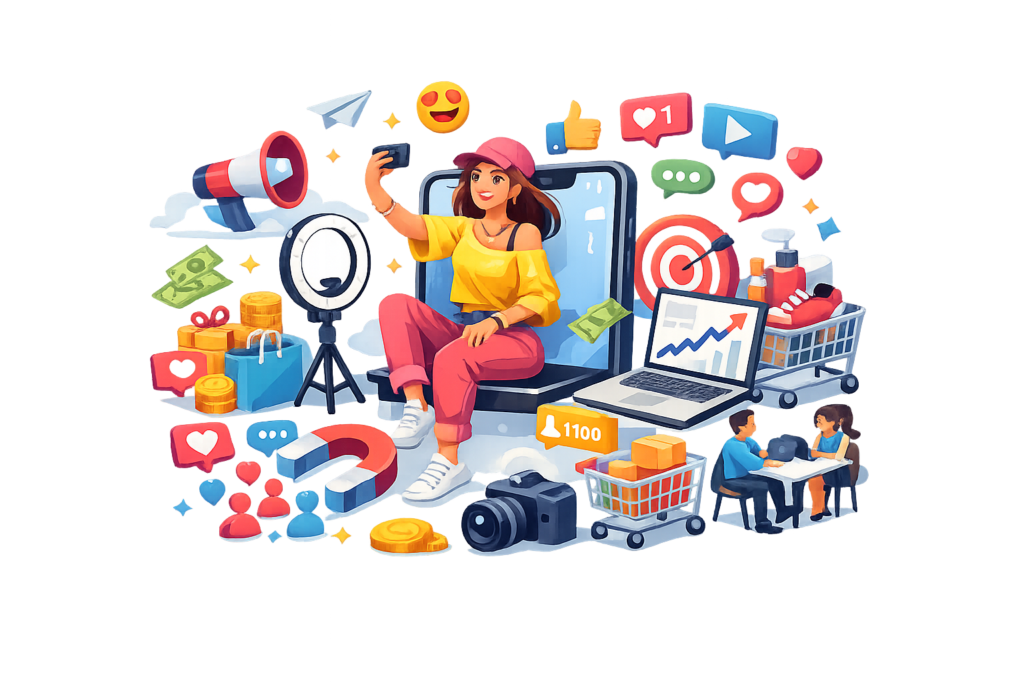
Influencer Marketing involves collaborating with individuals who have a strong online presence and influence over their audience. These influencers promote your brand to their followers.
This strategy helps build trust and credibility, as people are more likely to trust recommendations from individuals they follow.
Choosing the right influencer and creating authentic collaborations are key to successful influencer marketing campaigns.
Affiliate Marketing is a performance-based strategy where businesses reward affiliates for driving traffic or sales. Affiliates promote products through their channels and earn a commission for each successful transaction.
This approach allows businesses to expand their reach without significant upfront costs. It also creates a win-win situation for both businesses and affiliates.
Managing affiliate programs effectively ensures consistent growth and profitability.
Online Reputation Management focuses on maintaining a positive brand image. This includes monitoring reviews, responding to feedback, and addressing negative comments.
A strong reputation builds trust and influences customer decisions. Businesses must actively manage their online presence to ensure a positive perception.
Transparency and responsiveness are key factors in maintaining a good reputation.
Marketing Automation involves using software to automate repetitive marketing tasks. This includes email campaigns, social media posting, and lead nurturing.
Automation improves efficiency and allows businesses to focus on strategy and creativity. It also ensures consistent communication with customers.
Implementing automation tools can significantly enhance marketing performance and productivity.
Even with the best intentions, many businesses struggle with digital marketing due to avoidable mistakes. One of the most common issues is the lack of a clear strategy. Businesses often jump into campaigns without defining goals, target audience, or key performance indicators. This leads to wasted budgets and poor results. A well-defined strategy aligned with business objectives is essential for success.
Another major mistake is ignoring data and analytics. Digital marketing provides powerful insights, yet many businesses fail to use this data effectively. Without analyzing performance metrics, it becomes difficult to understand what is working and what needs improvement. This results in repeated mistakes and missed opportunities for optimization.
Lastly, inconsistent branding and messaging can harm your credibility. When your website, social media, and advertisements send mixed messages, it confuses your audience. Maintaining a consistent tone, visual identity, and value proposition across all channels is critical for building trust and recognition.
To achieve success in digital marketing, businesses must focus on delivering value to their audience. This means creating high-quality, relevant content that addresses user needs and solves real problems. Content should be informative, engaging, and optimized for both users and search engines.
Another important practice is adopting a multi-channel approach. Relying on a single platform can limit your reach and growth potential. By integrating SEO, social media, email marketing, and paid advertising, businesses can create a comprehensive strategy that maximizes visibility and engagement.
Continuous testing and optimization are also crucial. Digital marketing is not a one-time effort—it requires ongoing adjustments. A/B testing, performance tracking, and regular updates ensure that your campaigns remain effective and aligned with changing market trends.
1. What is the most important digital marketing channel?
There is no single “most important” channel. The effectiveness depends on your business goals and audience. However, SEO and content marketing are often considered foundational because they provide long-term value.
2. How long does digital marketing take to show results?
It depends on the strategy. SEO can take several months, while PPC campaigns can deliver immediate results. A balanced approach ensures both short-term and long-term success.
3. Is digital marketing suitable for small businesses?
Yes, digital marketing is highly scalable and cost-effective, making it ideal for small businesses. It allows them to compete with larger companies by targeting specific audiences.
4. What skills are required for digital marketing?
Key skills include content creation, data analysis, SEO, communication, and strategic thinking. Technical knowledge and creativity also play important roles.
5. How much should I invest in digital marketing?
The budget varies depending on your goals and industry. It is important to start with a manageable budget and scale based on performance and ROI.
6. Can I do digital marketing without a website?
While it is possible to use social media platforms alone, having a website is highly recommended. It serves as a central hub for your online presence and improves credibility.
7. What is the role of AI in digital marketing?
AI helps automate tasks, analyze data, and personalize user experiences. It enhances efficiency and allows businesses to make smarter decisions.
8. How do I measure digital marketing success?
Success is measured using metrics such as traffic, conversions, engagement, and ROI. Tools like analytics platforms provide detailed insights.
Digital marketing continues to evolve rapidly, and staying updated with trends is essential. One major trend is the use of artificial intelligence and machine learning. These technologies enable personalized experiences, predictive analytics, and automation at scale, improving efficiency and performance.
Another emerging trend is voice search optimization. With the growing use of voice assistants, businesses must adapt their SEO strategies to include conversational keywords and natural language queries. This ensures better visibility in voice search results.
Video marketing is also gaining significant traction. Short-form videos, live streaming, and interactive content are becoming popular among users. Businesses that leverage video effectively can increase engagement and brand awareness.
Using the right tools can significantly enhance your digital marketing efforts. Tools for SEO, analytics, content management, and automation help streamline processes and improve results. Popular tools include analytics platforms, keyword research tools, and social media management systems.
Automation tools allow businesses to manage campaigns more efficiently by handling repetitive tasks. This saves time and ensures consistency in communication. Additionally, design and content creation tools help produce high-quality visuals and engaging content.
Choosing the right tools depends on your business needs and budget. It is important to evaluate features, scalability, and ease of use before making a decision.
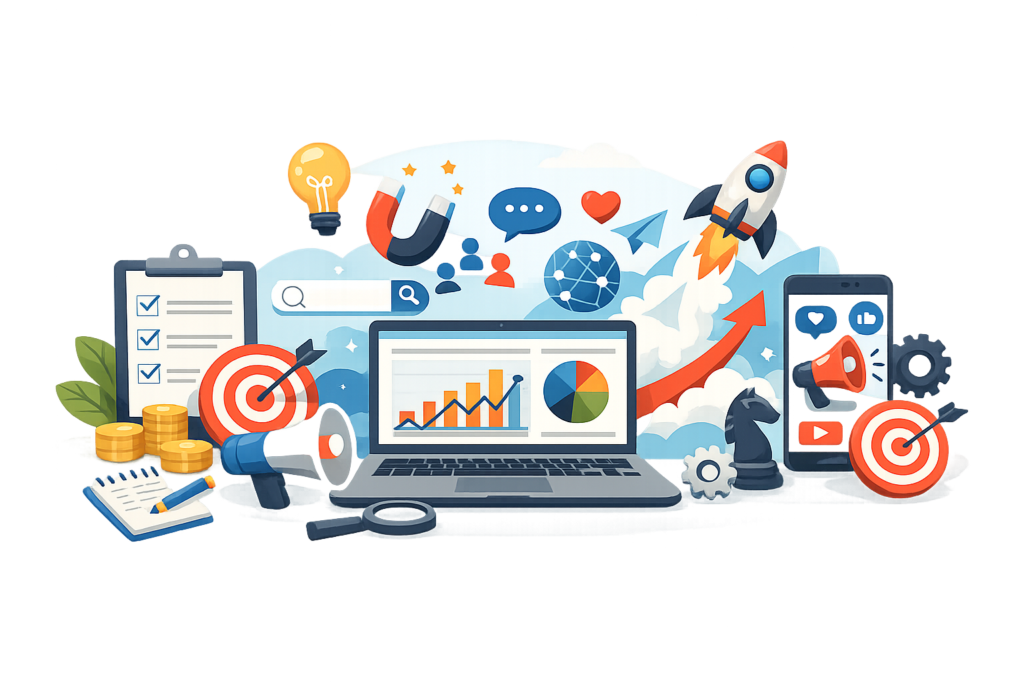
Creating an effective digital marketing strategy requires careful planning and execution. The first step is defining your goals and objectives. Whether it is increasing brand awareness, generating leads, or boosting sales, having clear goals helps guide your efforts.
Next, understanding your target audience is crucial. Conducting research to identify demographics, preferences, and behavior allows you to create personalized campaigns. This improves engagement and conversion rates.
Finally, implementing and monitoring your strategy ensures success. Regular analysis and adjustments help optimize performance and achieve desired outcomes. A flexible approach allows businesses to adapt to changing trends and market conditions.
Digital Marketing is a powerful tool that enables businesses to grow, connect with their audience, and achieve long-term success. By leveraging various channels and strategies, businesses can create meaningful interactions and drive measurable results.
At Appledew, we believe in delivering strategies that are not only effective but also sustainable. By focusing on quality, data-driven decisions, and customer-centric approaches, businesses can build a strong digital presence and stay ahead of the competition.
Implementing the insights and strategies discussed in this guide will help you navigate the digital landscape with confidence and achieve your business goals.
Prompt:
You are an expert consultant. Based on the blog post titled “Digital Marketing”, provide a step-by-step, practical implementation guide. Include tools, best practices, common mistakes to avoid, and advanced tips. Assume the reader wants to implement everything discussed in this article effectively.
Call to Action:
Want our help implementing this? Just reach out to us via our website contact form: https://appledew.com/contact-us/