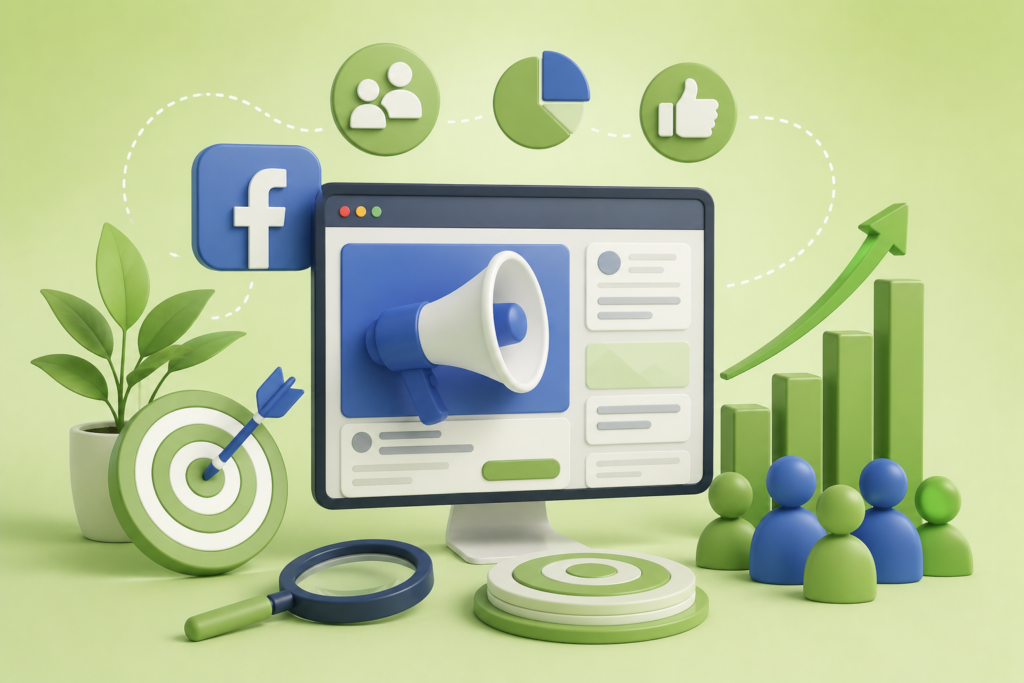
Learn how Facebook Ads help businesses increase brand awareness, generate leads, improve customer engagement, and achieve better marketing results with effective advertising strategies.
In today’s competitive digital environment, businesses need effective advertising strategies to connect with their target audience, increase visibility, and generate measurable results. Facebook Ads have become one of the most powerful online advertising solutions because they allow businesses to reach billions of users through highly targeted campaigns. Unlike traditional advertising methods, Facebook advertising provides advanced audience targeting, real-time performance tracking, flexible budgeting options, and detailed insights that help businesses make data-driven decisions.
For businesses looking to build a strong online presence, Facebook Ads provide an opportunity to reach potential customers based on their interests, behaviors, demographics, location, and online activities. Whether a company wants to increase website traffic, generate qualified leads, promote products, or improve brand recognition, Facebook’s advertising platform offers tools that support different marketing goals. Businesses can create campaigns that are personalized, measurable, and optimized according to customer behavior.
At Appledew, we understand that successful advertising is not only about spending money on ads. It requires strategic planning, audience research, creative development, continuous testing, and performance analysis. A well-structured Facebook advertising campaign focuses on delivering the right message to the right audience at the right time. When implemented correctly, Facebook Ads can become a valuable growth channel that helps businesses achieve long-term marketing success.
This complete guide explains everything businesses need to know about Facebook Ads, including how they work, why they matter, campaign types, targeting strategies, optimization techniques, common mistakes, and best practices for achieving better advertising results.
Facebook Ads are paid advertisements displayed across Facebook’s ecosystem, including Facebook feeds, Stories, Marketplace, Messenger, and other connected placements. These advertisements allow businesses, brands, and organizations to promote products, services, content, or websites to specific groups of users. Instead of relying only on organic reach, businesses can use paid campaigns to increase visibility and connect with potential customers more effectively.
The Facebook advertising system works through an auction-based model. When businesses create an advertisement, they select their campaign objective, define their target audience, establish a budget, and create advertising content. Facebook then evaluates multiple factors, including bid amount, estimated action rate, and ad quality, to determine which advertisements appear to users. This process helps deliver relevant advertisements while allowing advertisers to compete for audience attention.
One of the biggest advantages of Facebook Ads is advanced audience targeting. Businesses can reach users based on demographic information such as age, gender, location, education, and language. They can also target audiences according to interests, online behaviors, purchase activities, and engagement patterns. For example, an online clothing store can target people interested in fashion, shopping, lifestyle trends, and related products.
Facebook also provides powerful measurement tools that help advertisers understand campaign performance. Metrics such as impressions, clicks, conversions, cost per result, and return on ad spend allow businesses to evaluate whether their campaigns are achieving their goals. According to Facebook’s advertising resources, businesses should use proper measurement and optimization practices to improve campaign effectiveness. More information about advertising measurement is available through Meta Business Help Center.
Successful Facebook advertising requires more than simply creating an advertisement. Businesses need to understand their audience, develop engaging creatives, test different approaches, analyze results, and continuously improve campaigns. When businesses combine strategy with data-driven optimization, Facebook Ads can become a reliable source of traffic, leads, and revenue.
Digital competition has increased significantly, making it harder for businesses to reach customers through traditional marketing methods. Organic social media reach continues to become more challenging, which is why paid advertising has become an important part of many successful marketing strategies. Facebook Ads provide businesses with the ability to actively reach potential customers instead of waiting for users to discover their content naturally.
One major benefit of Facebook Ads is audience precision. Traditional advertising methods often involve reaching large groups of people without knowing whether they are interested in the product or service. Facebook advertising allows businesses to narrow their audience and focus their budget on users who are more likely to engage or convert. This improves advertising efficiency and helps reduce wasted spending.
Facebook Ads also support businesses at different stages of the customer journey. For example, a company trying to build awareness can use video advertisements to introduce its brand to new audiences. A business looking for leads can use lead generation campaigns to collect customer information. An e-commerce company can use product advertisements to encourage purchases from interested shoppers. This flexibility makes Facebook advertising useful for startups, small businesses, and established companies.
Another important advantage is measurable performance. Businesses can monitor campaign results and understand how users interact with advertisements. Instead of guessing whether marketing efforts are successful, advertisers can analyze real data and make informed decisions. This approach supports continuous improvement and allows businesses to allocate budgets toward strategies that deliver better outcomes.
Facebook Ads also provide opportunities for remarketing. Many potential customers visit a website or interact with a brand but do not immediately make a purchase. Through remarketing campaigns, businesses can reconnect with these users and encourage them to complete an action. This helps improve conversion rates and strengthens customer relationships.
For businesses that want sustainable digital growth, Facebook Ads offer a combination of reach, targeting, flexibility, and measurable results. However, success depends on strategic execution, strong creative content, and ongoing optimization.
Facebook provides multiple advertising formats designed to support different marketing objectives. Choosing the right advertisement type is essential because each format serves a specific purpose. Businesses should select ad formats based on their goals, audience preferences, and the customer journey stage they want to influence.
<u>Image Ads</u> are one of the most common Facebook advertising formats. These advertisements use visual content combined with persuasive copy to attract attention and encourage users to take action. Image ads work well for promoting products, announcing offers, increasing brand awareness, and driving website visits. High-quality visuals, clear messaging, and strong calls-to-action are important factors that influence performance.
<u>Video Ads</u> have become increasingly popular because videos can communicate information quickly and create stronger emotional connections with audiences. Businesses can use videos to demonstrate products, share customer stories, explain services, or showcase company values. Short, engaging videos often perform well because users typically scroll quickly through social media feeds.
<u>Carousel Ads</u> allow businesses to display multiple images or videos within a single advertisement. Each card can highlight different products, features, benefits, or steps. This format is especially useful for e-commerce brands, service providers, and businesses that want to explain multiple aspects of their offerings.
<u>Lead Ads</u> are designed to help businesses collect customer information directly through Facebook. Users can submit details such as names, email addresses, and phone numbers without leaving the platform. These campaigns are commonly used for newsletters, consultations, registrations, and service inquiries.
<u>Collection Ads</u> are useful for businesses that want to create a shopping experience within Facebook. These advertisements combine images, videos, and product catalogs to help customers discover and purchase products more easily.
<u>Messenger Ads</u> encourage users to start conversations with businesses. They are valuable for companies that rely on customer communication, consultations, or personalized recommendations. Messenger-based advertising helps businesses create direct relationships with potential customers.
Selecting the right Facebook Ads format requires understanding customer behavior and campaign goals. A successful advertiser does not simply choose the most popular format but selects the format that best supports the desired outcome.
Audience targeting is one of the strongest features of Facebook Ads. The success of an advertising campaign depends heavily on reaching people who are most likely to be interested in a product or service. Without proper targeting, even a well-designed advertisement may fail because it reaches users who have little interest in the offer.
Facebook provides several targeting options that allow advertisers to define their ideal customers. Demographic targeting helps businesses reach users based on information such as age, location, education, occupation, and language. This allows advertisers to create campaigns that match specific customer groups.
Interest-based targeting focuses on users’ interests, hobbies, and activities. For example, a fitness brand may target people interested in exercise, healthy lifestyles, sports equipment, and wellness content. Interest targeting helps businesses connect with audiences who show potential interest in their products.
Behavioral targeting uses user actions and activities to identify potential customers. This may include shopping behavior, device usage, purchase patterns, and interactions with digital content. Businesses can use these insights to create more relevant advertising experiences.
Custom Audiences allow businesses to target people who already have some connection with their brand. These audiences may include website visitors, customer lists, app users, or people who have engaged with social media content. Custom Audiences are especially valuable for remarketing campaigns because they focus on users who already know the brand.
Lookalike Audiences help businesses discover new potential customers who share similar characteristics with existing customers. By analyzing patterns from current audiences, Facebook can help advertisers reach people with similar interests and behaviors.
Effective audience targeting requires continuous testing. Businesses should experiment with different audience segments, analyze performance data, and refine their targeting approach over time. A successful Facebook Ads strategy combines accurate targeting with relevant messaging and high-quality creative content.
Creating successful Facebook Ads requires a clear strategy that aligns advertising activities with specific business goals. Many businesses make the mistake of launching campaigns without proper planning, which often results in wasted budgets and poor performance. A strong Facebook advertising strategy begins with understanding objectives, identifying target audiences, developing suitable content, and establishing a process for measuring success.
The first step is defining clear campaign goals. Facebook provides different objectives based on what businesses want to achieve. These objectives may include brand awareness, traffic generation, engagement, lead generation, app promotion, or sales. Selecting the correct objective helps Facebook optimize advertisements toward users who are more likely to complete the desired action. For example, a business looking for purchases should focus on conversion-based campaigns rather than simply increasing post engagement.
Audience research is another essential part of Facebook advertising strategy. Businesses should understand their customers’ needs, challenges, interests, and purchasing behaviors before creating advertisements. Customer personas can help advertisers develop more relevant messaging. A detailed understanding of the audience allows businesses to create advertisements that address real problems and provide valuable solutions.
Creative planning also plays a major role in campaign success. Facebook users interact with thousands of pieces of content every day, so advertisements must capture attention quickly. Strong visuals, persuasive headlines, benefit-focused messaging, and clear calls-to-action can improve engagement rates. Businesses should test multiple creative variations to identify which messages perform best.
Budget planning is another important factor. Advertisers should determine how much they are willing to spend and how they will distribute their budget across campaigns. Starting with smaller test budgets allows businesses to collect data before increasing investment. Successful campaigns can then receive additional budget allocation, while underperforming campaigns can be adjusted or paused.
A complete Facebook Ads strategy also includes ongoing monitoring and optimization. Advertising performance should be reviewed regularly to identify opportunities for improvement. Metrics such as click-through rate, conversion rate, cost per acquisition, and return on ad spend provide valuable insights into campaign effectiveness.
A strategic approach ensures that Facebook Ads are not just advertisements but part of a larger digital marketing system designed to attract, engage, and convert customers.
Budget management is one of the most important elements of running profitable Facebook Ads campaigns. Without proper budgeting and bidding strategies, businesses may spend money without achieving meaningful results. Effective advertisers understand how to control costs, test campaigns, and maximize the value of every advertising dollar.
Facebook provides different budgeting options that allow businesses to control their advertising expenses. A daily budget determines how much an advertiser wants to spend each day, while a lifetime budget defines the total amount spent during a specific campaign period. Choosing the right budgeting method depends on campaign goals, timeline, and available resources.
For businesses starting with Facebook advertising, testing is essential. Instead of investing a large amount immediately, advertisers should begin with controlled budgets to understand audience response. Testing different audiences, advertisements, and campaign settings helps identify the most effective combinations before scaling investment.
Facebook’s bidding system determines how advertisements compete for user attention. Advertisers can choose different optimization goals depending on their objectives. For example, campaigns focused on sales may optimize for conversions, while campaigns focused on awareness may optimize for impressions or reach.
Cost control requires continuous monitoring. Important financial metrics include:
These measurements help businesses determine whether their campaigns are financially successful.
Another important factor is understanding the relationship between budget and audience size. A very limited budget combined with a large audience may not generate enough data for optimization. Similarly, a large budget targeting a very small audience may cause advertising fatigue. Finding the right balance helps maintain campaign efficiency.
Scaling successful campaigns requires a careful approach. Businesses should avoid increasing budgets too quickly because sudden changes can affect campaign performance. Gradual increases allow Facebook’s system to adjust while maintaining stability.
A well-managed budget strategy helps businesses achieve better advertising results while reducing unnecessary expenses. Facebook Ads success is not based only on spending more money; it depends on spending intelligently.
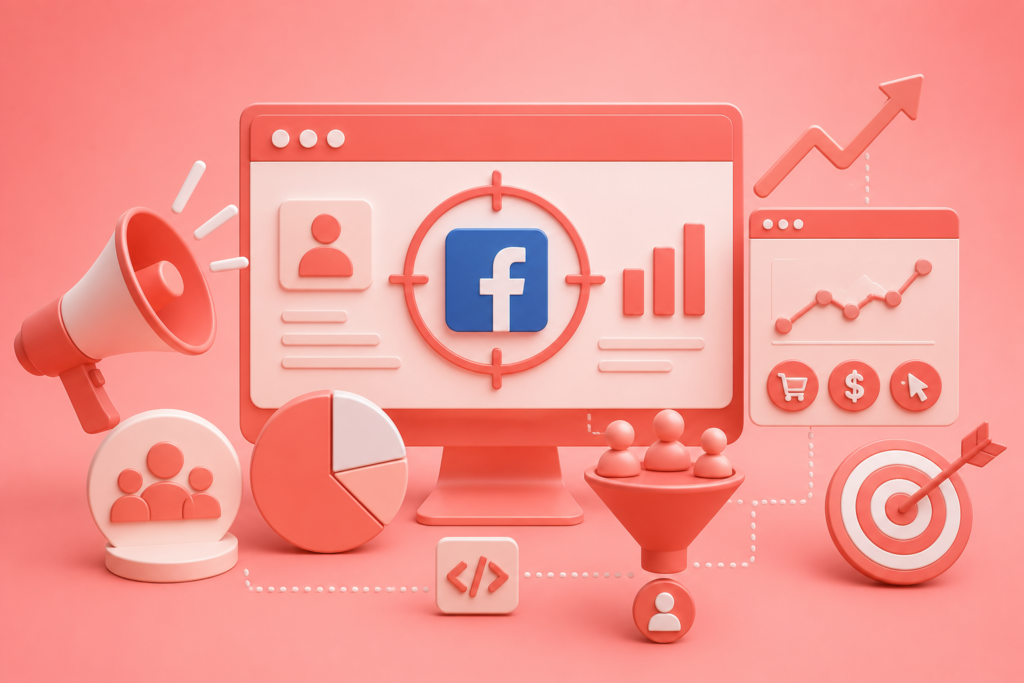
Tracking and measurement are essential components of successful Facebook Ads campaigns. Without accurate tracking, businesses cannot understand customer behavior, measure campaign performance, or identify opportunities for improvement. Facebook Pixel and conversion tracking tools help advertisers collect valuable data about user actions and optimize campaigns effectively.
The Facebook Pixel is a piece of code placed on a website that helps track visitor activity after users interact with advertisements. It allows businesses to understand actions such as page views, product searches, purchases, registrations, and form submissions. This information helps advertisers measure whether their campaigns are generating meaningful results.
Conversion tracking allows businesses to move beyond basic metrics such as clicks and impressions. While clicks show that users interacted with an advertisement, conversions reveal whether those interactions resulted in valuable business actions. For example, an online store may track completed purchases, while a service business may track consultation requests.
Tracking data also supports remarketing strategies. When users visit a website but do not complete an action, businesses can create campaigns specifically designed to reconnect with those visitors. This helps increase conversion opportunities because the audience has already shown interest in the brand.
Accurate tracking also improves Facebook’s optimization process. When Facebook receives conversion data, its system can identify patterns and find users who are more likely to complete similar actions. This helps improve campaign performance over time.
Businesses should ensure that tracking systems are correctly implemented and regularly tested. Incorrect tracking can lead to inaccurate reporting and poor optimization decisions. Advertisers should review events, attribution settings, and data accuracy before making major campaign decisions.
Google also emphasizes the importance of accurate measurement and understanding user interactions when improving digital experiences. Businesses can learn more about analytics measurement through Google Analytics Support.
Conversion tracking transforms Facebook Ads from a simple promotional tool into a measurable growth system. With accurate data, businesses can make smarter decisions, improve campaign performance, and achieve stronger returns.
Facebook Ads optimization is the continuous process of improving campaigns to achieve better results while reducing unnecessary costs. Successful advertisers understand that launching an advertisement is only the beginning. Regular analysis, testing, and improvements are necessary to maintain strong performance.
One of the most effective optimization methods is A/B testing. This involves comparing different versions of advertisements to understand which elements perform better. Businesses can test different headlines, images, videos, audience segments, calls-to-action, and landing pages. The results help identify the approaches that generate stronger engagement and conversions.
Creative optimization is another important factor. Users quickly scroll through social media content, meaning advertisements must immediately capture attention. Businesses should regularly refresh their creative content to prevent audience fatigue. Repeatedly showing the same advertisement to the same users can reduce engagement and increase costs.
Audience optimization involves analyzing which customer groups deliver the best results. Some audiences may generate more clicks, while others may produce higher-quality leads or sales. Advertisers should focus more budget on audiences that demonstrate stronger performance.
Landing page optimization also influences Facebook Ads success. Even a high-performing advertisement may fail if the landing page provides a poor user experience. Pages should load quickly, clearly explain the offer, provide easy navigation, and include a strong conversion path.
Performance analysis should focus on meaningful metrics rather than surface-level numbers. High impressions do not always mean success. Businesses should evaluate whether advertisements generate valuable actions such as leads, sales, or customer inquiries.
Facebook recommends using testing and performance insights to improve advertising outcomes. Advertisers can explore additional campaign optimization guidance through Meta Business Resources.
Successful optimization requires patience and continuous learning. Advertising platforms change regularly, customer behavior evolves, and competitors introduce new strategies. Businesses that consistently analyze and improve their campaigns are more likely to achieve sustainable Facebook Ads success.
Creative quality plays a major role in the success of Facebook Ads campaigns. Even with accurate targeting and a strong budget, advertisements may fail if the creative content does not attract attention or communicate value effectively. Facebook users interact with a large amount of content every day, which means businesses must create advertisements that immediately connect with their audience and encourage action.
The first important element of a successful Facebook Ad creative is understanding the audience’s needs. Effective advertisements are not focused only on promoting products or services; they communicate solutions to customer problems. Businesses should highlight benefits, explain value, and show how their offerings improve the customer’s situation. A customer-focused approach creates stronger connections and increases the likelihood of engagement.
Visual content is one of the most influential factors in Facebook advertising performance. Images and videos should be clear, professional, and relevant to the message. A strong visual should communicate the purpose of the advertisement even before users read the text. Businesses should avoid using low-quality images, confusing designs, or visuals that do not match their brand identity.
Video advertisements have become especially valuable because they allow businesses to explain products, demonstrate features, and create emotional connections. Short videos that deliver the main message quickly often perform well because users typically decide within seconds whether to continue watching. Businesses should focus on strong openings, clear storytelling, and a direct call-to-action.
Ad copy is equally important. A successful Facebook Ad usually includes a strong headline, clear description, and persuasive messaging. The copy should explain the benefit, create interest, and guide users toward the next step. Avoiding exaggerated claims and focusing on genuine value helps build trust with potential customers.
Testing different creative variations is another essential practice. Businesses should compare different images, videos, headlines, and messaging styles to discover what resonates best with their audience. There is no universal creative formula because different industries and customer groups respond differently.
Businesses should also consider mobile-first design. Most social media users access platforms through mobile devices, so advertisements must be easy to understand on smaller screens. Text should be readable, visuals should be optimized, and the overall experience should feel natural for mobile users.
A successful Facebook Ads creative strategy combines audience understanding, professional visuals, persuasive messaging, and continuous improvement. When businesses invest in quality creative development, advertisements become more effective at attracting attention and driving meaningful actions.
Lead generation is one of the most valuable applications of Facebook Ads because it helps businesses connect with potential customers who have shown interest in their products or services. Instead of waiting for customers to discover a business naturally, lead generation campaigns allow companies to actively collect information and build relationships with potential buyers.
Facebook Lead Ads make the process easier by allowing users to submit their information directly through Facebook without visiting another website. These advertisements are commonly used by businesses offering consultations, registrations, newsletters, demonstrations, and service inquiries. A simple and convenient process can improve conversion rates because users do not have to complete multiple steps.
A successful lead generation campaign begins with a valuable offer. Users are more likely to provide their information when they receive something useful in return. Examples include free consultations, educational guides, discount offers, product demonstrations, or exclusive content. The offer should match the audience’s interests and provide a clear reason to take action.
Lead quality is more important than lead quantity. Some businesses focus only on collecting as many contacts as possible, but low-quality leads may not contribute to business growth. Effective campaigns focus on attracting users who have genuine interest and are more likely to become customers.
Audience targeting has a significant impact on lead generation performance. Businesses should identify customer groups that are most likely to need their solutions. Using custom audiences and lookalike audiences can help businesses reach people who share characteristics with existing customers.
Follow-up processes are also important. Collecting leads is only the beginning of the customer journey. Businesses should have systems in place to contact leads, answer questions, provide additional information, and guide potential customers toward a purchase decision.
For service-based businesses, Facebook Ads can be particularly effective because they allow companies to introduce their expertise and build trust before direct interaction. Educational content, customer testimonials, and informative advertisements can help establish credibility.
Successful lead generation requires a combination of strong offers, accurate targeting, effective follow-up, and continuous optimization. When these elements work together, Facebook Ads can become a reliable source of qualified customer opportunities.
Facebook Ads have become an important marketing channel for e-commerce businesses because they provide powerful tools for product promotion, customer targeting, and sales growth. Online stores can use Facebook advertising to introduce products, attract potential buyers, recover abandoned purchases, and encourage repeat customers.
One of the biggest advantages for e-commerce brands is product-focused advertising. Businesses can showcase products through images, videos, carousel formats, and catalog advertisements. These formats allow customers to explore products visually and understand important details before making purchasing decisions.
Facebook Catalog Ads are especially useful for online stores with multiple products. Businesses can upload product information and create advertisements that automatically display relevant items to users. This approach helps personalize shopping experiences and connect customers with products they may be interested in.
Retargeting is another powerful strategy for e-commerce businesses. Many customers visit online stores but leave without completing a purchase. Facebook Ads allow businesses to reconnect with these visitors by showing relevant advertisements based on previous interactions. For example, a customer who viewed a product but did not buy it may see a reminder advertisement encouraging them to return.
Customer trust is also important for online sales. Advertisements that include customer reviews, product demonstrations, guarantees, or educational content can help reduce purchase hesitation. Modern consumers often research before buying, so businesses should use advertisements to provide confidence and information.
Mobile optimization is critical for e-commerce advertising success. Since many customers browse and shop through mobile devices, advertisements and landing pages should provide a smooth experience. Slow websites, unclear product information, or complicated checkout processes can reduce conversions.
Successful e-commerce Facebook Ads strategies require more than promoting products. Businesses must understand customer behavior, create engaging content, optimize shopping experiences, and analyze performance data.
When properly managed, Facebook Ads can help e-commerce brands increase visibility, attract qualified buyers, and generate consistent revenue growth.
Retargeting is one of the most effective Facebook Ads strategies because it focuses on users who have already interacted with a business. Many potential customers do not make a purchase or complete an action during their first visit. Retargeting allows businesses to reconnect with these users and encourage them to continue their customer journey.
Customer decisions often require multiple interactions before conversion. A user may visit a website, view products, read information, or engage with social media content but still need additional motivation before taking action. Retargeting campaigns provide reminders and relevant messages that keep the brand visible.
Facebook retargeting can target different groups based on their previous actions. Businesses can advertise to website visitors, people who interacted with posts, video viewers, customers who added products to carts, or users who previously contacted the business. Each audience group can receive customized messaging based on their level of interest.
Effective retargeting requires personalization. Showing the same advertisement to every previous visitor may not produce the best results. Instead, businesses should create different campaigns for different customer behaviors. For example, someone who viewed a product page may receive a product-focused advertisement, while someone who purchased previously may receive a customer loyalty offer.
Frequency management is also important. Showing advertisements too often can create annoyance and reduce brand perception. Businesses should monitor frequency metrics and refresh creative content regularly.
Retargeting campaigns also help improve advertising efficiency because they focus on warmer audiences. Users who already know a brand generally require less education and may be more likely to convert compared to completely new audiences.
A successful retargeting strategy combines audience segmentation, relevant messaging, creative testing, and performance monitoring. Businesses that use retargeting effectively can recover lost opportunities and improve overall advertising results.
Running Facebook Ads successfully requires experience, testing, and continuous improvement. Many businesses invest in paid advertising but fail to achieve expected results because they make avoidable mistakes during campaign planning, setup, execution, or optimization. Understanding these common problems can help advertisers improve performance, protect their budget, and create more effective campaigns.
One of the most common mistakes is launching advertisements without a clear objective. Businesses sometimes create campaigns simply because they want more traffic, followers, or visibility without defining what success actually means. Without a specific goal, it becomes difficult to choose the right campaign objective, measure performance, or determine whether the investment is producing value. A business should always identify whether it wants awareness, leads, sales, engagement, or another measurable outcome before creating an advertisement.
Another frequent mistake is poor audience targeting. Facebook Ads provide advanced targeting options, but some advertisers either target audiences that are too broad or create audiences that are too narrow. A very broad audience can waste budget by reaching people who are unlikely to become customers. On the other hand, an extremely limited audience may prevent Facebook’s system from collecting enough data for optimization. Businesses should use customer research, analytics, and testing to discover the most effective audience groups.
Many advertisers also make the mistake of focusing only on advertisement creation while ignoring the customer experience after the click. A well-designed advertisement can attract visitors, but a slow website, confusing landing page, or complicated checkout process can prevent conversions. The entire customer journey should be optimized, including landing pages, forms, payment processes, and follow-up communication.
Another issue is failing to test different advertisement variations. Some businesses create one advertisement and expect immediate success. However, customer preferences differ, and the first version may not always perform best. Testing different visuals, headlines, messages, and audiences helps identify which combinations generate stronger results.
Ignoring campaign data is another serious mistake. Facebook Ads provide detailed performance information, but some businesses do not analyze their results regularly. Metrics such as cost per result, conversion rate, click-through rate, and return on ad spend provide important insights. Without reviewing this data, businesses may continue spending money on ineffective campaigns.
Poor budget management can also reduce advertising success. Some advertisers increase spending too quickly without understanding whether campaigns are profitable. Others stop campaigns too early before enough data is collected. Successful advertising requires patience, controlled testing, and strategic scaling.
Finally, many businesses fail because they do not update their advertising approach. Consumer behavior, platform features, and market conditions change regularly. Advertisers must continue learning, testing new strategies, and improving their campaigns.
Avoiding these mistakes helps businesses create more efficient Facebook Ads campaigns, reduce unnecessary expenses, and achieve better long-term results.
Businesses that want to achieve stronger results from Facebook Ads must move beyond basic campaign creation and implement advanced strategies. Advanced advertising techniques help improve targeting accuracy, increase conversions, and create more personalized customer experiences. These strategies require deeper analysis, continuous testing, and a strong understanding of customer behavior.
One powerful strategy is audience segmentation. Instead of treating all customers as one group, businesses should divide audiences based on characteristics such as buying behavior, engagement level, interests, and customer journey stage. For example, new visitors may need educational content, while existing customers may respond better to loyalty offers or product recommendations.
Another advanced approach is using funnel-based advertising. A customer usually moves through different stages before making a purchase. The awareness stage focuses on introducing the brand, the consideration stage provides information and builds trust, and the conversion stage encourages action. Businesses can create different Facebook Ads campaigns for each stage to guide customers through the buying process.
Dynamic advertising is another valuable strategy, especially for e-commerce businesses. Dynamic ads automatically show relevant products to users based on their previous interactions. This allows businesses to deliver personalized experiences without manually creating separate advertisements for every product.
Artificial intelligence and automation are also influencing modern advertising strategies. Facebook’s advertising system uses machine learning to identify patterns and optimize delivery. Businesses can improve results by providing accurate conversion data, testing different creative approaches, and allowing enough time for optimization.
Creative personalization is another advanced technique. Different audiences may respond to different messages. A new customer may need information about brand benefits, while a returning customer may respond better to special offers. Personalized messaging helps advertisements feel more relevant and increases engagement.
Another important strategy is analyzing customer lifetime value. Many businesses focus only on immediate purchases, but long-term customer relationships often provide greater value. Advertisers should consider how Facebook Ads contribute to repeat purchases, customer retention, and overall business growth.
Competitor analysis can also provide useful insights. Businesses should study market trends, customer expectations, and competitor messaging to identify opportunities for differentiation. However, advertisements should remain authentic and focus on providing unique value rather than simply copying competitors.
Advanced Facebook Ads strategies require continuous learning and experimentation. Successful advertisers understand that there is no single formula that works forever. They analyze data, adapt to changes, and continuously improve their approach.
Measuring advertising performance is essential for understanding whether Facebook Ads campaigns are achieving business goals. Without proper measurement, businesses cannot determine which strategies work, where improvements are needed, or how effectively their budget is being used.
One of the most important metrics is Return on Ad Spend (ROAS). This measurement shows how much revenue a business generates compared to its advertising investment. A higher ROAS generally indicates that campaigns are producing profitable results. However, businesses should consider other factors such as customer lifetime value and long-term growth when evaluating success.
Cost Per Acquisition (CPA) is another important metric. It measures how much money is spent to acquire a customer or achieve a specific action. Lower acquisition costs can improve profitability, but businesses should also focus on attracting high-quality customers rather than only reducing costs.
Click-Through Rate (CTR) measures how many users click an advertisement after seeing it. A strong CTR often indicates that the advertisement is relevant and engaging. Low CTR may suggest that businesses need to improve their creative content, targeting, or messaging.
Conversion Rate shows how effectively website visitors complete desired actions. These actions may include purchases, registrations, form submissions, or downloads. A high conversion rate usually indicates that advertisements and landing pages are working together effectively.
Cost Per Click (CPC) and Cost Per Thousand Impressions (CPM) provide additional insights into advertising efficiency. CPC helps businesses understand the cost of generating website visits, while CPM shows the cost of reaching users.
Engagement metrics such as reactions, comments, shares, and video views can also provide valuable information, especially for awareness campaigns. However, businesses should avoid focusing only on engagement because high interaction does not always lead to sales or business growth.
Tracking the right metrics depends on campaign objectives. A brand awareness campaign may prioritize reach and impressions, while a sales campaign may focus more on conversions and revenue.
Businesses should create regular reporting systems to review performance and identify trends. Consistent measurement allows advertisers to make informed decisions, improve campaign efficiency, and achieve better results over time.
Successful Facebook Ads campaigns require a combination of strategy, creativity, accurate targeting, and continuous improvement. Businesses that follow proven best practices are more likely to achieve stronger results while reducing unnecessary advertising costs.
The first best practice is to always define clear objectives before launching campaigns. Every advertisement should have a specific purpose, whether it is increasing awareness, generating leads, driving sales, or improving customer engagement. Clear objectives make campaign management and measurement easier.
Understanding the target audience is another essential practice. Businesses should research customer needs, behaviors, challenges, and preferences before creating advertisements. Relevant messaging performs better because it connects with users on a personal level.
High-quality creative content is also critical. Advertisements should use professional visuals, clear messaging, and strong calls-to-action. Businesses should regularly test different creative formats to identify what works best.
Testing and optimization should become a regular part of the advertising process. Successful advertisers do not rely on assumptions. They use performance data to improve audiences, creatives, budgets, and strategies.
Tracking and measurement should never be ignored. Proper analytics setup allows businesses to understand customer behavior and make informed decisions. Data-driven advertising is more effective than relying on guesswork.
Businesses should also focus on providing value instead of only promoting products. Educational content, helpful information, and customer-focused messaging build trust and improve relationships.
Another important practice is maintaining consistency. Successful Facebook advertising requires regular monitoring, updating, and improvement. Markets change, customer expectations evolve, and advertising strategies must adapt.
Finally, businesses should prioritize customer experience. Advertisements are only one part of the customer journey. A strong website, simple conversion process, and effective communication system help transform visitors into loyal customers.
Following these best practices allows businesses to create Facebook Ads campaigns that are more efficient, customer-focused, and capable of supporting long-term growth.
Q1: What are Facebook Ads?
A: Facebook Ads are paid advertisements that help businesses reach targeted audiences and promote products, services, or content.
Q2: Why should businesses use Facebook Ads?
A: Facebook Ads help businesses increase brand awareness, generate leads, drive sales, and reach potential customers effectively.
Q3: How much does Facebook Ads cost?
A: Facebook Ads costs depend on budget, audience competition, campaign goals, and advertising strategy.
Q4: Can small businesses use Facebook Ads?
A: Yes, small businesses can use Facebook Ads with flexible budgets to attract customers and grow their online presence.
Q5: What types of Facebook Ads are available?
A: Facebook offers image ads, video ads, carousel ads, lead ads, collection ads, and Messenger ads.
Q6: How long does it take to see Facebook Ads results?
A: Results vary based on campaign goals, budget, targeting, and optimization efforts, but consistent testing improves performance.
Q7: How can businesses improve Facebook Ads performance?
A: Businesses can improve results through audience research, creative testing, tracking, and continuous campaign optimization.
Q8: Are Facebook Ads effective for generating sales?
A: Yes, Facebook Ads can generate sales when businesses use proper targeting, compelling creatives, and conversion-focused strategies.
Facebook Ads have transformed the way businesses connect with customers in the digital age. With advanced targeting options, flexible budgeting, powerful analytics, and multiple advertising formats, Facebook provides businesses with opportunities to reach the right audience and achieve measurable marketing results.
However, successful Facebook advertising requires more than simply creating advertisements. Businesses need a complete strategy that includes audience research, creative development, tracking, optimization, and continuous improvement. Advertisers who focus on providing value, understanding customer needs, and analyzing performance data are more likely to achieve sustainable results.
From increasing brand awareness to generating leads and driving sales, Facebook Ads can support different business objectives. Whether a company is launching a new product, expanding its customer base, or improving online visibility, strategic advertising can create meaningful growth opportunities.
At Appledew, we believe effective digital advertising combines creativity, technology, and data-driven decision-making. Businesses that approach Facebook Ads with a clear strategy and commitment to improvement can build stronger customer relationships and achieve long-term success.
The future of digital advertising will continue to evolve, but businesses that understand their audience, adapt to changes, and use technology effectively will remain competitive. Facebook Ads are not just a promotional tool; they are a powerful platform for building connections, generating opportunities, and growing businesses in a measurable way.
Prompt Text:
You are an expert consultant. Based on the blog post titled “(Facebook Ads)”, provide a step-by-step, practical implementation guide. Include tools, best practices, common mistakes to avoid, and advanced tips. Assume the reader wants to implement everything discussed in this article effectively.
Call to Action:
Want our help implementing this? Just reach out to us via our website contact form: (https://appledew.com/contact-us/)