

Discover a complete, SEO-optimized guide to website design and development, covering strategy, UX, performance, security, and best practices to build high-performing, scalable websites.
In today’s digital-first landscape, website design and development is no longer just about aesthetics—it is about creating high-performing digital experiences that drive engagement, conversions, and long-term business growth. A well-crafted website acts as the foundation of your online presence, shaping how users perceive your brand and interact with your services. From visual hierarchy to backend performance, every detail contributes to success.
At its core, modern website design blends user experience (UX), interface design (UI), technical performance, and SEO strategy. Businesses that invest in strategic development frameworks consistently outperform competitors because they prioritise usability, speed, and accessibility. Moreover, search engines increasingly favour websites that deliver seamless, user-friendly experiences.
For businesses aiming to scale effectively, platforms like Appledew emphasise data-driven design, performance optimisation, and conversion-focused development. This approach ensures that websites are not only visually appealing but also technically sound and aligned with search engine expectations.
Website design and development is a multidisciplinary process that involves planning, conceptualising, designing, building, and maintaining websites. While design focuses on visual appeal and user interaction, development ensures that the site functions smoothly across devices and platforms. Together, they create a cohesive digital experience that meets user expectations.
The process begins with understanding user intent and business goals. Designers create wireframes and prototypes to visualise layout and navigation, while developers translate these designs into functional code using technologies such as HTML, CSS, JavaScript, and backend frameworks. This collaboration ensures that both aesthetics and functionality are aligned.
In addition, modern development incorporates responsive design, accessibility standards, and performance optimisation. Websites must adapt seamlessly to different screen sizes while maintaining usability. Following accessibility guidelines ensures inclusivity, allowing all users—including those with disabilities—to interact effectively with digital content.
A successful website starts with a clear strategy. Without proper planning, even visually stunning websites can fail to deliver results. Strategic planning involves defining objectives, identifying target audiences, and mapping out user journeys to ensure that every element serves a purpose.
One key component of planning is content architecture. Structuring content logically improves navigation and enhances SEO performance. Clear hierarchies, intuitive menus, and well-organised pages help users find information quickly, reducing bounce rates and increasing engagement.
Another essential factor is aligning the website with business goals. Whether the objective is lead generation, e-commerce sales, or brand awareness, the design and functionality must support these outcomes. Strategic planning ensures that every feature—from call-to-action buttons to landing pages—contributes to measurable success.
User experience (UX) is at the heart of effective website design. It focuses on how users interact with a website and how easily they can achieve their goals. A strong UX design ensures that navigation is intuitive, content is accessible, and interactions are seamless.
One fundamental principle of UX is simplicity. Overcomplicated designs can confuse users and reduce engagement. Instead, clear layouts, logical navigation, and concise content improve usability. Additionally, consistency in design elements—such as fonts, colours, and buttons—enhances familiarity and trust.
Another critical aspect is usability testing. By analysing user behaviour and gathering feedback, designers can identify pain points and optimise the experience. Continuous improvement ensures that the website evolves based on real user needs rather than assumptions.
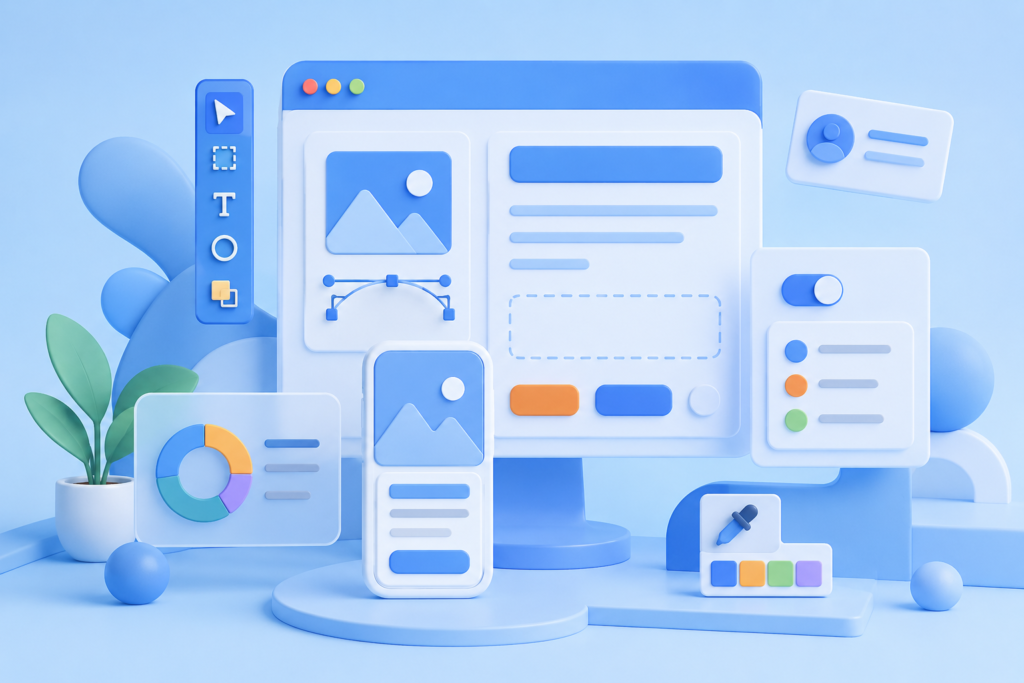
While UX focuses on functionality, user interface (UI) design deals with the visual elements of a website. A well-designed interface enhances usability and creates a positive emotional response from users. Elements such as colour schemes, typography, and spacing play a crucial role in shaping the overall experience.
Effective UI design prioritises visual hierarchy. Important elements, such as headlines and call-to-action buttons, should stand out clearly. This guides users through the website and encourages desired actions. Proper use of whitespace also improves readability and reduces visual clutter.
Moreover, consistency is essential in UI design. Maintaining uniform styles across pages ensures a cohesive experience. This includes consistent button styles, colour palettes, and typography. A unified design strengthens brand identity and builds user trust.
With the majority of users accessing websites on mobile devices, responsive design is no longer optional—it is essential. A responsive website adapts to different screen sizes, ensuring a consistent experience across desktops, tablets, and smartphones.
The mobile-first approach involves designing for smaller screens first and then scaling up for larger devices. This ensures that essential features and content are prioritised. Mobile optimisation improves usability and aligns with search engine preferences, as mobile-friendly websites rank higher in search results.
Additionally, responsive design improves loading speed and reduces bounce rates. By optimising images, layouts, and code for mobile devices, businesses can provide faster, smoother experiences that keep users engaged.
Modern website development relies on a variety of technologies and frameworks to create robust and scalable solutions. Frontend development focuses on the user interface, using technologies such as HTML, CSS, and JavaScript to build interactive elements.
Backend development, on the other hand, handles server-side functionality, databases, and application logic. Popular backend technologies include PHP, Python, Node.js, and various frameworks that streamline development processes. These technologies ensure that websites can handle complex functionalities, such as user authentication and data processing.
Frameworks and content management systems (CMS) also play a significant role in development. They provide pre-built structures and tools that accelerate development while maintaining flexibility. Choosing the right technology stack depends on project requirements, scalability needs, and long-term goals.
Search engine optimisation (SEO) should be integrated into the design and development process from the beginning. A well-optimised website ensures better visibility in search engine results, driving organic traffic and improving overall performance.
Key SEO elements include clean code structure, fast loading speed, mobile responsiveness, and proper use of meta tags. Additionally, keyword optimisation and high-quality content play a crucial role in improving rankings. Internal linking also enhances navigation and helps search engines understand site structure.
Following best practices outlined in SEO Starter Guide ensures that websites meet search engine standards. By aligning design and development with SEO principles, businesses can achieve sustainable growth and long-term visibility.
Website performance is a critical factor that directly impacts user experience, engagement, and search engine rankings. A slow-loading website can lead to higher bounce rates and lost conversions, making performance optimisation a top priority in website design and development. Speed is not just a technical metric—it directly affects how users perceive your brand and whether they stay or leave.
One of the most effective ways to improve performance is by optimising images, reducing file sizes, and using modern formats such as WebP. In addition, minimising CSS and JavaScript files helps reduce page load times and improves rendering speed. Techniques like lazy loading ensure that only visible content loads initially, which significantly enhances performance on both mobile and desktop devices.
To follow industry standards, developers should align with Google’s performance guidelines available at Web Performance Optimization. Regular performance audits using tools like Lighthouse and PageSpeed Insights help identify issues and ensure continuous improvement. A fast-loading website not only enhances user satisfaction but also improves search engine visibility and ranking potential.
Website security is essential for protecting user data, maintaining trust, and preventing cyber threats. As digital interactions increase, so does the importance of implementing strong security measures. A secure website reassures users that their data is safe and encourages them to engage confidently.
The first step in website security is implementing HTTPS encryption, which ensures that data transmitted between the user and server is protected. In addition, regular updates of plugins, frameworks, and core systems help prevent vulnerabilities that attackers may exploit. Strong password policies and multi-factor authentication further strengthen security.
Developers should follow Google’s security best practices outlined at HTTPS Security Guidelines. Additional measures such as firewalls, malware scanning, and regular backups provide extra layers of protection. A secure website is not just a technical requirement—it is a trust signal that directly impacts user confidence and SEO performance.
Content Management Systems (CMS) simplify the process of creating, managing, and updating website content without requiring extensive coding knowledge. Platforms like WordPress, Drupal, and Joomla have become popular choices for businesses due to their flexibility and ease of use.
A CMS allows users to manage content efficiently, enabling quick updates and scalability. It also provides access to a wide range of plugins and themes that enhance functionality and design. This makes it easier for businesses to adapt their websites to changing needs without rebuilding from scratch.
However, choosing the right CMS depends on project requirements. Factors such as scalability, security, and customisation capabilities must be considered. A well-selected CMS can significantly improve workflow efficiency while ensuring long-term sustainability.
Web hosting plays a crucial role in website performance, security, and reliability. Choosing the right hosting provider ensures that your website remains accessible, fast, and secure at all times. Poor hosting can lead to downtime, slow loading speeds, and security vulnerabilities.
There are different types of hosting solutions, including shared hosting, VPS hosting, and dedicated servers. Each option offers varying levels of performance and control. Businesses must select a hosting solution that aligns with their traffic volume, budget, and technical requirements.
Additionally, modern hosting providers offer features such as automatic backups, security monitoring, and scalability options. Investing in high-quality hosting ensures consistent performance and supports long-term growth.
Conversion Rate Optimisation (CRO) focuses on improving the percentage of website visitors who complete desired actions, such as making a purchase or filling out a form. Effective CRO strategies enhance user experience while driving measurable business results.
Key CRO techniques include clear call-to-action buttons, persuasive content, and streamlined navigation. Reducing friction in the user journey increases the likelihood of conversions. For example, simplifying checkout processes and minimising form fields can significantly improve results.
Data analysis and A/B testing play a vital role in CRO. By testing different design elements and layouts, businesses can identify what works best for their audience. Continuous optimisation ensures that the website evolves to meet user expectations and maximise conversions.
Accessibility ensures that websites are usable by people with disabilities, including those with visual, auditory, or motor impairments. Inclusive design not only improves usability but also expands the reach of your website to a broader audience.
Implementing accessibility features such as alt text for images, keyboard navigation, and proper colour contrast improves usability for all users. Clear and readable content further enhances accessibility, making information easier to understand.
Following guidelines from WCAG Accessibility Guidelines (W3C) ensures compliance with international accessibility standards. An accessible website demonstrates social responsibility while improving overall user experience and SEO performance.
Website maintenance is an ongoing process that ensures optimal performance, security, and functionality. Regular updates and monitoring help prevent issues and keep the website running smoothly.
Maintenance tasks include updating software, fixing bugs, monitoring performance, and backing up data. These activities ensure that the website remains secure and up-to-date with the latest technologies. Ignoring maintenance can lead to performance issues and security vulnerabilities.
Additionally, continuous improvement based on analytics and user feedback helps enhance the website over time. A well-maintained website delivers consistent performance and supports long-term success.
Many businesses make critical mistakes during website design and development that negatively impact performance and user experience. One common mistake is prioritising aesthetics over functionality. While visual appeal is important, usability and performance should never be compromised.
Another mistake is neglecting mobile optimisation. With the majority of users accessing websites on mobile devices, failing to optimise for smaller screens leads to poor user experience and lost traffic. Slow loading speeds and unresponsive designs are major contributors to high bounce rates.
Additionally, ignoring SEO and accessibility can limit visibility and reach. Websites that are not optimised for search engines struggle to attract organic traffic. Avoiding these mistakes requires a balanced approach that prioritises design, performance, and usability equally.

To achieve long-term success, businesses must follow best practices in website design and development. First, prioritise user experience by creating intuitive navigation and clear content structures. A user-focused approach ensures better engagement and higher conversion rates.
Second, optimise performance by reducing load times and improving responsiveness. Fast websites provide better user experiences and rank higher in search engines. Regular performance audits help maintain optimal speed and efficiency.
Finally, ensure security, accessibility, and scalability. Implement strong security measures, follow accessibility guidelines, and design with future growth in mind. By combining these best practices, businesses can create websites that deliver consistent results and long-term value.
1. What is website design and development?
Website design focuses on visual appearance and user experience, while development involves coding and functionality that make the website work.
2. Why is website speed important?
Website speed affects user experience, bounce rates, and search engine rankings. Faster websites perform better overall.
3. What is responsive design?
Responsive design ensures that a website adapts to different screen sizes, providing a consistent experience across devices.
4. How does SEO impact website development?
SEO ensures that websites are optimised for search engines, improving visibility and driving organic traffic.
5. What is the role of a CMS?
A CMS allows users to manage website content easily without requiring advanced technical skills.
6. Why is website security important?
Security protects user data, prevents cyber threats, and builds trust with visitors.
7. How often should a website be updated?
Websites should be updated regularly to maintain security, performance, and relevance.
8. What are the key elements of good UX design?
Good UX design includes intuitive navigation, clear content, fast loading speed, and accessibility.
Website design and development is a dynamic and essential process that combines creativity, technology, and strategy. A well-designed website not only enhances user experience but also drives business growth by improving engagement and conversions. From performance optimisation to security and accessibility, every aspect plays a vital role in overall success.
Businesses that invest in professional website design and development gain a competitive advantage in the digital landscape. Platforms like Appledew highlight the importance of combining design excellence with technical expertise to create high-performing websites. By following best practices and continuously improving, businesses can build websites that deliver long-term value and sustainable growth.
Prompt:
You are an expert consultant. Based on the blog post titled “Website Design and Development”, provide a step-by-step, practical implementation guide. Include tools, best practices, common mistakes to avoid, and advanced tips. Assume the reader wants to implement everything discussed in this article effectively.
Call to Action:
Want our help implementing this? Just reach out to us via our website contact form: https://appledew.com/contact-us/